Light a room properly without touching the wiring.
Two sconces, one pendant, three plugs, no electrician.

By NoraRenter DIY · Checked Sep 15, 2026
Some links on this page go to Amazon. As an Amazon Associate I earn from qualifying purchases, which is how the site pays for itself. How this works
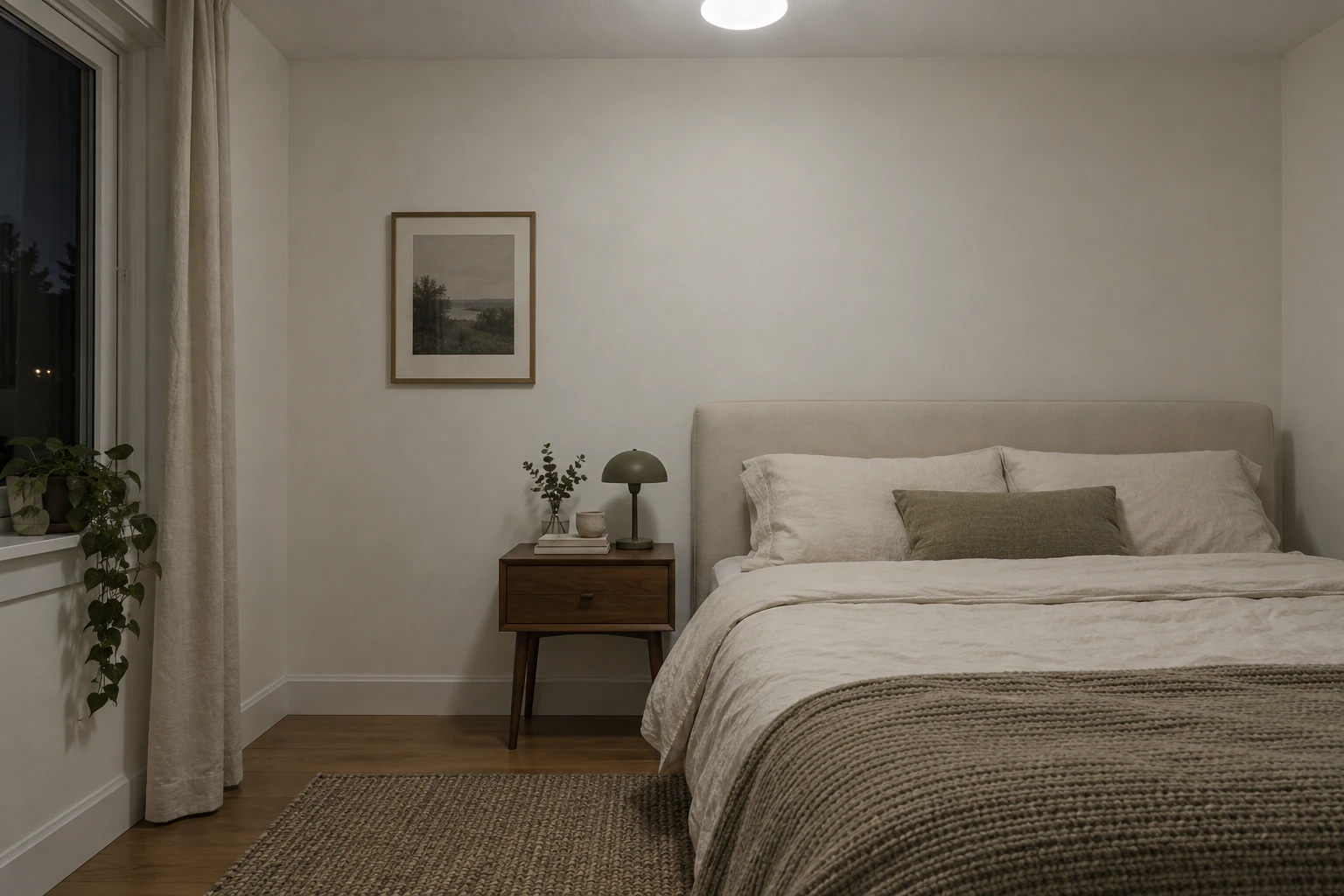
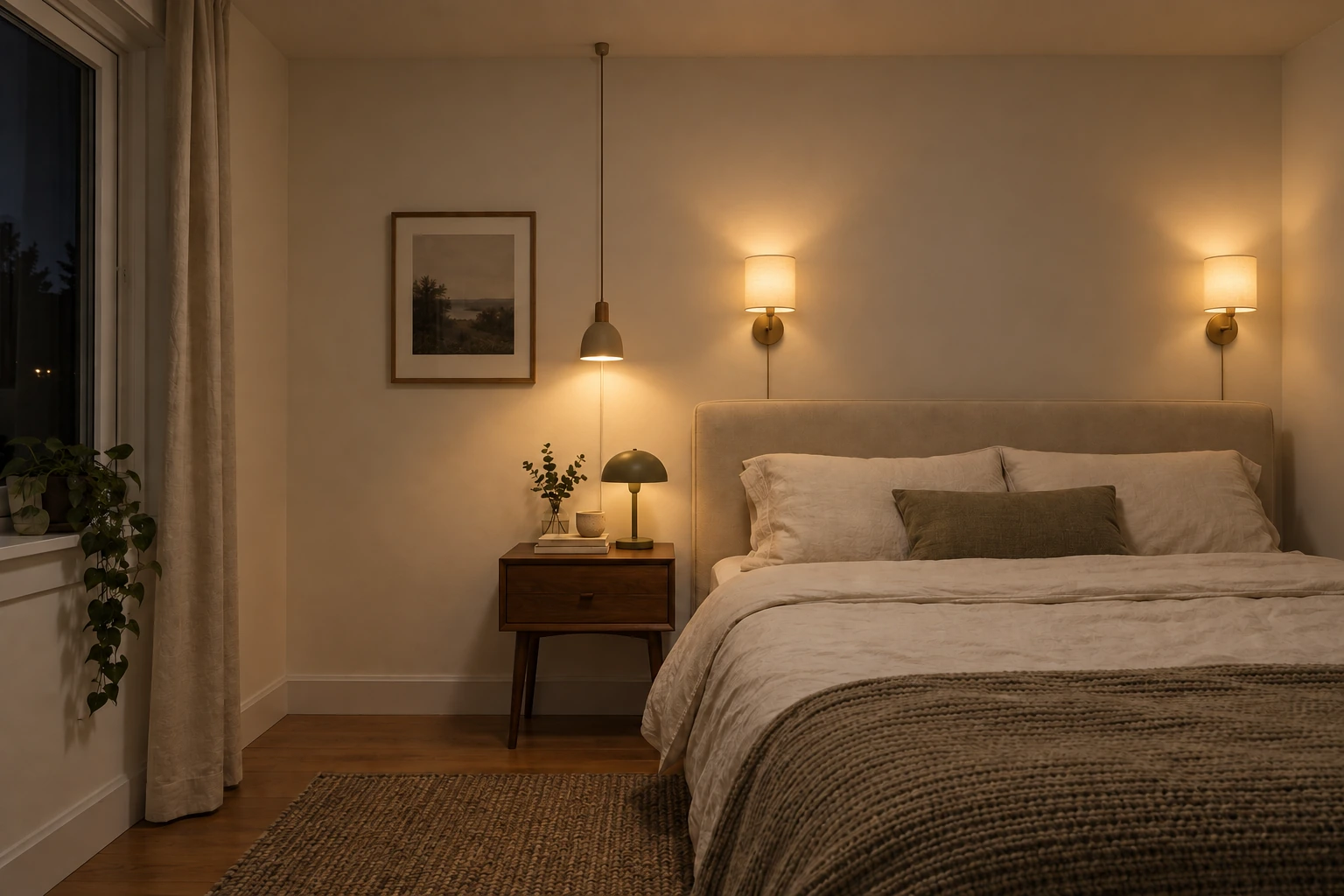
Above: the same bedroom corner at night with only the ceiling light on, flat, with the light falling straight down, then the same corner with two plug-in sconces and a plug-in pendant lit and the ceiling light switched off.
Afternoon project 2 of 3 rolls
Renter DIY · deposit risk: low · drill: no
Materials
Five things, and you can leave two of them
I opened every listing on this page on Sep 15, 2026 to check the title and the variant. Amazon does not let me show prices or product photos without their API, so what you get is the name, the variant, why this one, and what is wrong with it.
-
XSDeTu plug-in wall sconces, set of two
Pair · fabric shade · wood arm · switch on the cordBuy sconces in pairs. One sconce beside a bed is a reading light; two are a headboard, and the difference costs almost nothing extra. A fabric shade matters more than the arm does: it is the thing standing between a bare bulb and your eyes at the exact height your eyes will be.
The switch sits on the cord within reach of the pillow, which is the whole argument for a plug-in sconce over a table lamp.
The catchThe cord is about six feet, and six feet is shorter than you think once it has gone up the wall and back down. Measure with string first. There is also a black pair with a longer switch cord if your outlet is awkward.
See it above Opens Amazon in a new tab
-
Q-Plusmore pendant cord kit with hooks
15 ft cord · E26 socket · toggle switch · hooks included · 2-pack, whiteThis is a cord, a socket, a plug and the hooks to swag it. Fifteen feet is the number that makes this work in a real apartment, because the cord has to reach the ceiling, cross to the hook and come back down the wall to an outlet that is nowhere near the table.
It is a 2-pack, which sounds like more than you need until you want the same light over the kitchen counter.
The catchThere is no shade in the box. You are buying the hard part and supplying the pretty part, which is either the best thing about it or a second shopping trip, depending on the day you are having.
See the 15 ft cord kit on Amazon Opens Amazon in a new tab
-
Amazon Basics A19 bulbs, 2700K
60 W equivalent · 9 W · E26 · soft white 2700K · dimmable · 6-pack2700K in a living room and a bedroom, every time, because warm light carries less of the wake-up blue in the evening. For faces, the spectrum matters more than the kelvin: look for a CRI of 90 or more. A six pack covers both sconces, the pendant, and the two lamps you already own, and putting the same temperature in all five is what makes a room read as lit rather than as decorated.
The catchDimmable only does something if something in the circuit dims, and a plug-in cord with a toggle switch does not. Buy them anyway for the next fixture, or buy the non-dimmable ones and keep the difference.
See the 2700K six pack on Amazon Opens Amazon in a new tab
-
Command clear cord clips
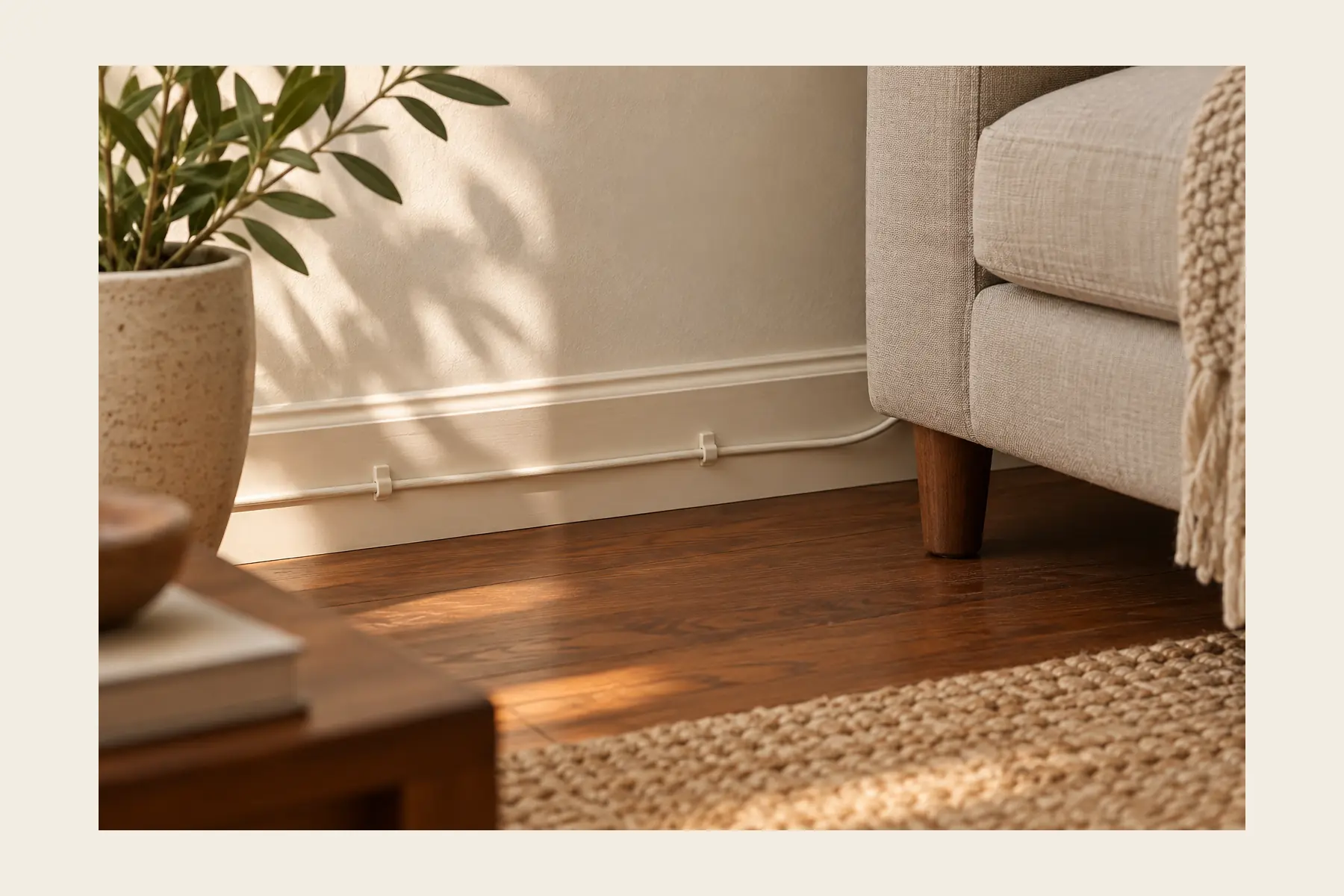
13 clips · 16 strips · clearA cord running down a wall in a straight line reads as a decision. The same cord sagging in a curve reads as an accident, and that is the entire difference between a sconce that looks installed and one that looks borrowed. One clip every twelve inches or so, all on the same vertical line.
The catchClear is right on a pale wall and wrong on a dark one, where a clear clip catches the light and turns into a row of shiny dots. On a dark wall, run the cord behind furniture and use nothing.
See the 13 clip pack on Amazon Opens Amazon in a new tab -
Paintable adhesive cord raceway
315 in of channel · white · adhesive backed · paintableFor the one run you cannot hide: across an open wall, or around a doorway to reach the only outlet in the room. The channel takes paint, so it disappears against the wall instead of drawing a white line across it.
The catchSkip this one unless the run is out in the open. It is the only item on the page with real adhesive on real rental paint, and a cord that drops straight down behind a nightstand needs nothing at all. Buy it second, after you have lived with the cord for a week.
See the 315 in of raceway on Amazon Opens Amazon in a new tab
What you do not need
A smart plug, unless you already like them. A dimmer. A second person. And a drill: everything here goes up on adhesive strips or a single ceiling hook, and the hook goes in with a screwdriver.

the drill stayed in the drawer for this one too
-
Materials
$75 to 160
A pair of sconces, one pendant cord kit, warm bulbs and the cord hardware.
-
Hands-on time
90 min
Twenty minutes of it is standing on a chair deciding where the hook goes.
-
To undo
10 min
Unplug, unhook, peel the clips. One hole at most, and it is a fingertip of spackle.
This is the project to do first. Nothing else you buy changes a room this much for this little, and it is the only one your landlord will not have an opinion about.
Before you start
Measure the cord, not the room
Everything in this build hangs on one boring question: how far is the nearest outlet from where the light should be? A sconce cord is usually about six feet. A pendant kit is fifteen. Both of those sound generous until the cord has to go up the wall, across to the hook, and back down to the plug.
So before you buy anything, run a piece of string along the route the cord will take. Outlet, up the wall, along the ceiling line, to the fixture. Measure the string. Then add a foot, because a cord pulled tight is a cord that unplugs itself when someone walks past.
The three things that stop this project
“Nothing is wired in. It is a plug, a hook and two adhesive clips, and it comes down in ten minutes.”
That is the landlord sentence for this one, and it lands because it is boringly true. There is no junction box, no switch plate, and nothing behind the drywall. If a hook is going into the ceiling, say so in the same breath and offer to fill it. Asking about one hook is a very different conversation from asking about a light fixture.
Popcorn ceiling and no hook is not the end of it, either: if the room already has a hardwired ceiling fixture, a screw-in socket adapter gets you a pendant from that same junction box, with nothing hanging off the plaster at all.
The numbers this hangs on
Two heights and one count
n30 · Light
3Sources in a room, minimum
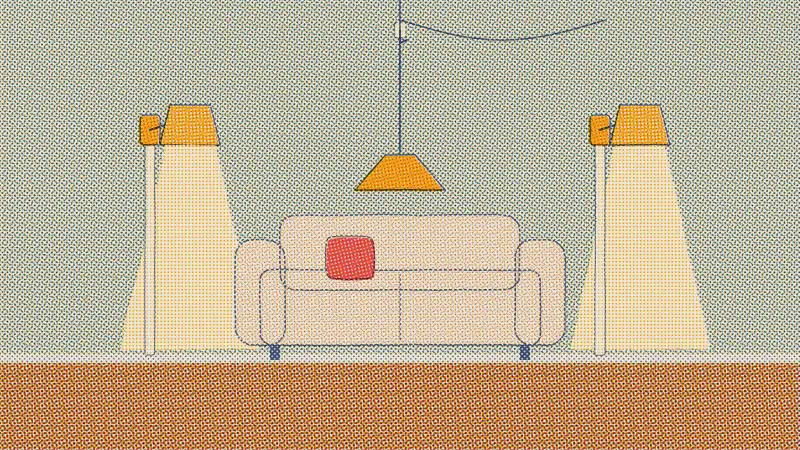
Ambient, task, accent. One ceiling light is a single source directly overhead, which is why a rental living room at night looks like a waiting area: every face gets the same flat light from the same angle, and every shadow falls straight down: under the shelf, under the plant, under your eyes.
Two sconces and a pendant is three sources without touching the switch on the wall. The ceiling light becomes the thing you use when you have lost an earring.

n18 · Dining
30 to 36 inFrom the table top to the bottom of the pendant
Light on the food, not in the eyes of the person across from you. Lower than 30 and you are ducking to make eye contact. Higher than 36 and the pool of light spreads out until it stops being a table and starts being a room.
The shade wants to be half to two thirds of the table width. On a 36 in table that is 18 to 24 in across, which is larger than most people guess.
Eight steps
Sconces first, then the pendant
Do this in the evening with the ceiling light off, so you are judging the light you are making rather than the light you already had.

-
01
Run string along the cord route and measure it
Outlet, up the wall, across, down to the fixture. Add a foot. That number is the cord length you need, and it is usually about double the number people guess from looking at the wall.
What goes wrong here
Measuring the straight line from the outlet to the sconce. Cords do not go through furniture.
-
02
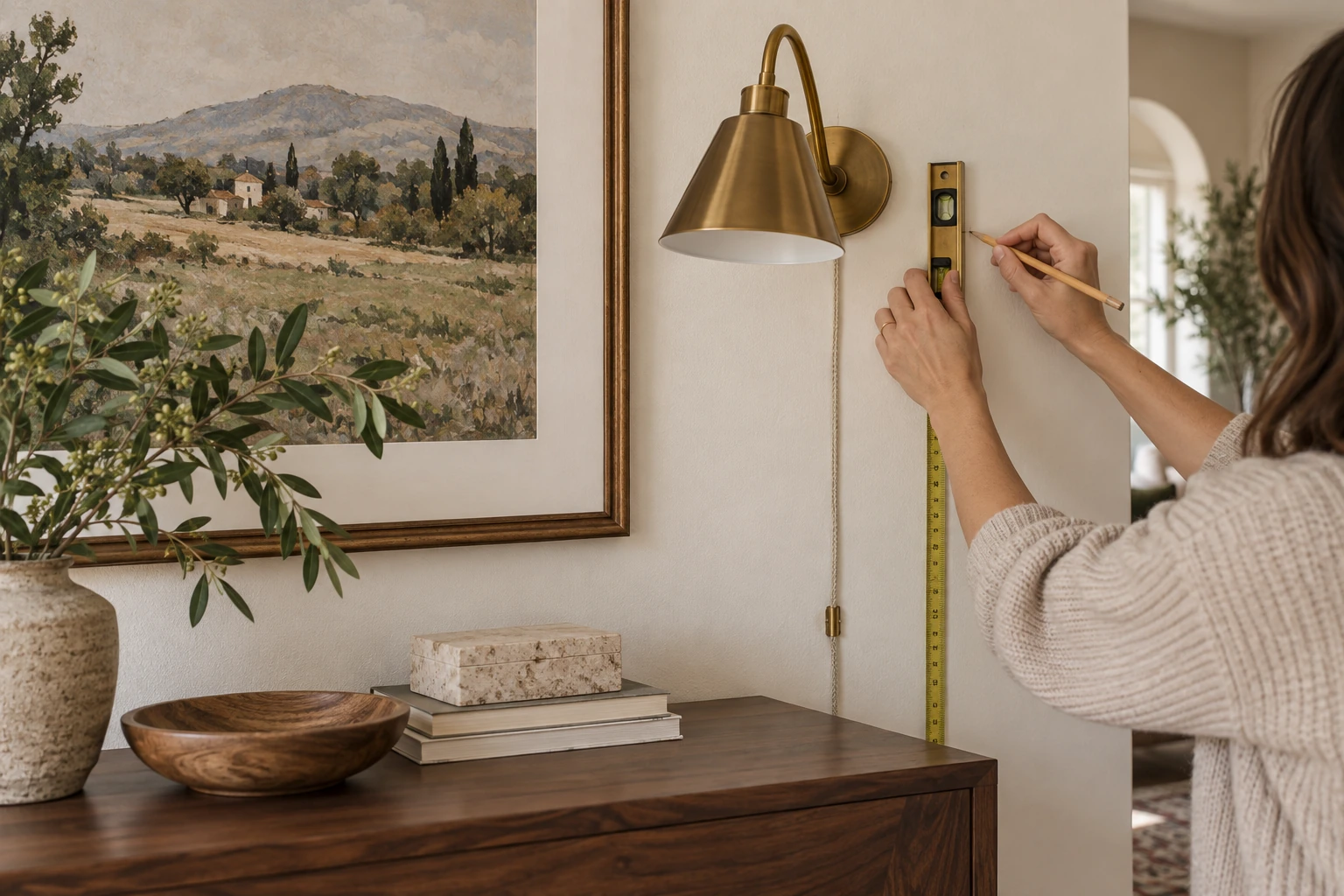
Mark the sconce height sitting on the bed, not standing beside it
Sit up against the headboard the way you read. The bottom of the shade wants to be at about chin height from there, which usually lands the mounting plate somewhere near 50 in off the floor. Mark it in pencil with the shade held in place.
What goes wrong here
Marking it at eye level while standing. You end up with a bulb pointing into your face every night for a year.
-
03
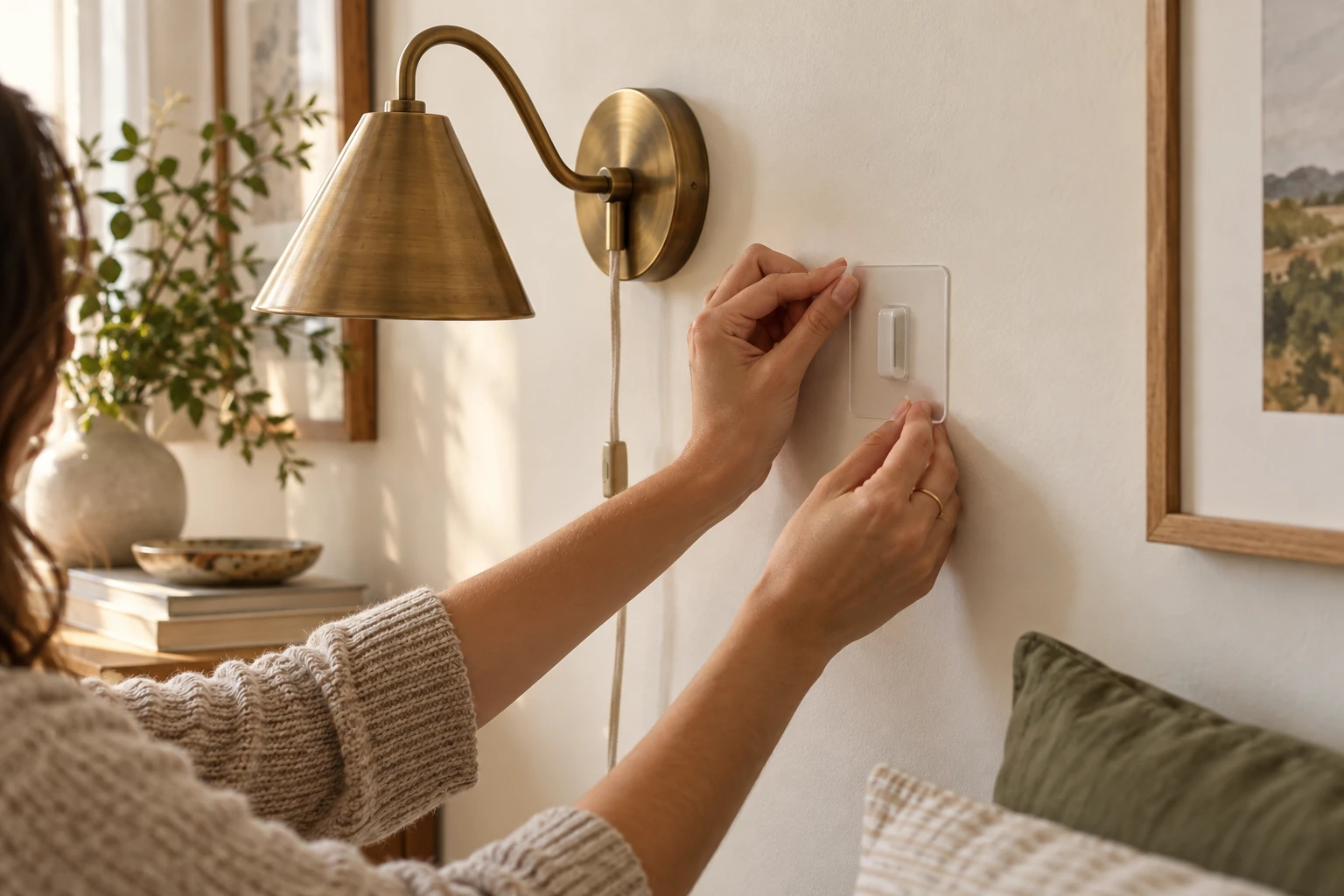
Mount the plate on adhesive strips and wait an hour
Clean the wall with rubbing alcohol, not a wet cloth. Press the strips for thirty seconds each, then leave the wall alone for an hour before you hang anything on it. The instructions say this and everybody ignores it.
What goes wrong here
Hanging the sconce the same minute. Adhesive needs time to grab, and a sconce on the floor at 2 am is how you learn that.
-
04
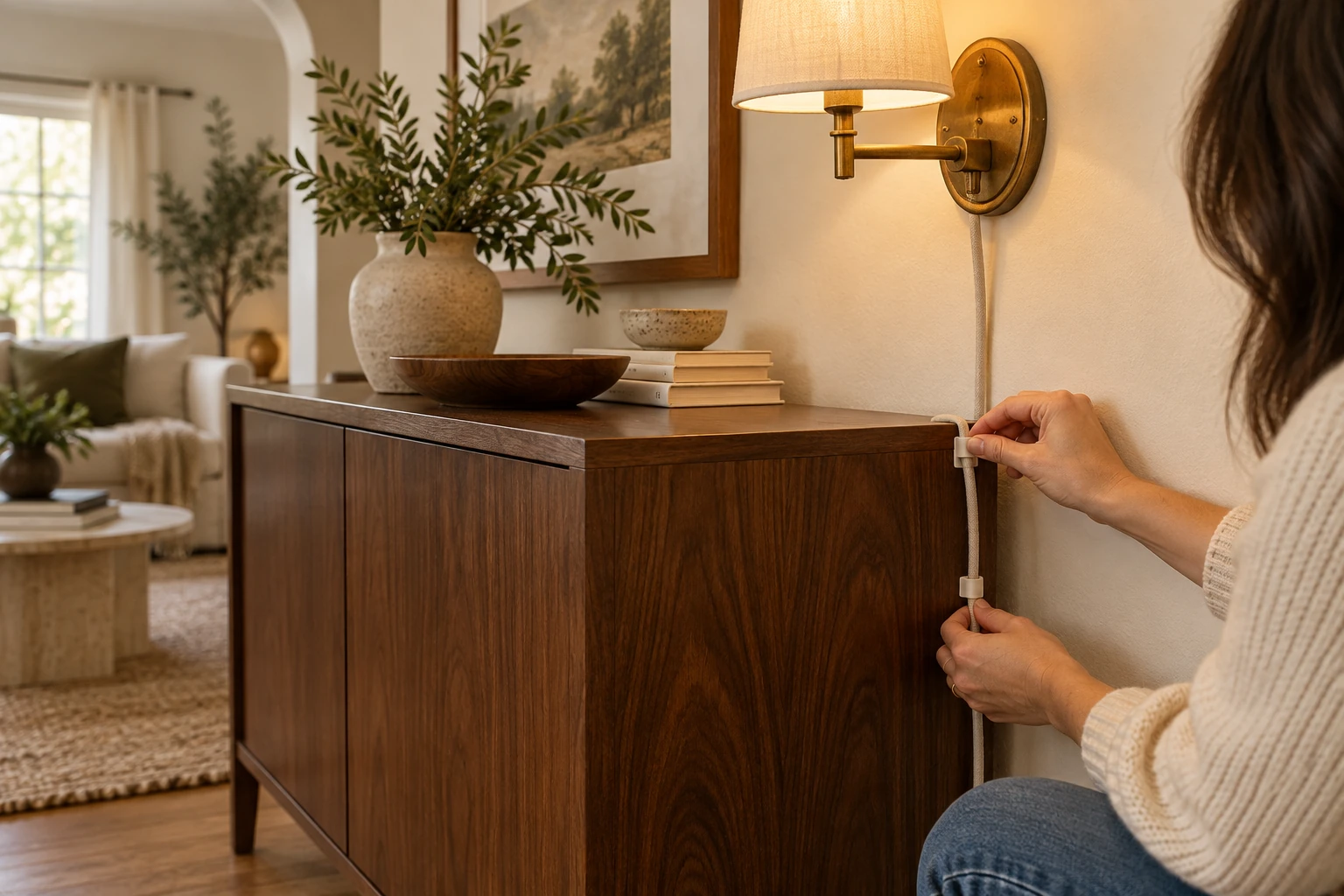
Drop the cord in a straight line and clip it
Hold the cord taut, plumb, from the sconce down toward the outlet. Mark where the clips go before you stick any of them: one every twelve inches, all on one line. Then peel and press, top to bottom.
What goes wrong here
Sticking the clips first and threading the cord after. The line wanders by half an inch per clip and you can see it from the doorway.
-
05
Find the center of the table and mark the ceiling
Center of the table, not center of the room. They are almost never the same point in a rental, and the pendant belongs over the table. Measure from two walls, mark the ceiling with a pencil dot, then stand back and check it against the table from across the room.
What goes wrong here
Hanging it over the middle of the room because the ceiling looks symmetrical. It never is.
-
06
Set the hooks and swag the cord
One hook at your pencil dot, one where the cord turns to head down the wall. Screw the ceiling hook into a joist if you can find one; into a plastic anchor if you cannot. Then run the cord hook to hook with a slight, deliberate curve, not a tight straight line.
What goes wrong here
One hook. The cord then pulls at an angle from the socket and the shade hangs crooked forever.
-
07
Set the height with someone sitting at the table
Bottom of the shade 30 to 36 in above the table top. Sit down and look across at the other chair: if you can see the bulb, it is too high. If you are ducking, it is too low. Take up the slack at the ceiling hook, not at the outlet.
What goes wrong here
Setting the height standing up. Standing, everything looks too low; sitting, the same light is right.

i have been sitting down this whole time. it is right from here
-
08
Same bulbs everywhere, then turn the ceiling light off for a week
2700K in the sconces, the pendant and the lamps you already own. Then leave the ceiling switch alone after dark for seven days and see whether you miss it. Keep the big light for the daytime jobs, cleaning and cooking. Most people do not miss it at night, and the ones who do find out they need one more source rather than the overhead one back.
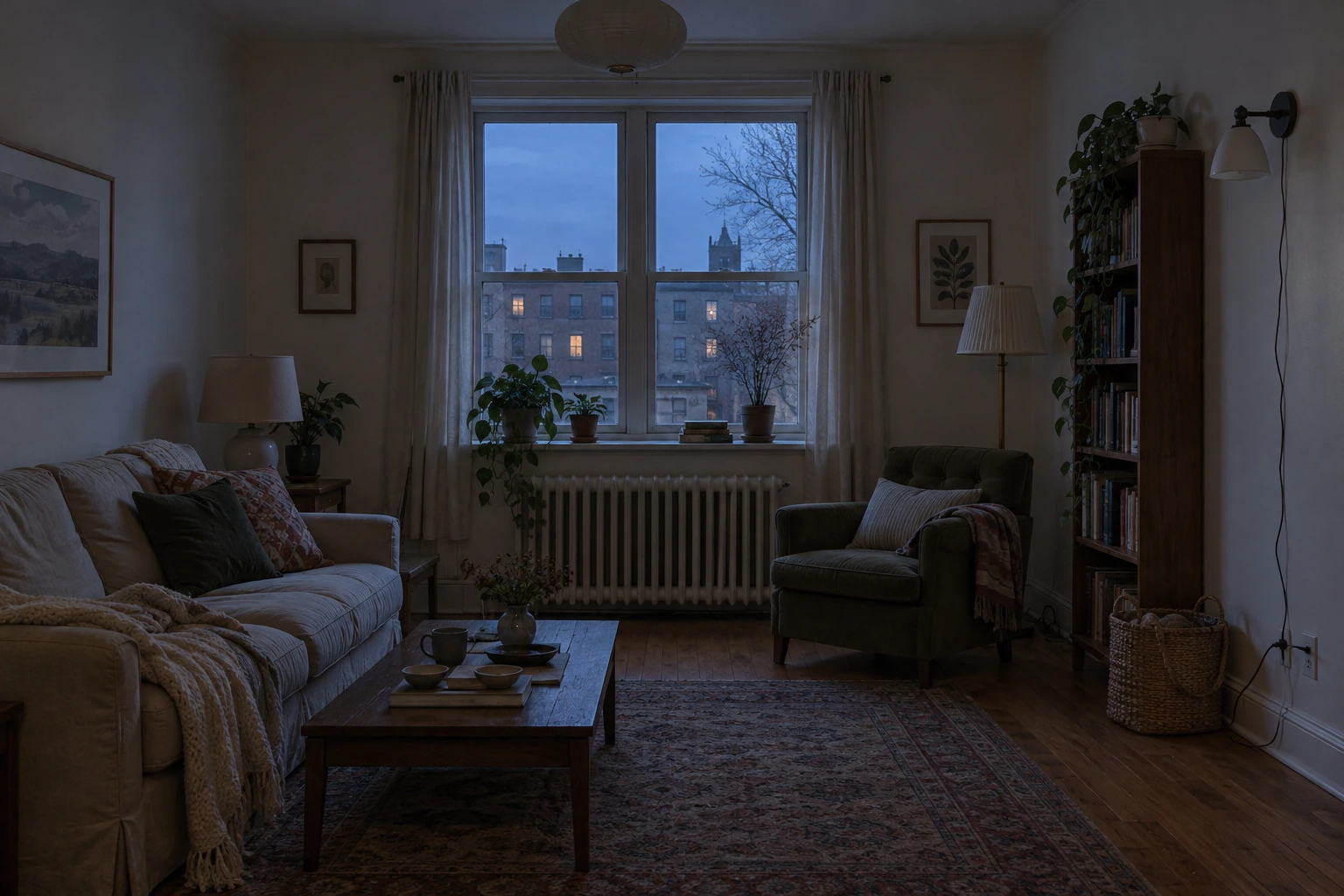
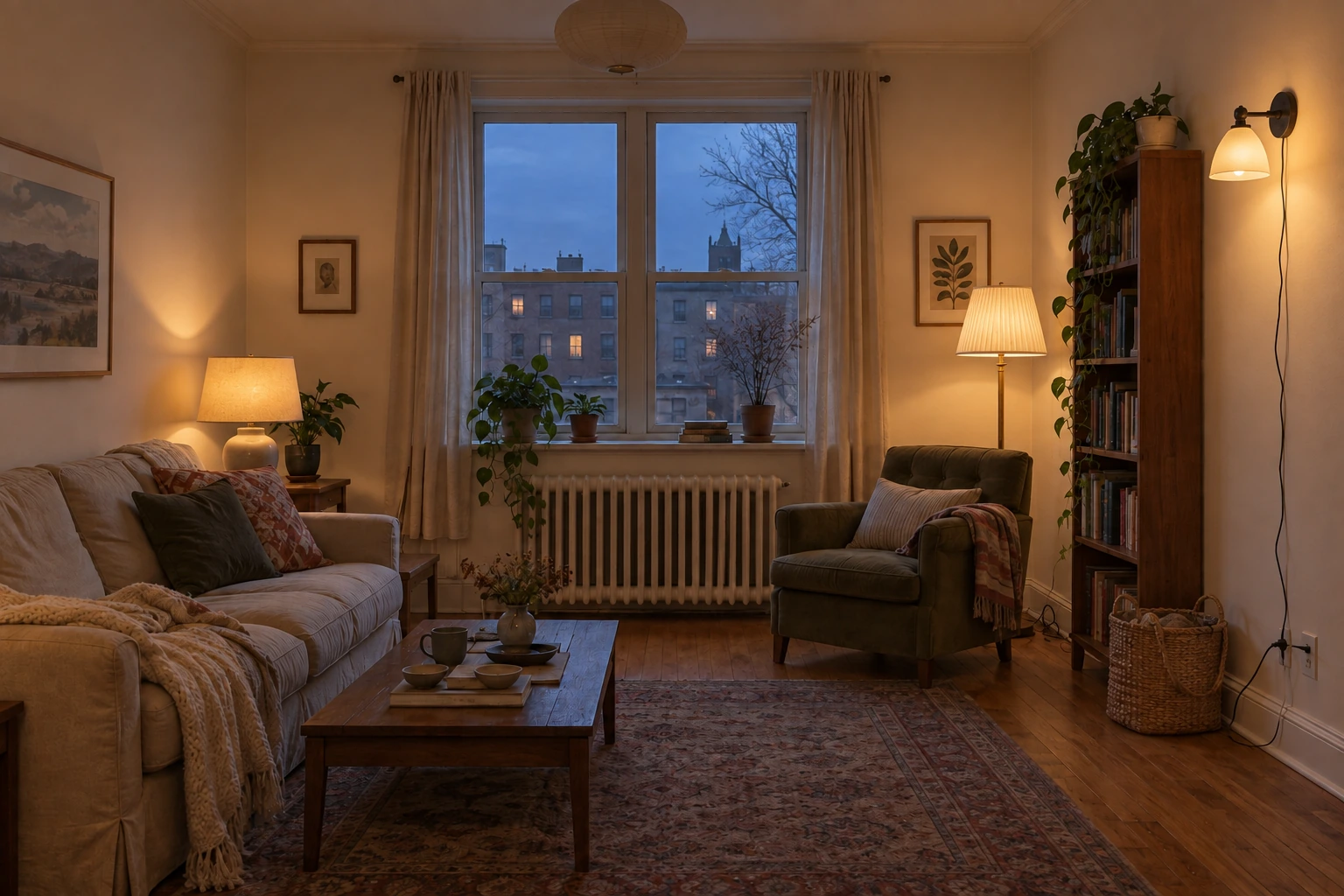
The same room, a week in. The ceiling globe is switched off in both frames; the difference is three plugs. What goes wrong here
Mixing 2700K and 4000K in one room. One corner goes yellow and the other goes blue, and nobody can say why the room feels wrong.
How to undo it
10 minDown in the time it takes to find the box
Unplug everything first, which is both a safety habit and the thing that stops you dropping a live cord behind a radiator. Then work from the fixture back to the outlet: lift the sconces off their plates, unhook the pendant, coil the cords.
- 01Unplug, lift the fixtures off, coil each cord loosely
- 02Pull each adhesive tab straight down until it releases. Down, never out.
- 03Unscrew the hooks. One fingertip of spackle per hole, wiped flat with a card.
What is left on the wall: nothing from the clips or the mounting plates if you pulled the tabs down slowly. One or two screw holes in the ceiling where the swag hooks went, each about the width of a pencil lead. Filler, a wipe with a damp cloth, done.
If you used the raceway, warm the channel with a hair dryer for a minute before you pull it. Adhesive that has been on a wall for a year does not let go at room temperature, and forcing it is the one way this project costs you money.
Everything else goes in the box and lights the next place. That is the part that makes this worth doing on day one of a lease rather than month eleven.
Quick answers
Six questions, and the honest answers
Yes, with a plug-in swag kit. The cord ends in a plug rather than in a junction box, so nothing gets wired and nothing gets removed. The only thing going into the ceiling is a hook, and a hook is a screw hole you fill in thirty seconds.
The bottom of the shade goes 30 to 36 inches above the table top. Set it with someone sitting at the table: if you can see the bulb from the opposite chair it is too high, and if you are ducking to talk it is too low.
No. The mounting plate on most plug-in sconces is light enough for heavy duty adhesive strips, so long as you clean the wall with rubbing alcohol first and wait an hour before you hang the fixture. Check the weight rating on the strips against the weight of the sconce and the shade together.
2700K, or dimmable 2200 to 3000K, in living rooms and bedrooms. 3000 to 4000K in kitchens and bathrooms, by taste, and 4000K and up for daytime desk work. For a dining nook at night, stay warm: 2700K, dimmable, with a CRI of 90 or more and, if the spec sheet lists it, a good R9, the score for saturated red. More important than any of that: use one temperature per room. Mixing them is what makes a room feel wrong in a way nobody can name.
First choice, run it behind furniture where nobody sees it. Second, clip it down the wall in a dead straight vertical line, one clip every twelve inches. A straight cord reads as intentional. A curved one does not, and no amount of hiding fixes a sag.
Three sources, minimum: ambient, task and accent. A ceiling light on its own is one source from one angle, which is why rental rooms look flat at night. Two sconces and a pendant get you to three without touching the wiring.

Doing it this weekend?
Tick what you still need
Leave anything that is already in a drawer. The rest goes to your Amazon cart in one tap.
Amazon shows you the cart first; nothing is bought until you check out there. As an Amazon Associate I earn from qualifying purchases.
Where next