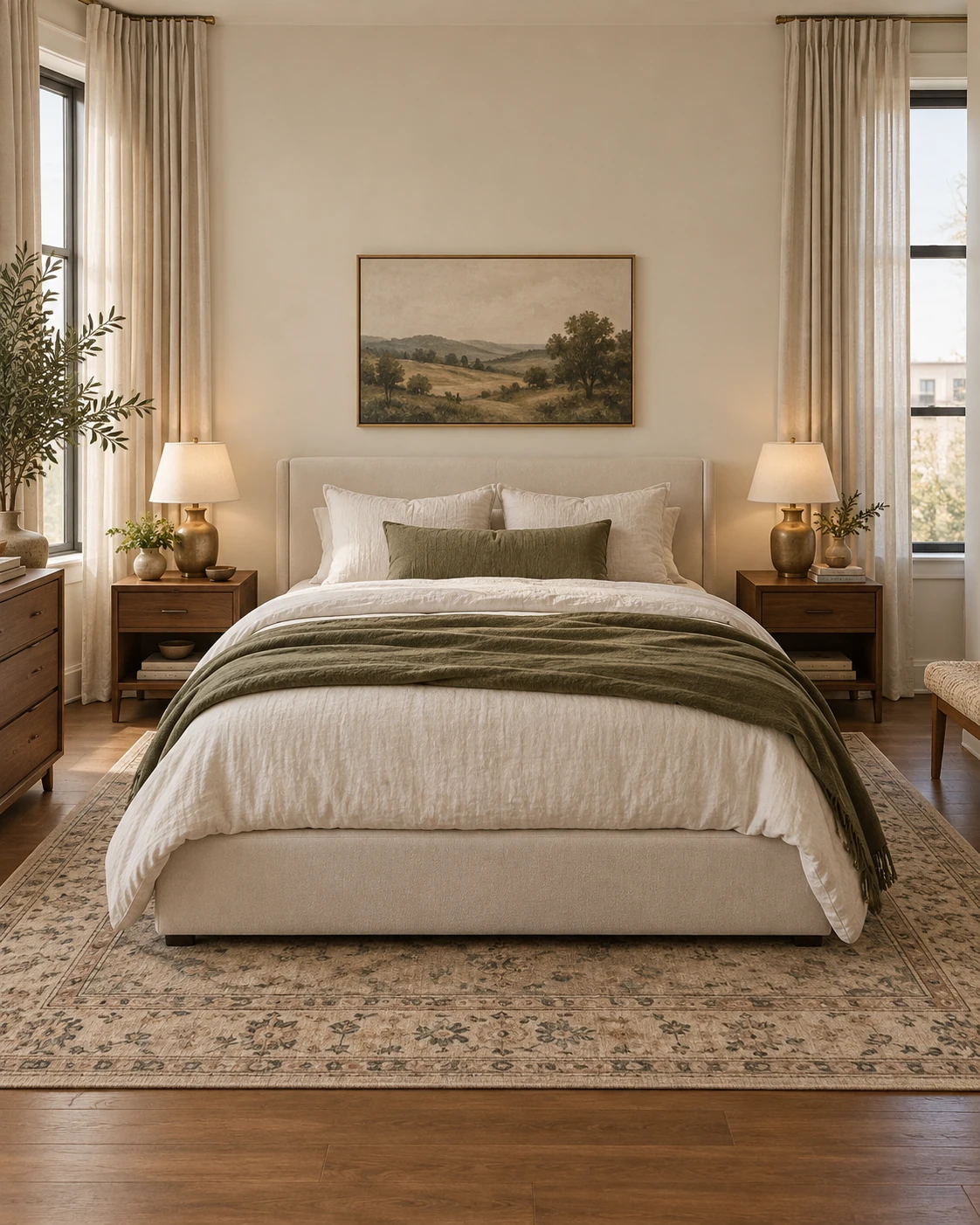
The bedroom, for renters.
The bed lands where the window lets it. After that it is four measurements and one bulb, and you sleep in the result every night.
Some links on this page go to Amazon. As an Amazon Associate I earn from qualifying purchases, which is how the site pays for itself. How this works
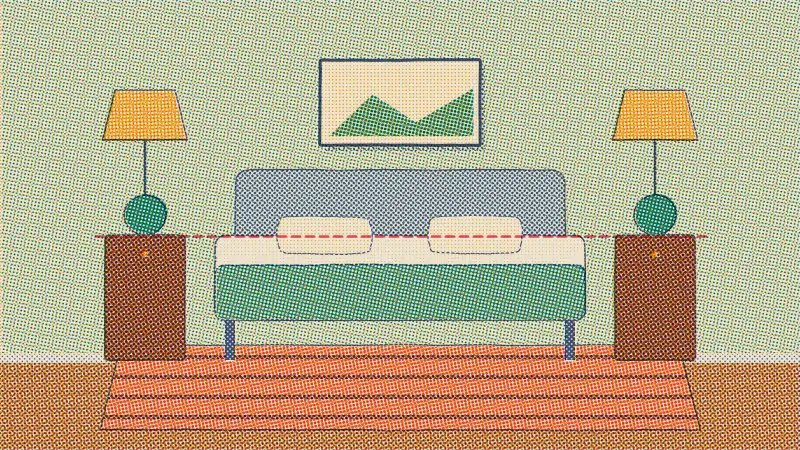
The three numbers of this room
Three measurements you make once and live with for a year
Checked Sep 15, 2026
One question
Pick the bed. The rug follows.
There is only one field here, because the bed is the only measurement that matters: the rug has to clear both sides by 18 in and carry past the foot. Change the bed and watch the answer, and the reason, change with it.
8 × 10 ft
244 × 305 cm
18 in of rug on each side of a queen bed.
A king asks for a 10 × 14, which is a lot of rug for a rented bedroom. If it will not fit, the honest answer is two runners rather than a small rug stranded under the middle of the bed. See the bedroom section of the guide →

The rug decided. Wake me for the curtains.
What feels wrong?
Point at the thing you can see. I will tell you which number it is.
Almost every bedroom complaint is a height complaint wearing a disguise. Pick whichever sentence sounds like your room.
Bed, two nightstands, one rug under the bottom two thirds
Start here
Nobody sees the rug under your headboard and you are paying for that part.
There is no bedroom guide yet. The one guide that is finished has a bedroom section, and it is the decision worth reading before you buy anything: which size reaches 18 in past both sides of your bed, where the top edge starts, and the two runner version for when the big rug is out of reach.
The first guide written for this room is What size lamp goes on that table?, third in the notebook, after the two on light. See what is coming and get the one email →
In order
The decisions in this room, in the order you make them
A bedroom has one large object in it and everything else is measured off that object. Move the bed after you have bought the rug and you buy the rug twice.
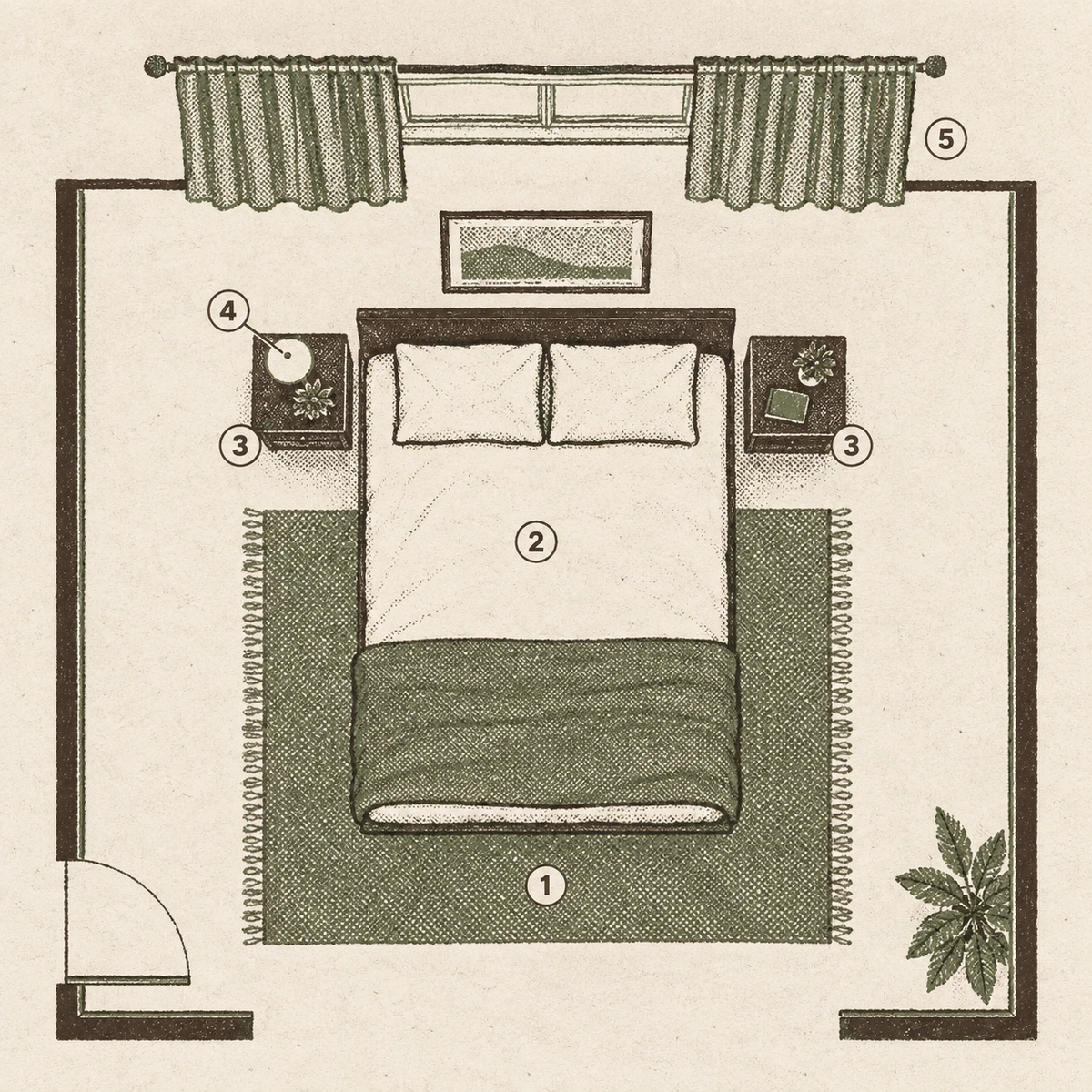

- 01 Which wall the bed goes on First, and it is usually decided for you by the window and the radiator. Test it with tape before you drag anything: 24 in minimum on each side you get out of, 30 to 36 in if you want to make the bed without shuffling sideways. Headboard on the wall you see from the door. See the clearance either side →
- 02 The rug Second, because it slides under the bed and the nightstands sit on top of it. Do this after the bed and you are lifting a queen mattress on a Saturday. The rug starts just below the nightstands and runs 18 to 24 in past both sides and the foot. Get my rug size →
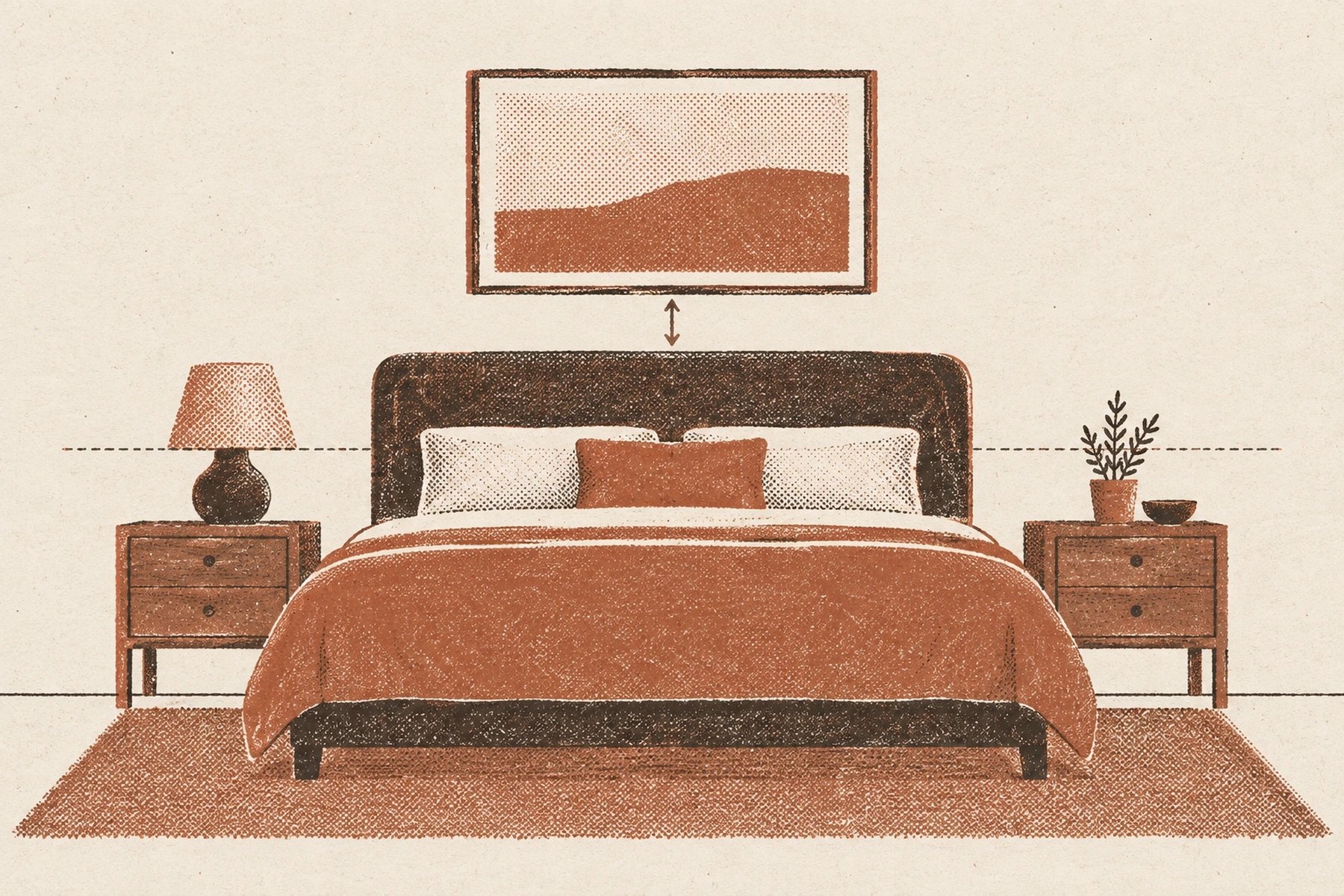
- 03 The nightstands Third, because their height is set by the mattress and their width by whatever gap the bed left. Top of the nightstand level with the top of the mattress, 2 in either way. Anything lower turns into a shelf you cannot reach lying down. See the mattress line →
- 04 The lamps Fourth, because the lamp is sized to the nightstand you just chose, not to the room. Sit up in bed: the bottom of the shade wants to be at your chin, so the light lands on the page and the bulb stays out of your eyes. Two matching lamps beat one good one. See the chin height rule →
- 05 Curtains Fifth, and in here they have a second job: the room has to go dark. Rod as close to the ceiling as the bracket allows, never less than 4 to 6 in above the frame, brackets 4 to 10 in past it on each side, panel touching the floor. Hanging them at the frame is what makes a rented bedroom read low. Get the rod height →
- 06 Art over the headboard Last, because it is the one thing here that is only for looks, and because a headboard is a terrible thing to guess at. Bottom edge 6 to 8 in above it, the piece or the group about two thirds the width of the bed, centered on the bed and not on the wall. See the two thirds rule →

I have already picked my side. You can have the rest.
The lease says no
What you cannot change here, and the workaround
- One ceiling bulb, or none
- A bare fixture over the middle of the bed is the worst light in the apartment, and it is the only one most rentals give you. Two nightstand lamps switch the ceiling off for good, and a third source somewhere low keeps the room from going flat. Three layers of light and the plug-in lighting project.
- You cannot paint
- So the color goes in the things you take with you: bedding, a rug, one wall of peel-and-stick behind the headboard. That last one does more for a bedroom than paint would, because it lands exactly where you look from the door. The wallpaper project and the 60 / 30 / 10 split.
- You cannot mount a headboard
- Most headboards want lag bolts into studs. A renter has three ways around it: one that leans against the wall and is pinned by the bed frame, a run of fabric hung from a tension rod, or art doing the job instead, 6 to 8 in above the mattress. Art over the bed and the 57 inch center line.
- The closet has no doors
- Or it has doors that fell off the track in 2019. A curtain on a tension rod inside the opening closes it in ten minutes and leaves nothing behind. Use the same fabric family as the window so the room reads as one room and not as a repair. The no-drill rod and the small space version.

The short list
Seven things, and two of them exist so you can skip the first one
Everything here is a link that earns me a commission, which is exactly why each one also says where it falls down. Every button opens Amazon in a new tab.
-
SAFAVIEH California Shag, ivory
8 × 10 ft · ultra plush thick pile · non sheddingThe answer for a full or a queen: 18 in of rug on each side, top edge sliding in just below the nightstands, and enough length left that your feet land on it and not on cold laminate. This is also the one room where pile height stops being a style question. Low pile is a crumb decision and it belongs in a dining room. A bedroom rug is judged at seven in the morning by two bare feet that have not agreed to be awake yet, and thick wins that argument every time.
The catchThick pile does not go in a washing machine, it eats a vacuum with a beater bar, and most of this rug lives under a bed where nobody will ever see it. If your room is tight, the runner below covers the part your feet touch for a fraction of it.
-
Soalmost washable area rug, beige
10 × 14 ft · for a king, with 18 in on every sideThis is what the calculator up the page returns for a king, and I would rather say it out loud than quietly round down. A king is 76 by 80 in; 18 in of rug on both sides and past the foot is 112 by 116 in, and only a 10 × 14 clears that. Washable, low pile, so it is the opposite decision to the row above and the right one if the bedroom doubles as the place the dog sleeps.
The catchA 10 × 14 rarely fits a rented bedroom. You need about 12 by 16 ft of floor to leave a walkway around it, and most second bedrooms are not that. If yours is not, a 9 × 12 leaves 16 in a side instead of 18 and nobody will ever notice: run your room through the calculator → before you buy either.
-
SAFAVIEH Milan Shag runner, ivory
2 × 8 ft · 2 in thick pile · buy two, one per sideThe budget version of the whole rug decision, and the one that keeps the argument honest. If the reason to put anything on a bedroom floor is the seven in the morning problem, then a runner should be as thick as the big rug, not thinner because it is cheaper. Two inches of pile, eight feet long, which runs the length of a queen and then some, and the pair still costs a fraction of the 8 × 10.
The catchIt does not look as good, and I am not going to pretend it does. Two runners read as two runners. Thick pile also means a door that opens inward over one of them may not, so check the door swing with a tape before you order, not after.

-
USumkky table lamps, white washed ceramic
25 in tall · set of 2 · ceramic base, fabric shadeSold as a pair, which is the whole reason it is here: a bedroom wants two lamps that match, one per side, so you can switch the ceiling off and never turn it on again. At 25 in on a nightstand near mattress height, the bottom of the shade lands around chin level when you sit up, which is where a reading light belongs.
The catchThat height only works if your nightstand is near mattress height. Sit up in bed, measure from the nightstand top to your chin, and if the answer is well under 25 in you want a shorter lamp than this one.

-
Philips Ultra Definition A19 bulbs, frosted
2700K · 450 lumens · 40 W equivalent · 8 pack · dimmable, E262700K is the temperature that reads as evening rather than as corridor. The number that changes in here is the other one. A living room lamp wants 800 lumens; a lamp 20 in from your face at eleven at night does not, and 450 is the figure that lets you read without lighting the whole room and without the wince when someone switches it on. Frosted for the same reason: no filament to look straight into from a pillow. Dimmable on top, because full for finding socks and low for the last twenty minutes of a book are two different jobs.
The catchEight bulbs is more than one bedroom needs, and 450 lumens is dim if this lamp is also the only light in the room. Check what is in your lamps first; plenty of bulbs sold as soft white are already 2700K, and swapping a bulb that is doing its job is money set on fire.
-
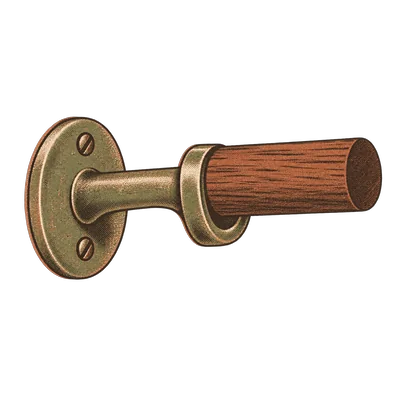
Cream blackout linen curtains, 96 in, back tab
96 in long · 2 panels · back tab · cream on ivoryNinety six inches is the length that lets the rod sit up near the ceiling in a standard eight foot room and still reach the floor. Blackout is the bedroom specific part: the rod height makes the room look taller, the lining makes it dark at six in the morning in June.
The catchA true blackout panel hangs heavier and flatter than the linen look suggests, and it kills the soft morning glow completely. If you like waking up with the light, hang a light filtering panel instead and accept the early summer sun.
Quick answers
Six questions about this room
8 × 10 ft. That leaves 18 in of rug on each side of a queen, which is the low end of the range and the point where your feet stop landing on bare floor. A king wants a 9 × 12 at least, and 10 × 14 if the room will take it.
Just below the nightstands, under the bottom two thirds of the bed. Nobody sees the rug under a headboard, so a rug that starts there is square footage you paid for and will never look at. It runs 18 to 24 in past the sides and the foot.
Level with the top of the mattress, 2 in either way. Measure the mattress with the bedding on it, not the bed frame. Lower than that and you are reaching down into a hole for a glass of water in the dark.
About as tall as the nightstand, which usually lands between 24 and 27 in. The test is simpler than the number: sit up in bed and the bottom of the shade should be at your chin. Higher and you get the bulb in your eyes.
24 in minimum on any side you get out of, 30 to 36 in to make the bed without shuffling sideways. If only one side can hit 24 in, put the open side where you actually sleep and push the other against the wall.
6 to 8 in above the headboard, with the piece or the group about two thirds the width of the bed. Center it on the bed rather than on the wall, and let the headboard set the height rather than the floor. You look at it sitting up or lying down, so lower beats higher.

The bed was mine before any of this started.
Where next