How high should curtains go?

By NoraLease and Layer · Windows · Checked Sep 15, 2026
Some links on this page go to Amazon. As an Amazon Associate I earn from qualifying purchases, which is how the site pays for itself. How this works
In this guide

The rod
Four to six inches above the frame is the floor, not the goal
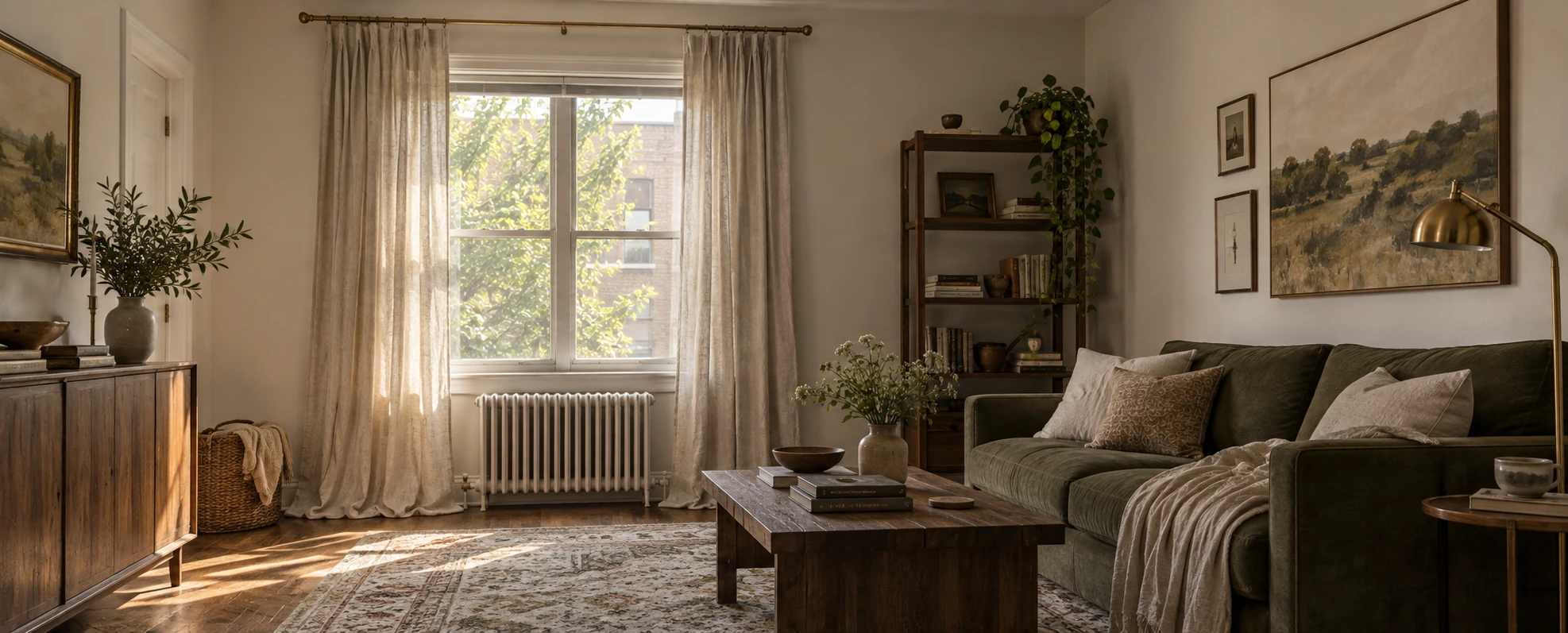
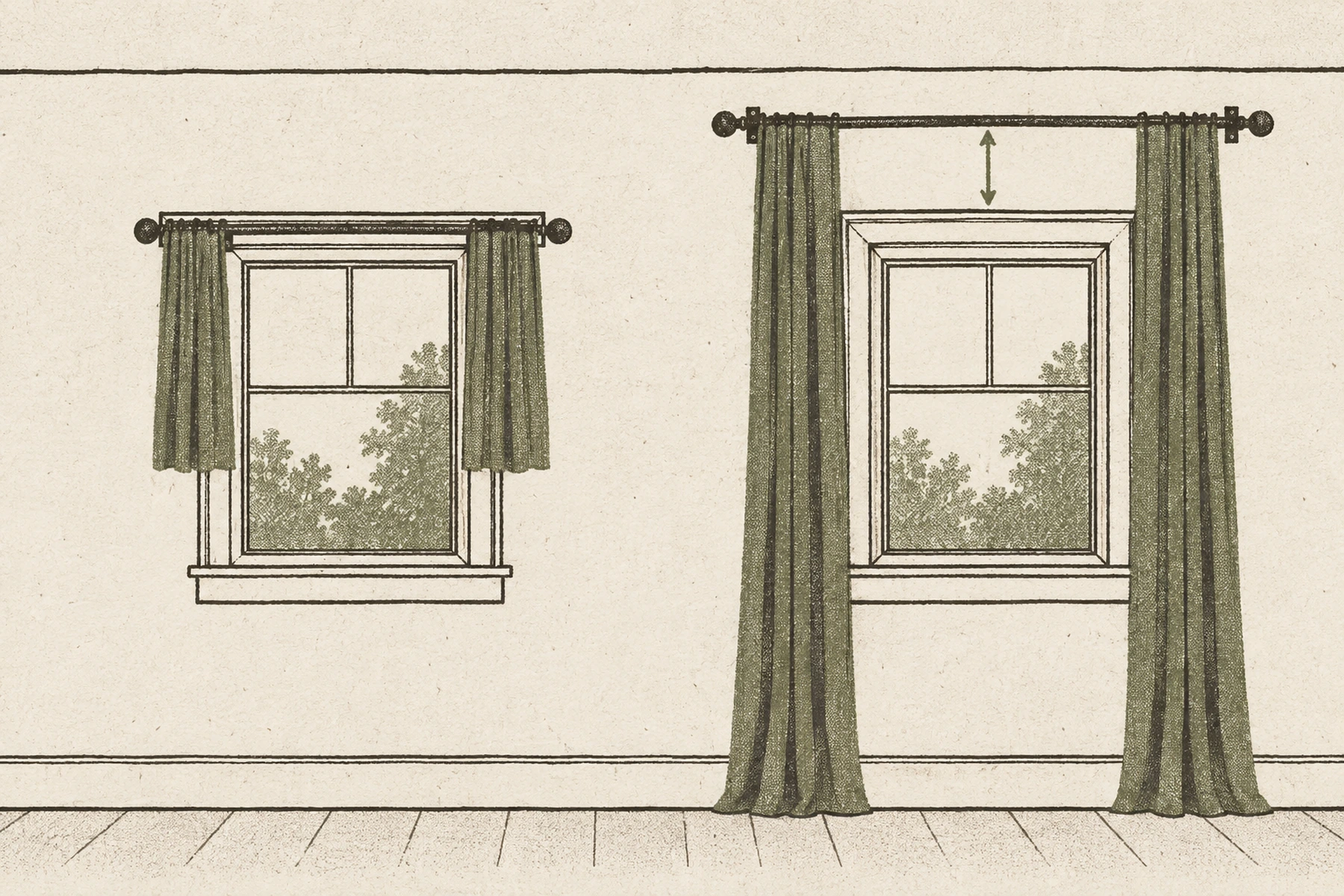
Your eye reads the rod as the top of the window. It does not know where the frame is, because the panels are covering it. So every inch you move the rod up, the window grows, and it costs you nothing but a second set of screw holes.
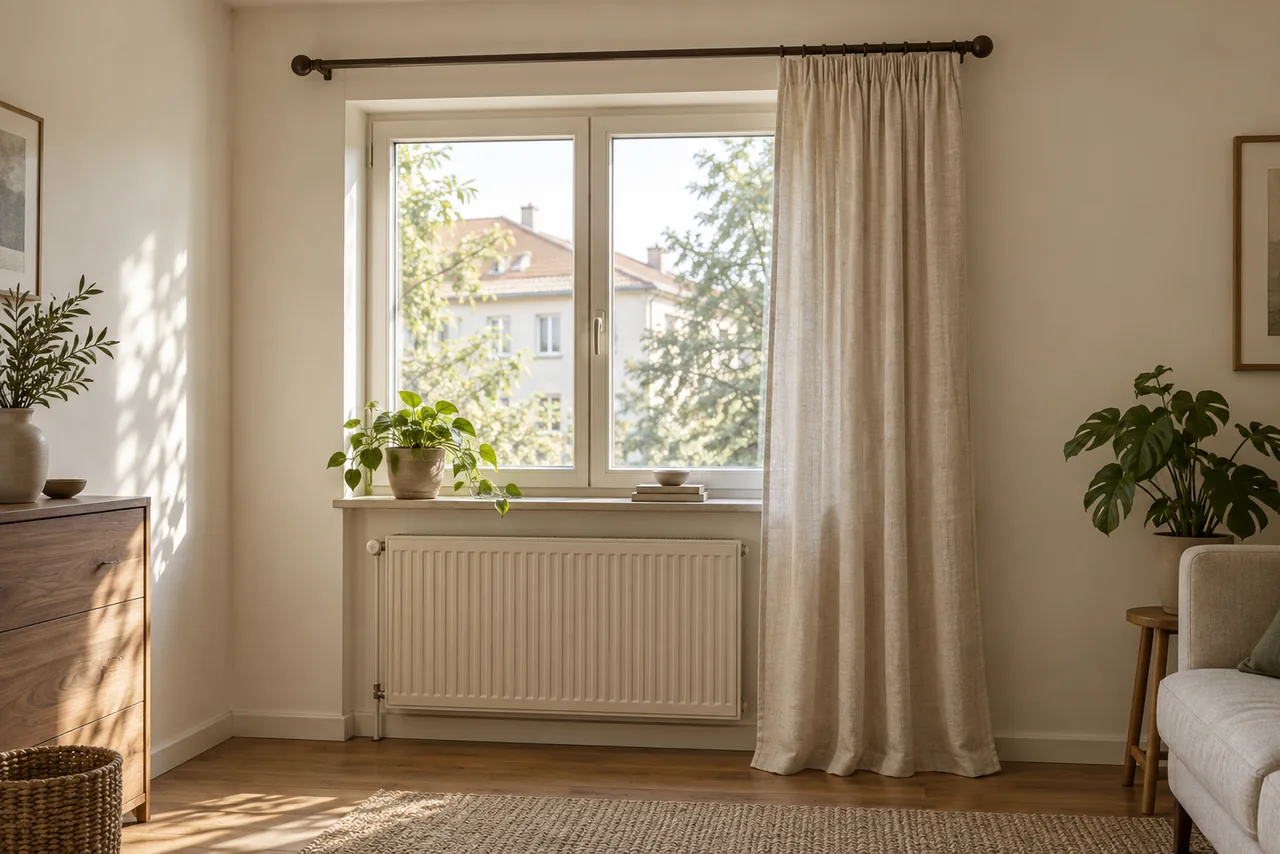
That is the whole trick, and it is why the same window in two apartments can look like two different windows. Put the rod 4 to 6 in above the frame as your absolute minimum. If there is more wall than that, keep going: as close to the ceiling as the bracket allows, usually 1 to 2 in under it, is where it stops looking like a rental and starts looking like somebody chose it.
The mistake is screwing the brackets into the frame
It is the obvious place. The wood is solid, the screws bite, and you do not have to find a stud or trust an anchor. It is also the one spot that guarantees the window looks its actual size, with a curtain sitting on the glass all day and a rod that draws a line exactly where the window already ends.
If the frame is the only thing you can attach to, fine, but then at least mount on the face of the casing and not the inside, and read the no drill section before you commit. There is a bracket that clips onto the frame molding and puts the rod above it anyway.
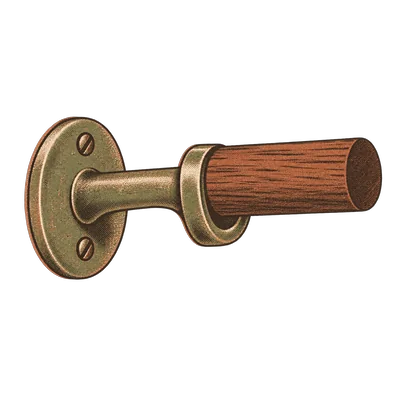
How high is your ceiling?
The rod goes as close to the ceiling as the bracket allows, so the ceiling decides your panel length, not the window. Measure floor to ceiling, then pick your row. Every length below is measured from the top of the rod, and buying the length first is how people end up with curtains that float.
- 8 ft ceiling Most rentals. Mount the rod 1 to 2 in under the ceiling, so its top sits near 94 to 95 in off the floor. A 95 or 96 in panel on back tabs or a rod pocket then kisses the floor or breaks on it by an inch or two. On clip rings, which drop the panel about 1.5 in, take the 95: it lands with about 2 in on the floor. This whole window in one cart
- 9 ft ceiling Same rule. The rod top lands near 106 to 107 in, and a 108 in panel kisses the floor or breaks by an inch or two. Higher than 9 ft, you are into 120 in panels, which the velvet further down comes in. See the panel lengths below
- Crown molding or a soffit The rod goes right under it, which on an 8 ft ceiling usually puts it somewhere around 88 to 92 in. Measure from the top of the rod to the floor and buy the stock length closest to that number: 90 and 92 in panels exist, and the velvet further down comes in both. See the panel lengths below
- A rod near 84 to 86 in A ceiling lower than 8 ft, or no drill brackets clipped onto the window trim, which put the rod just above the frame. This is the one case where an 84 in panel is the right answer instead of the cheap one: on back tabs for a rod at 84 in, on clip rings for a rod at 86 in. See the panel lengths below
- None, and no drill A tension rod sits inside the window opening, so the rod is below the top of the frame and you lose the lift entirely. I am telling you that up front: this is the option that makes the window look smaller, and sometimes it is still the right call. See the no drill options below
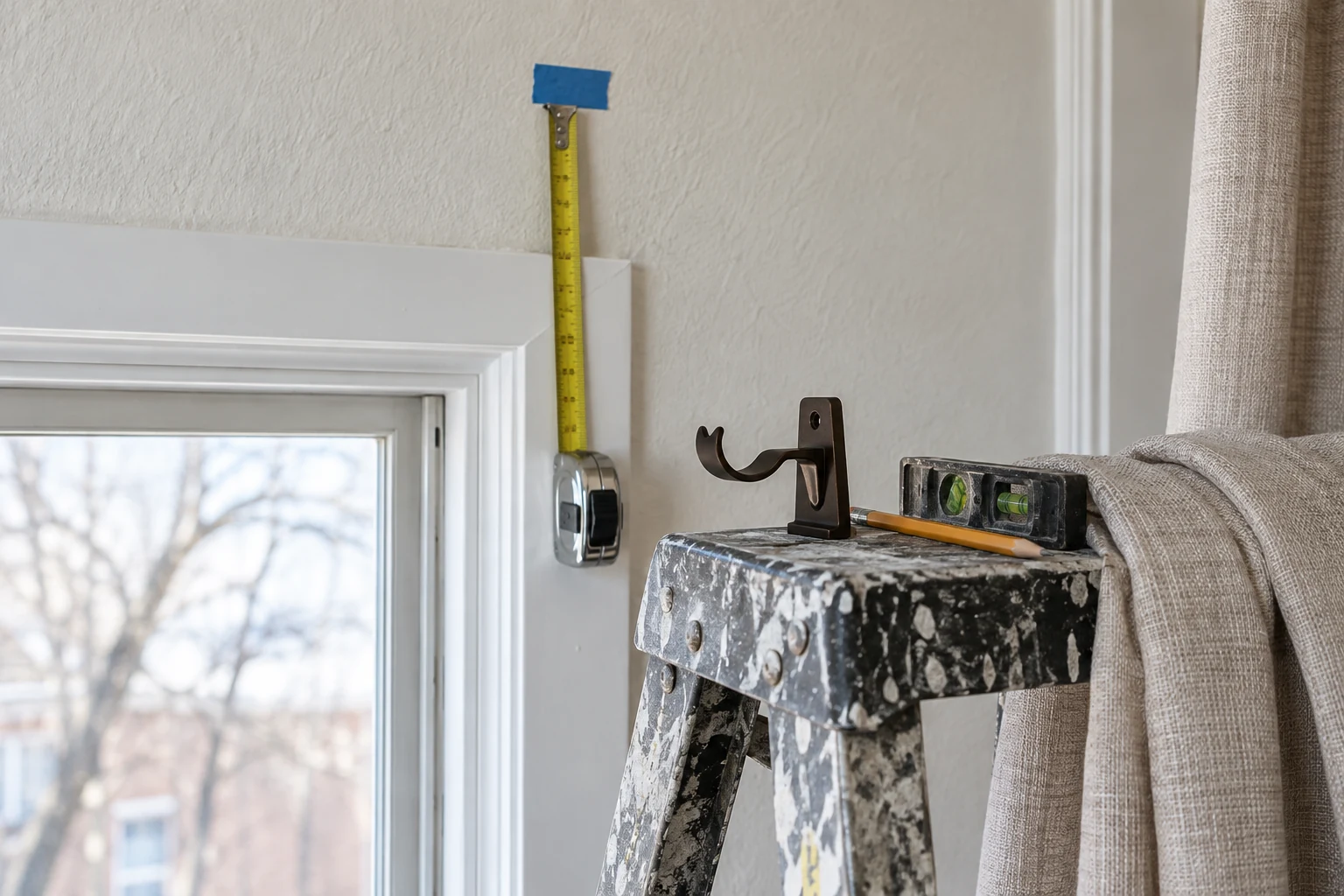
Width
The brackets go past the window, and the panels are twice as wide as you think
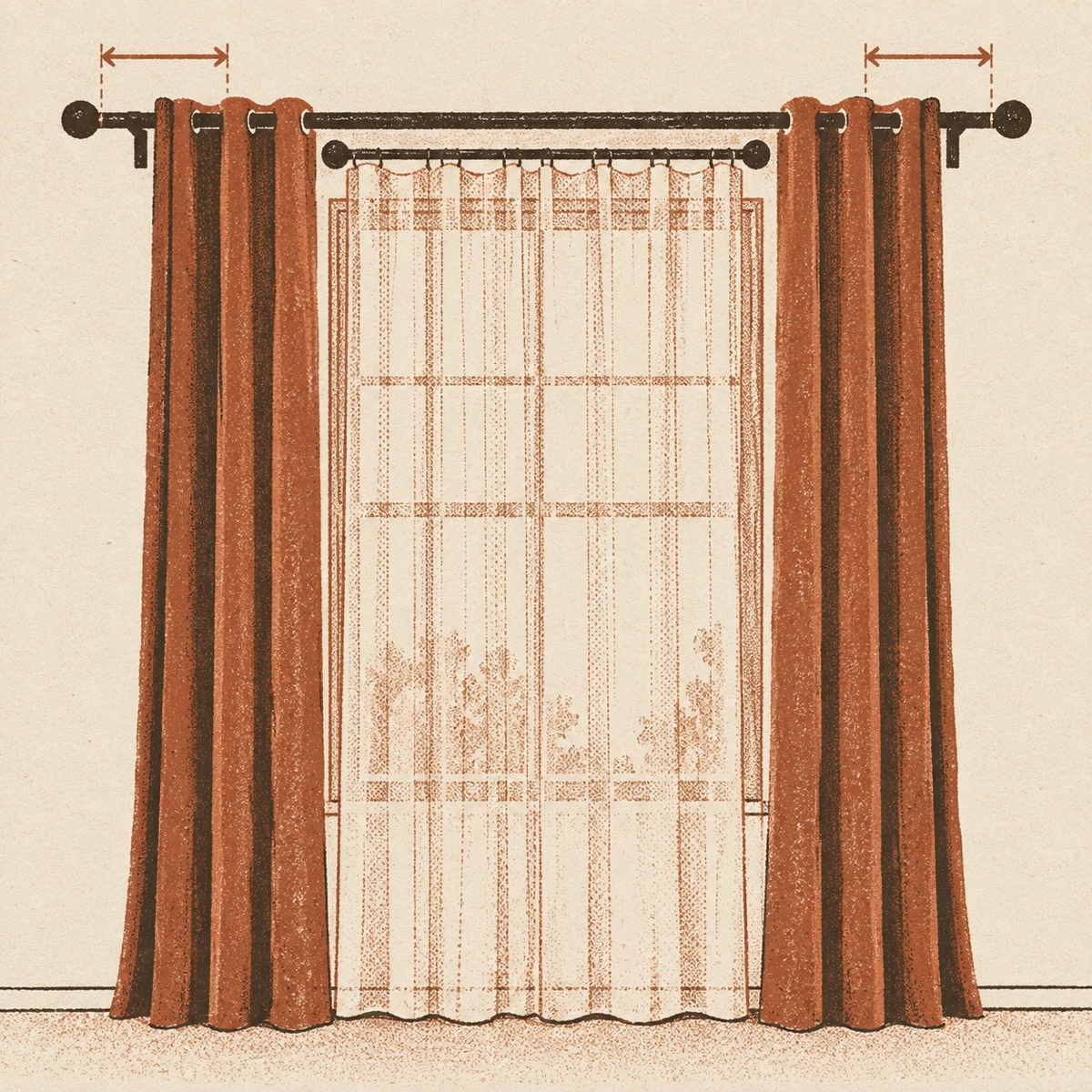
Here is what a curtain does when you open it: it does not disappear. It bunches into a column about 6 to 10 in wide and stands there all day. If the bracket is at the edge of the frame, that column stands on the glass, and you have just bought a window covering that covers the window when it is open.
So the brackets go 4 to 10 in past the frame on each side, out on bare wall. Narrow window, take the small end. Anything wider than about 48 in, take the big end. The window looks wider and the glass stays clear, for the price of some wall you were not using.
Flat panels look like bedsheets, and the fabric is not the problem
This is the one I would fix first in most apartments. A panel hanging flat, with no folds in it, reads as a sheet on a pole no matter how nice the linen is. The folds are the whole look, and folds come from surplus fabric.
every panel added up = 2 to 2.5× the window width
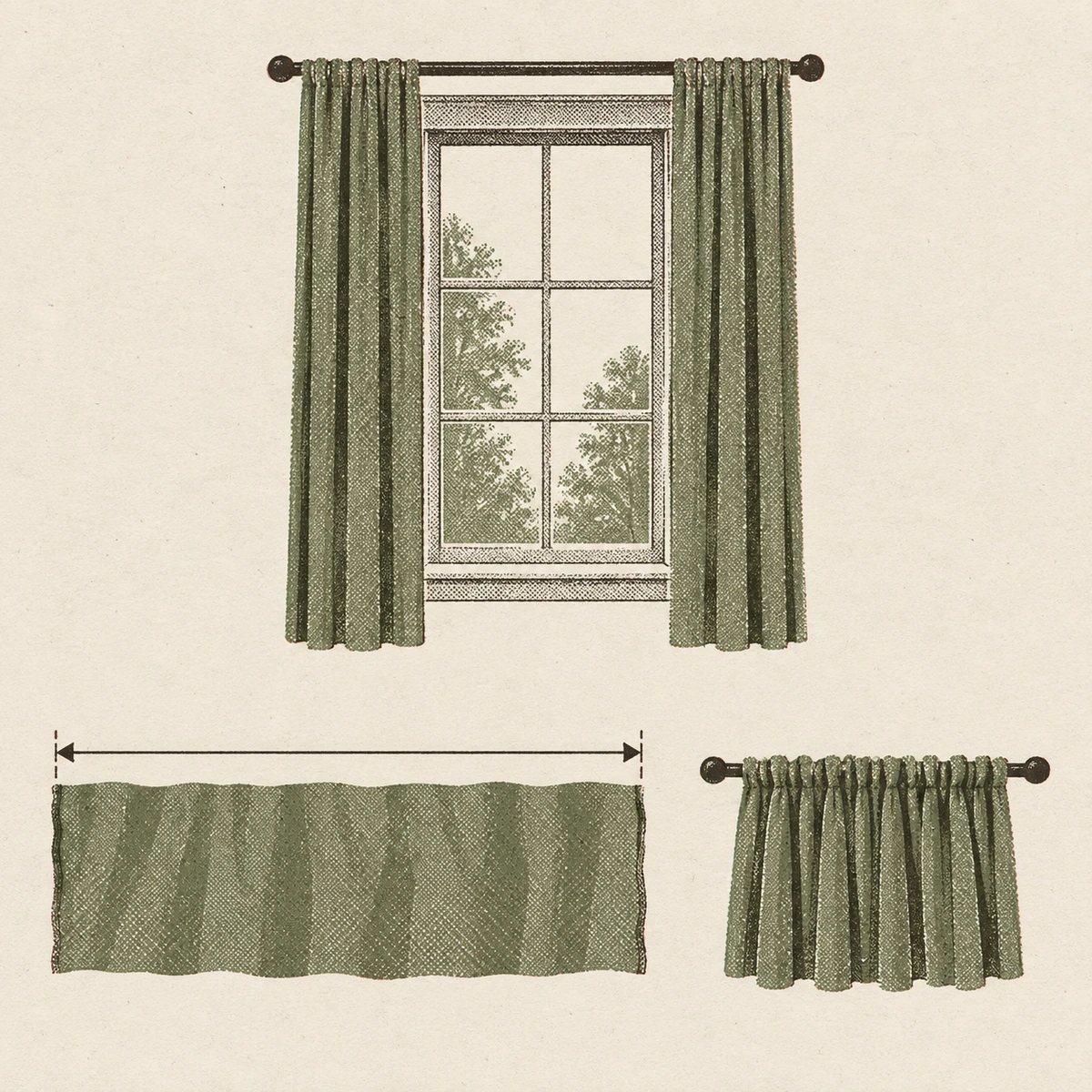
Standard panels are sold about 50 to 52 in wide each. Two of those is roughly 100 in of cloth, which dresses a window up to about 48 in properly and starts running thin after that. Past 60 in of window you are into three panels, and at a sliding door you are into four. Nobody says this in the listing, because the listing would like to sell you a set of two.
How long a rod, and how many panels
Measure the glass opening, not the curtain you own. The rod has to cover the window plus both bracket extensions, so a 36 in window wants a rod that reaches 44 to 56 in before the finials.
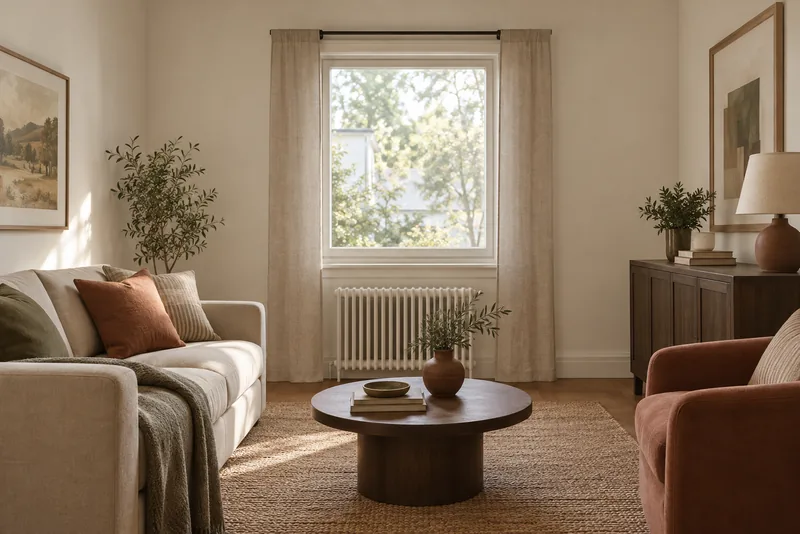
| Window | Rod span | Panels, and why | Link |
|---|---|---|---|
| 24 to 36 in | 36 to 52 in | Two standard panels, and you can leave them closed on the sides permanently. A tension rod covers this span too if you cannot drill, though it sits inside the opening. | See the no drill options below |
| 36 to 60 in | 52 to 80 in | The standard bedroom or living room window. Two panels still work at the bottom of this range. An adjustable 36 to 88 in rod at 1 in thick covers the whole band without sagging in the middle. | See the 36 to 88 in rod |
| 60 to 84 in | 80 to 104 in | Three panels, not two, or the folds flatten out the moment you close them. A rod this long bows under three panels of lined fabric without a center bracket, so get one that has it in the box: this 72 to 144 in, 1 in rod comes with its center brackets. | See the 72 to 144 in rod |
| 96 in and upSliding door | 116 in and up | Four panels, and stack them all on the side the door opens from so the handle stays reachable. This is the only window where I would put the rod on the ceiling instead of the wall. | See the 72 to 144 in double |
| Any widthTwo panels you already own | Whatever you have | Clip rings buy you width back. They lift the panel off the rod so the top hem does not eat the height, and spacing the clips further apart across a too narrow panel spreads what fabric you have into folds instead of a flat wall. | See the 42 pack of clip rings |
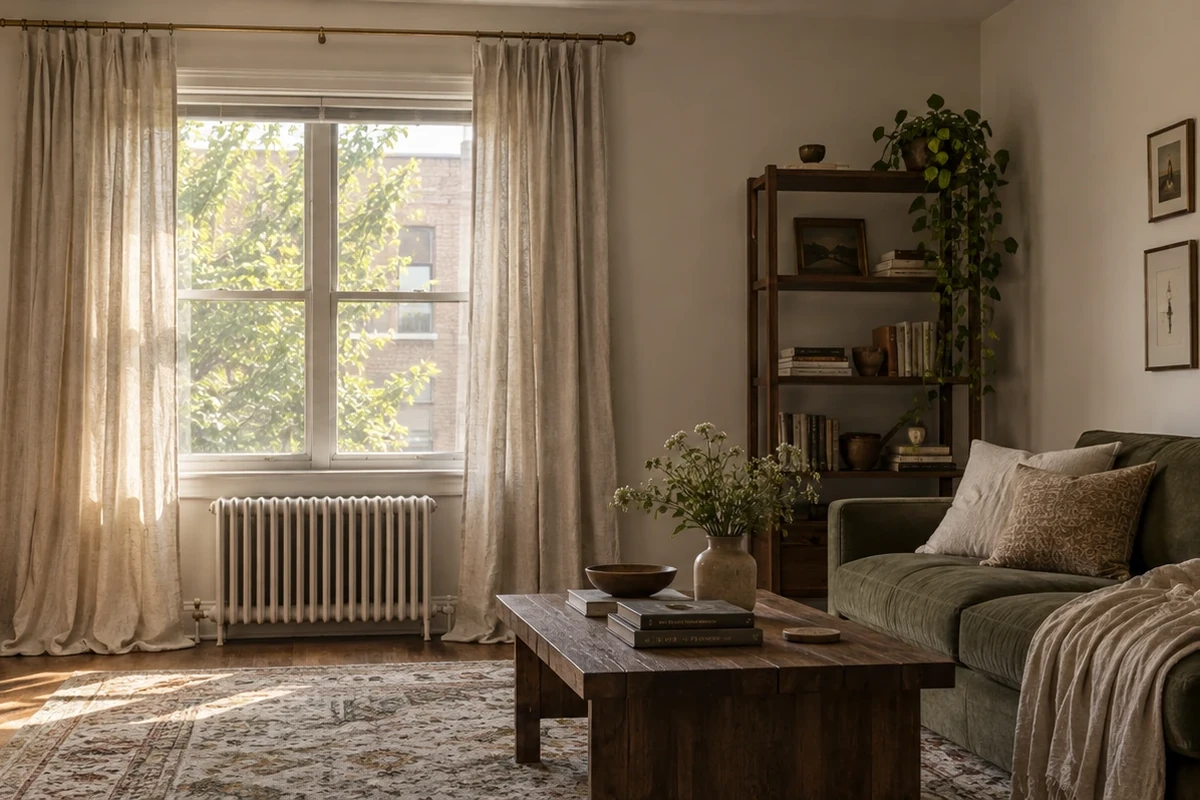
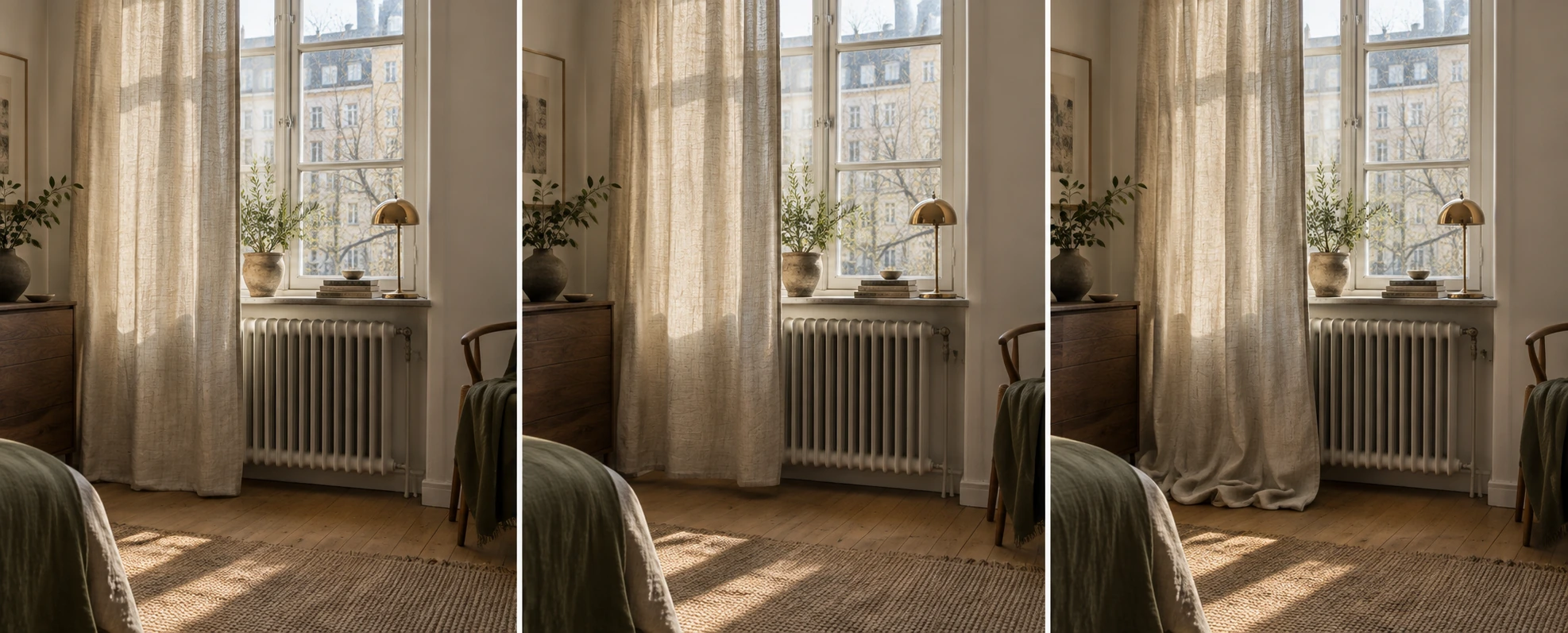
Length
Measure from the rod to the floor. Never from the frame.
Almost every short curtain started with somebody measuring the window. Measure from the rod instead: it is up near the ceiling, often a foot or more above the window, and the fabric has to cover all of that too.
So: put the rod up first, or hold it where it is going. Run the tape from the top of the rod straight down to the floor. That number, give or take an inch, is the panel length you buy. Anything that lands three inches short reads as a mistake from across the room, however good the fabric is.
The two inches nobody warns you about
How the panel attaches changes the length by more than you would expect, and it is the reason two people can buy the same curtains for the same window and get different results.
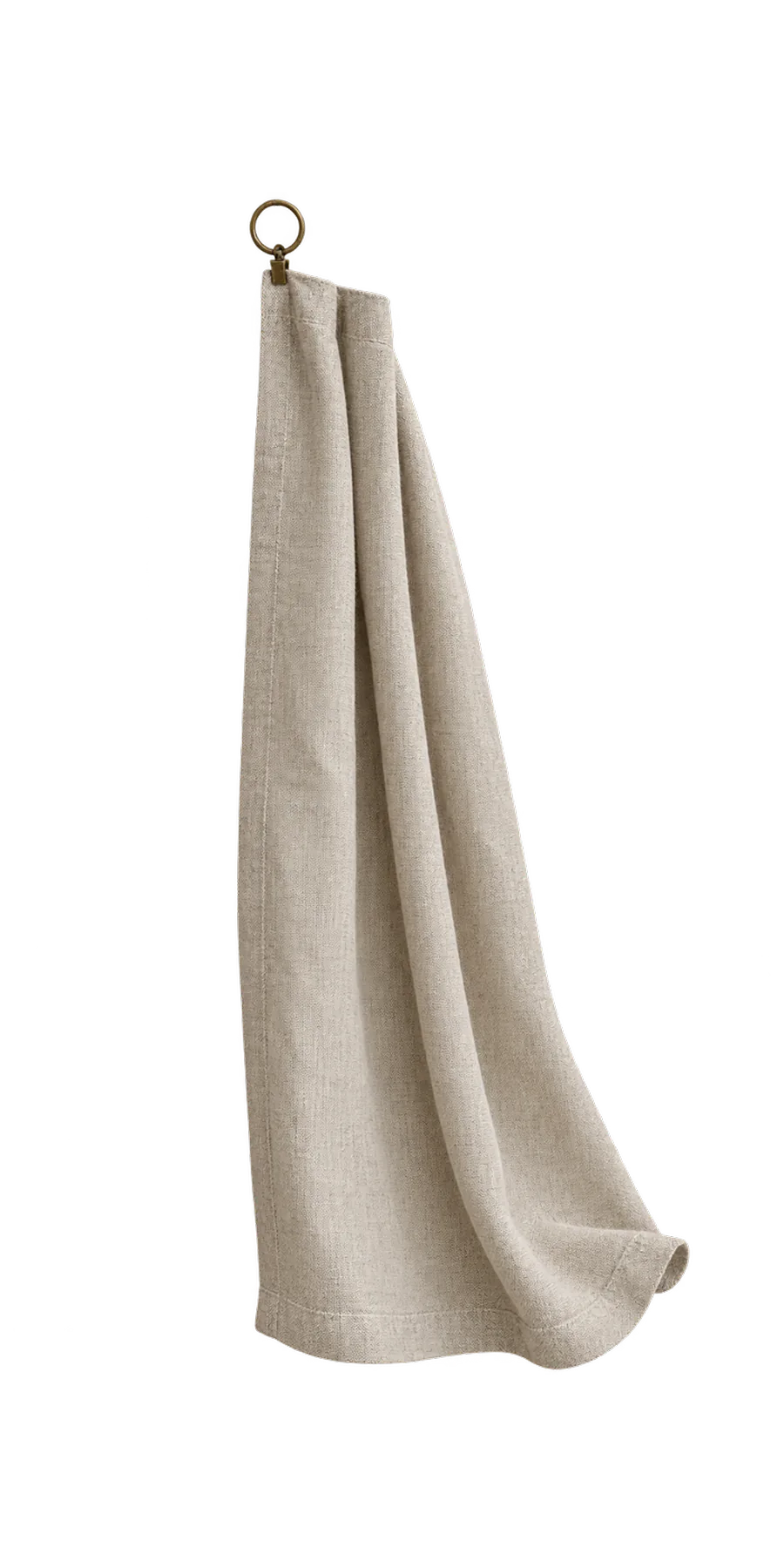
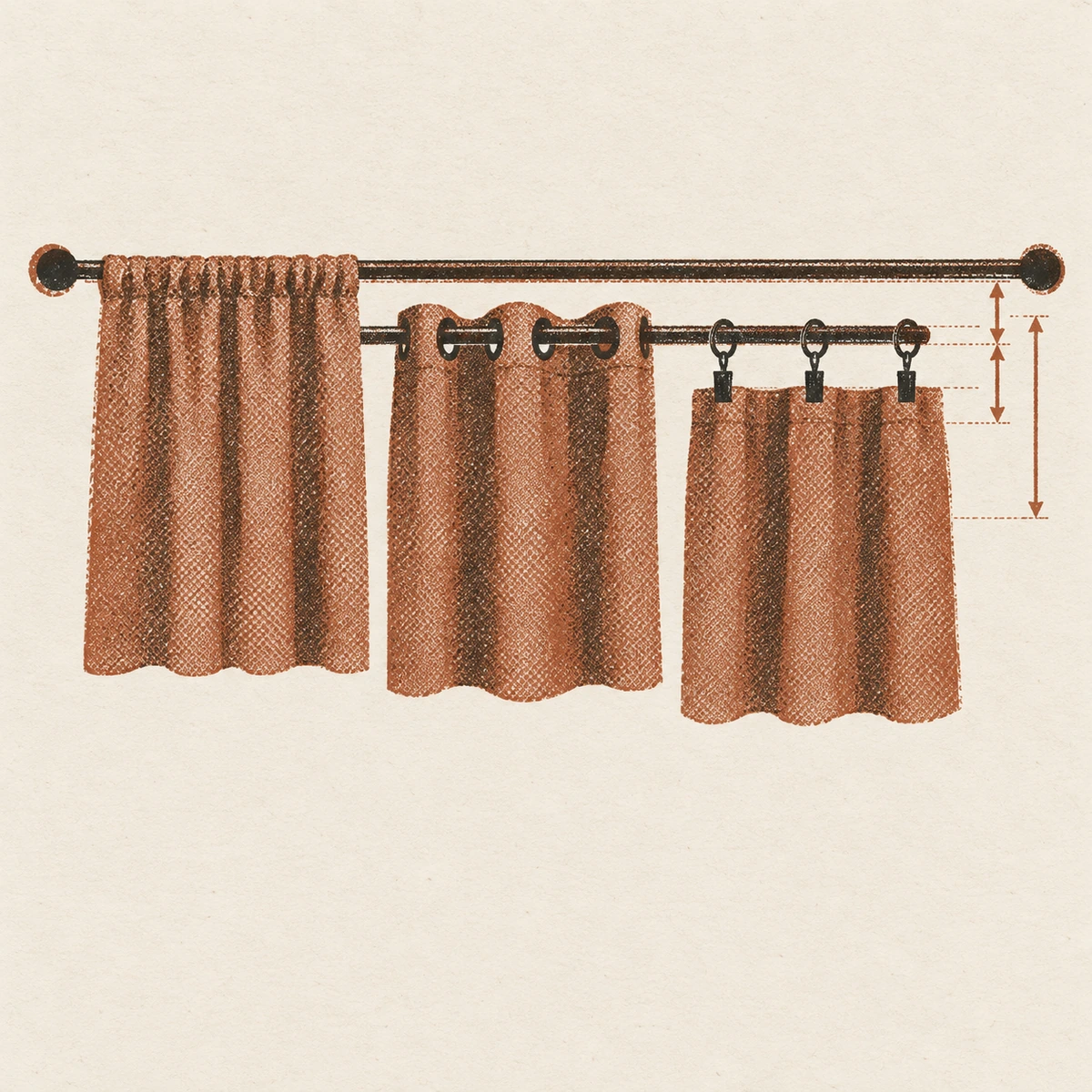
A rod pocket or a back tab sits the top of the fabric roughly level with the rod, so your rod height and your panel length match up directly. Clip rings hang the panel about an inch and a half lower, which sounds trivial until you realize it turns an 84 in panel that floated into an 84 in panel that clears the floor by half an inch. If your curtains are short by an inch or two, rings are the cheap fix and hemming is the expensive one.
Grommets sit somewhere in between, a little lower than a back tab and well above clip rings, and how much depends on the size of the ring. If a grommet panel lands between two stock lengths, take the longer one: an inch of fabric on the floor reads as a choice, an inch of air does not.
Which stock length, by what you are working with
Most panels come in three lengths: 84, 95 or 96, and 108 in. Take your rod to floor number (minus 1.5 in if you are on clip rings) and buy the stock length closest to it. Within an inch or two, the hem kisses the floor or breaks on it, and that is the goal.
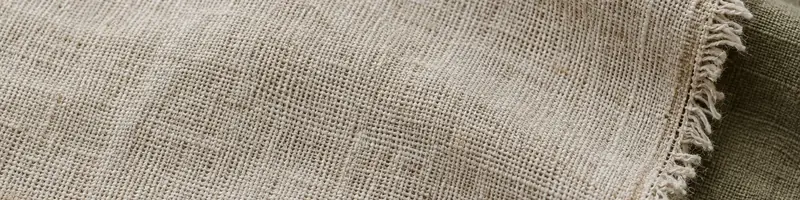
Solino Home pure linen panel, sage green
52 in wide × 96 in long, one panel, 100% European flax linen, unlined, 3 in rod pocket
If these are the curtains that follow you through the next few leases, this is real linen, not a linen look blend. It hangs heavier and straighter than the polyester mixes above and softens with every wash, and sage sits with the olive and terracotta the rest of this site keeps coming back to. The catch: it is sold as one panel, so you need two (three past a 48 in window), it is unlined, so it filters light instead of blocking it, and linen wrinkles. If the room has to go dark, keep the landlord’s blind behind it.
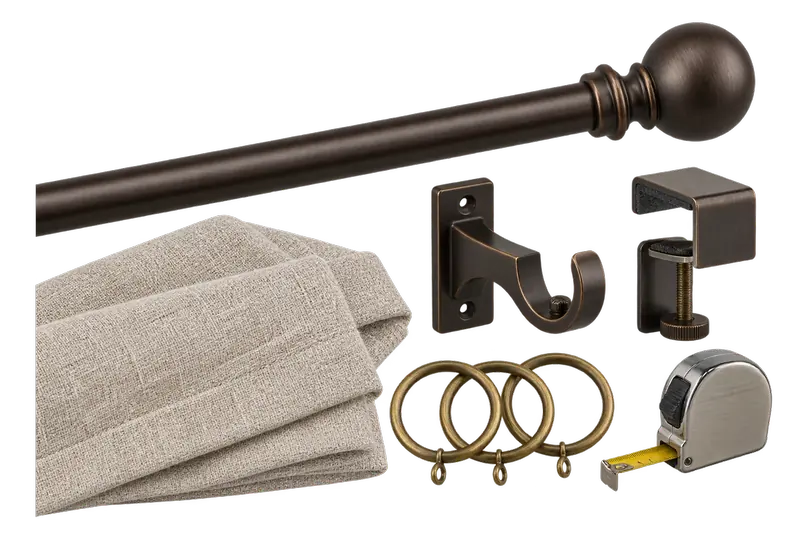
Umbra Cappa heavy duty rod, nickel
36 to 72 in, 1.25 in thick, stainless steel, rated to 22 lb
The rod is the piece you look at every day and never replace if it is right. This one is a thicker steel tube than the 1 in rods on this page, rated by its listing for 22 lb, so a lined pair hangs from it without a dip in the middle. The catch: it stops at 72 in, which with the brackets out past the frame is a window up to about 56 in wide. And a rod this thick needs a 3 in rod pocket, back tabs or bigger rings: the clip rings in the width table are too tight for it.

The standard 8 ft rental window
One window, one cart
An 8 ft ceiling and a window up to about 48 in wide, which is most bedrooms and living rooms. The rod goes 1 to 2 in under the ceiling and the 96 in pair kisses the floor.
Wider than 48 in? Add a second pair of panels once you are in the cart, or see the width table. Amazon shows you the cart first; nothing is bought until you check out there. As an Amazon Associate I earn from qualifying purchases.
Two layers
A lace behind and a heavy panel in front, on one double rod
One curtain makes you choose between light and privacy every single day. Two layers end the argument: the lace sits against the glass and stays closed, so you get daylight without the street, and the heavy panel sits out on the wall and only moves at night. In the trade the back layer is the sheer and the front one is the overdrape. Everywhere else the whole thing is filed under layered curtains.
The height and width rules above do not change. The double rod still goes up near the ceiling and 4 to 10 in past the frame on each side. Four things do change, and they are the four nobody mentions.
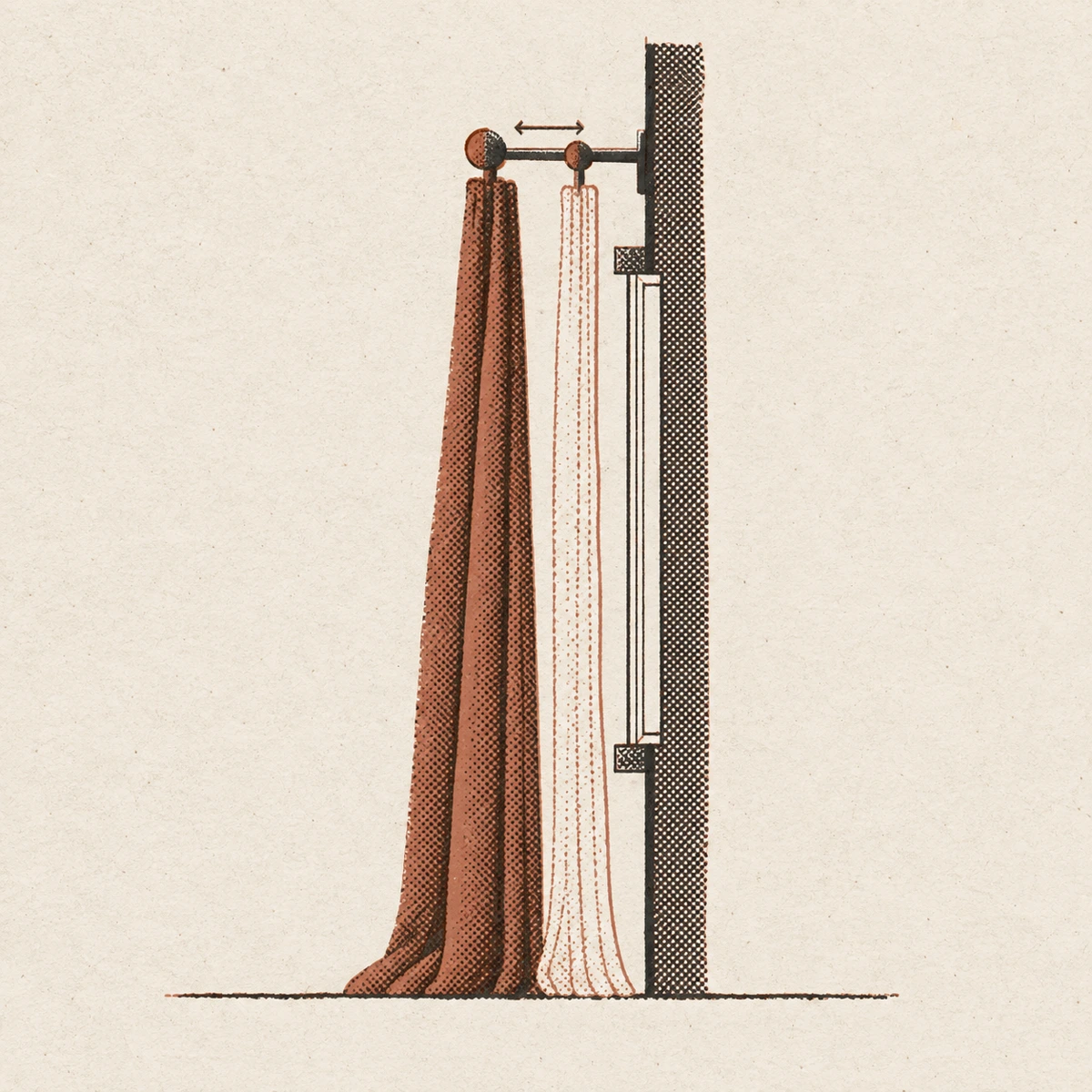
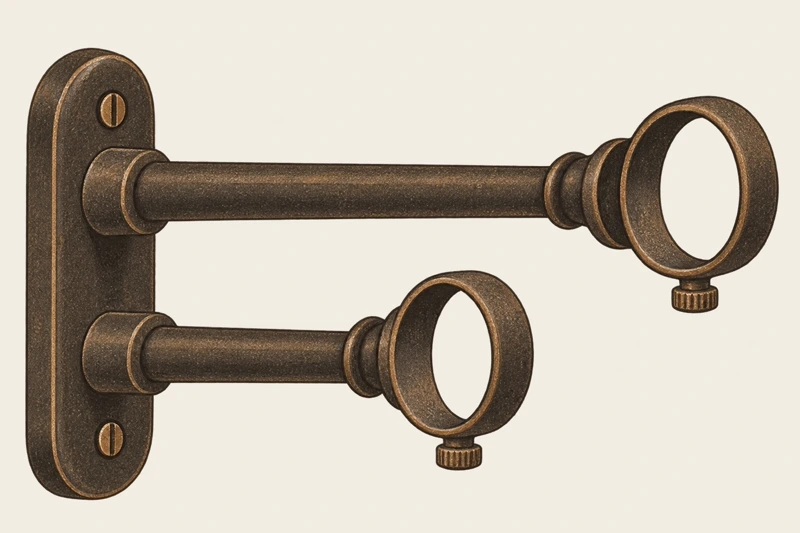
- 01The back rod is shorter than the front one. If they match, the lace pokes out past the heavy panel at both ends and the whole thing reads as a mistake.
- 02The lace is the same length or 1 in shorter. Longer and it shows below the hem of the panel in front, which is the one flaw you cannot unsee once you have seen it.
- 03Lace behind, heavy in front. The back layer stays shut all day, so a rod pocket is fine back there. The front one is what you drag every night, so it wants grommets or back tabs.
- 04Four panels instead of two. The bracket carries double, which quietly rules out the adhesive options in the next section. A double rod wants screws.
The back layer
This one is a knitted Victorian lace, far from flat tulle, with flowers, birds and a ruffle at the hem, and it has a pattern of its own that you will see against the light. That is the point of it: at midday the window is the lace, and the velvet is just two columns at the sides.
It comes in ten colors, and nearly all of them run to 96 in and 108 in. That matters more than it sounds. The back layer has to match the panel in front of it, so with most lace curtains the length you worked out upstairs ends up choosing your color for you. With this one it does not.
Ten colors. Lengths run 43, 84, 90, 95, 96 and 102 in, and every color holds 84 and 96.
All ten colors, every lengthOne listing. Pick the color and the length you worked out above in its two dropdowns.
If you want the back layer graphic instead of floral
Same job, completely different face: an open crochet weave in triangles and stripes with a tassel hem, closer to a blanket than to a net. Thirteen colors, and the catch is the one above in reverse. Only the beige runs the full range of lengths; in color most shades stop at 84 in, with teal reaching 96 and burnt orange 102. Check your number before you fall for a shade of it.
- Beige
- Brown
- Burgundy
- Burnt Orange
- Dark Olive Green
- Grass Green
- Lavendar Purple
- Light Slate Blue
- Navy Blue
- Off White
- Taupe
- Teal
- Yellow
All thirteen colors, every lengthOne listing. Pick the color and the length you worked out above in its two dropdowns.
The front layer
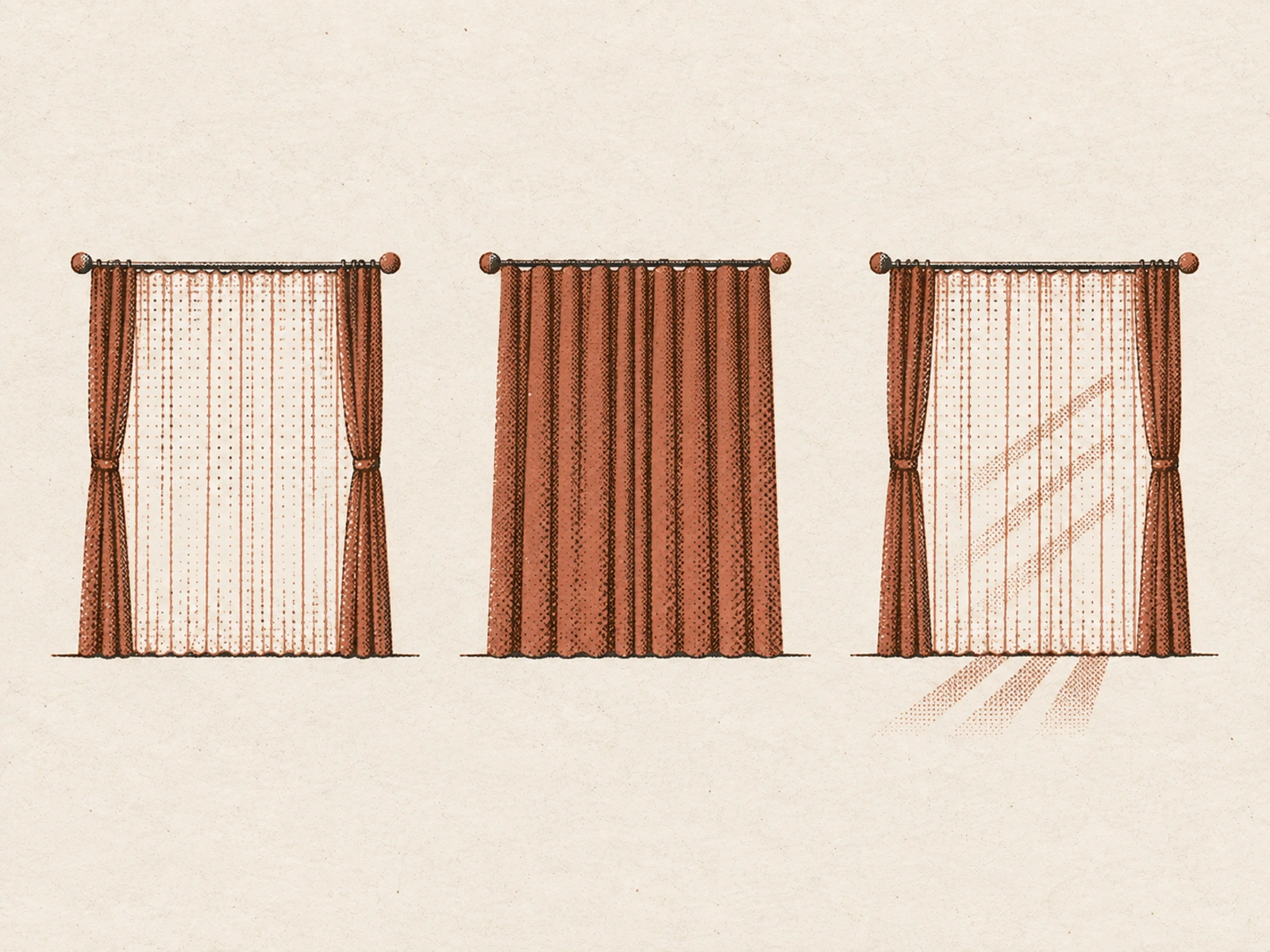
The velvet in front comes in forty two colors and nineteen lengths, and that is the only reason it is on this page: it is the one panel here that can match the rod height you calculated instead of making you round up to the nearest 84. Two things to know before you order. It is sold as blackout and its own listing says it blocks 70 to 80 percent, with the opacity field reading room darkening, so treat it as a dark room and not as a dark room at six in the morning in June. And it hangs from grommets, which sit somewhere between a back tab and clip rings, the same drop the three headers drawing above is about. So if your rod to floor number lands between two of its lengths, take the longer one.
- Beige
- Beige/Champagne
- Black
- Blush Beige
- Blush Pink
- Brown
- Burgundy
- Burnt Orange
- Camel Beige
- Charcoal Grey
- Chocolate
- Dark Green
- Dark Slate
- Dusty Rose
- Emerald Green
- Gold
- Gold Brown
- Golden
- Golden Brown
- Grey
- Greyish White
- Ivory
- Lavender
- Light Olive
- Light Pink
- Light Taupe
- Misty Blue
- Moss Green
- Mustard Yellow
- Navy Blue
- Olive
- Olive Green
- Orange
- Peacock Blue
- Pure White
- Purple Orchid
- Red
- Royal Blue
- Ruby Red
- Sage Green
- Taupe
- Teal
Forty two colors. Lengths run 63, 72, 80, 84, 90, 92, 94, 96, 100, 102, 105, 108, 120 and 132 in at 52 in wide, plus 66 and 72 in wide at 84 and 96.
All forty two colors, all nineteen lengthsOne listing. Pick the color and the length you worked out above in its two dropdowns.
Every link in this section lands on that exact color at 96 in. Once you are there, the two dropdowns hold the whole range above, so you can change color and length without coming back.
Six pairs, and why each one works
The rooms below were made for this page to show how each pair of colors behaves with light behind it. They are not photographs of these two products. The lace pattern and the exact shade you receive will be different, and the two links on each card are where you check that.
-
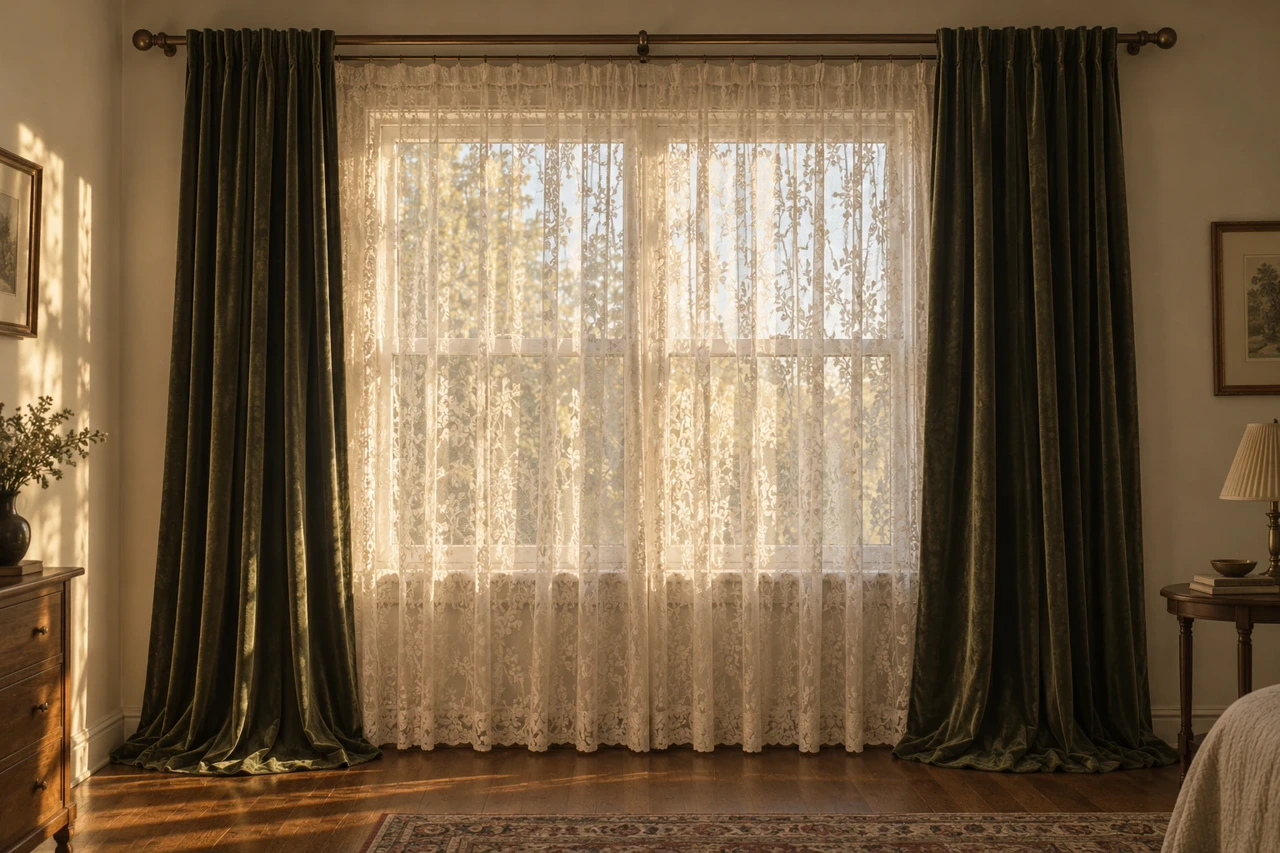
Made for this page. Not a photograph of these two products. Cream behind, Olive Green in front
Olive behaves like a neutral once the sun is off it, which is why this site keeps coming back to it. By day you see cream lace and the wall behind it. By night the window goes dark green and the room closes in on purpose.
The cream laceThe olive green velvet -
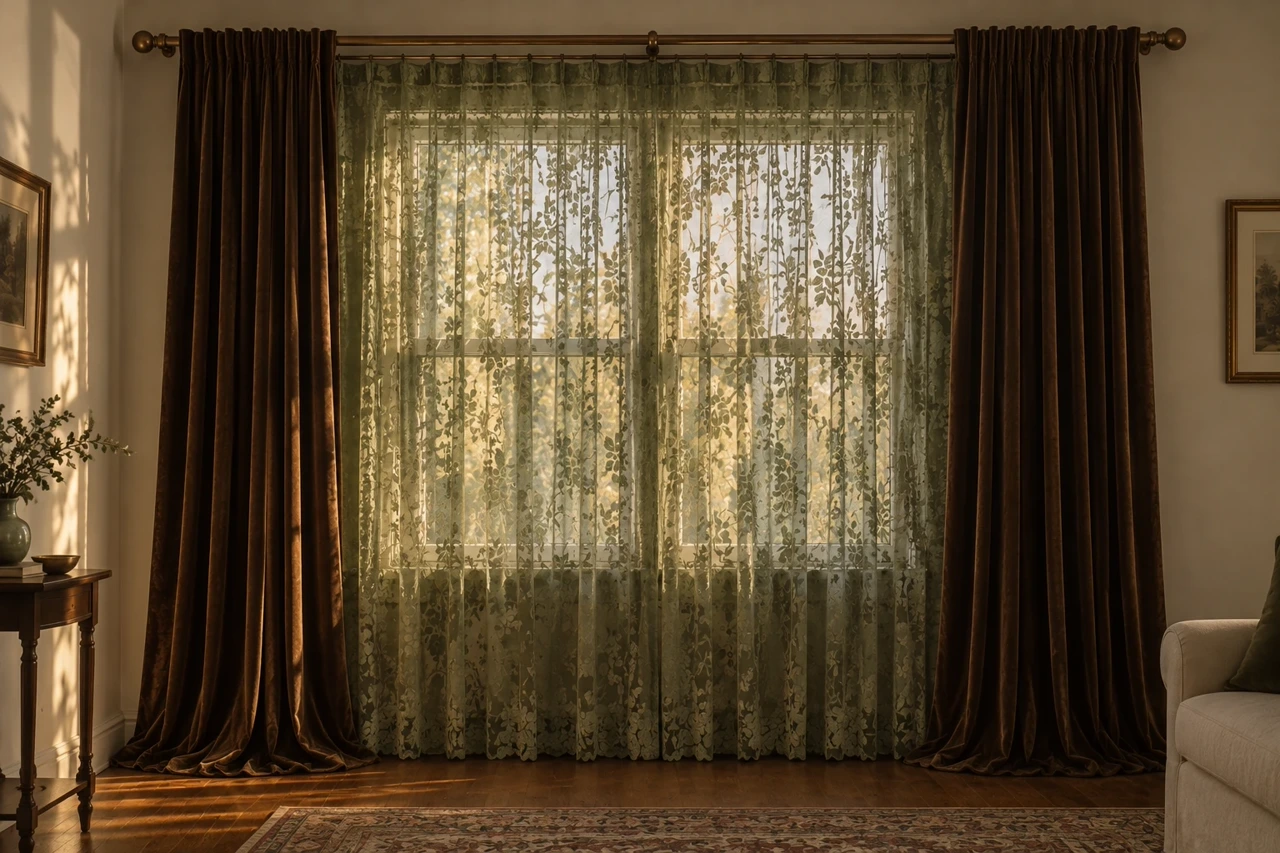
Made for this page. Not a photograph of these two products. Sage Green behind, Chocolate in front
Brown velvet is the warmest thing you can do to a rental window without painting anything, and it is also the one that goes gloomy fastest. A sage lace against the glass keeps green daylight coming through all afternoon, so the brown only arrives when you close it.
The sage green laceThe chocolate velvet -
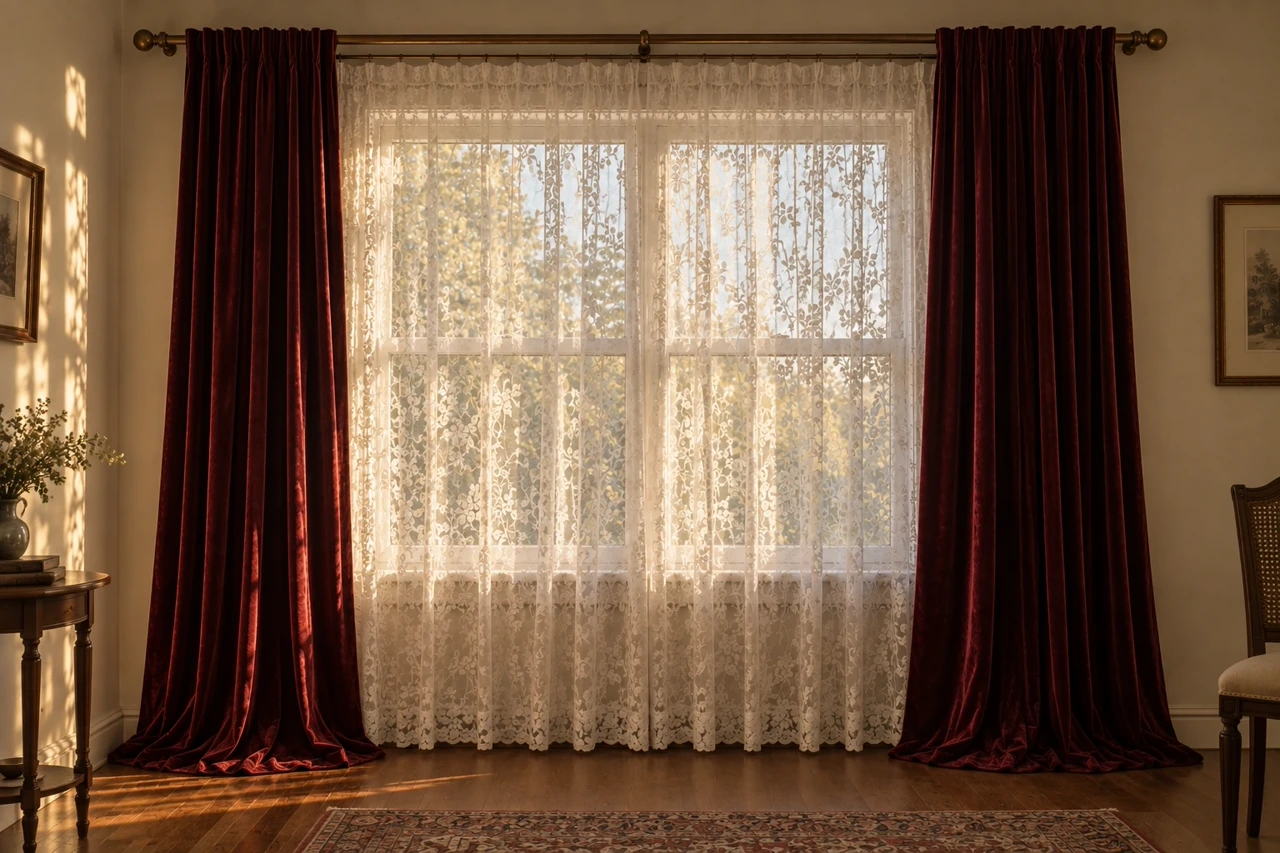
Made for this page. Not a photograph of these two products. White behind, Burgundy in front
The only high contrast pair here, and the most traditional. Wine against white is what a hotel does when it wants a room to feel formal. Put it where there is already wood, and not where there is already a pattern.
The white laceThe burgundy velvet -
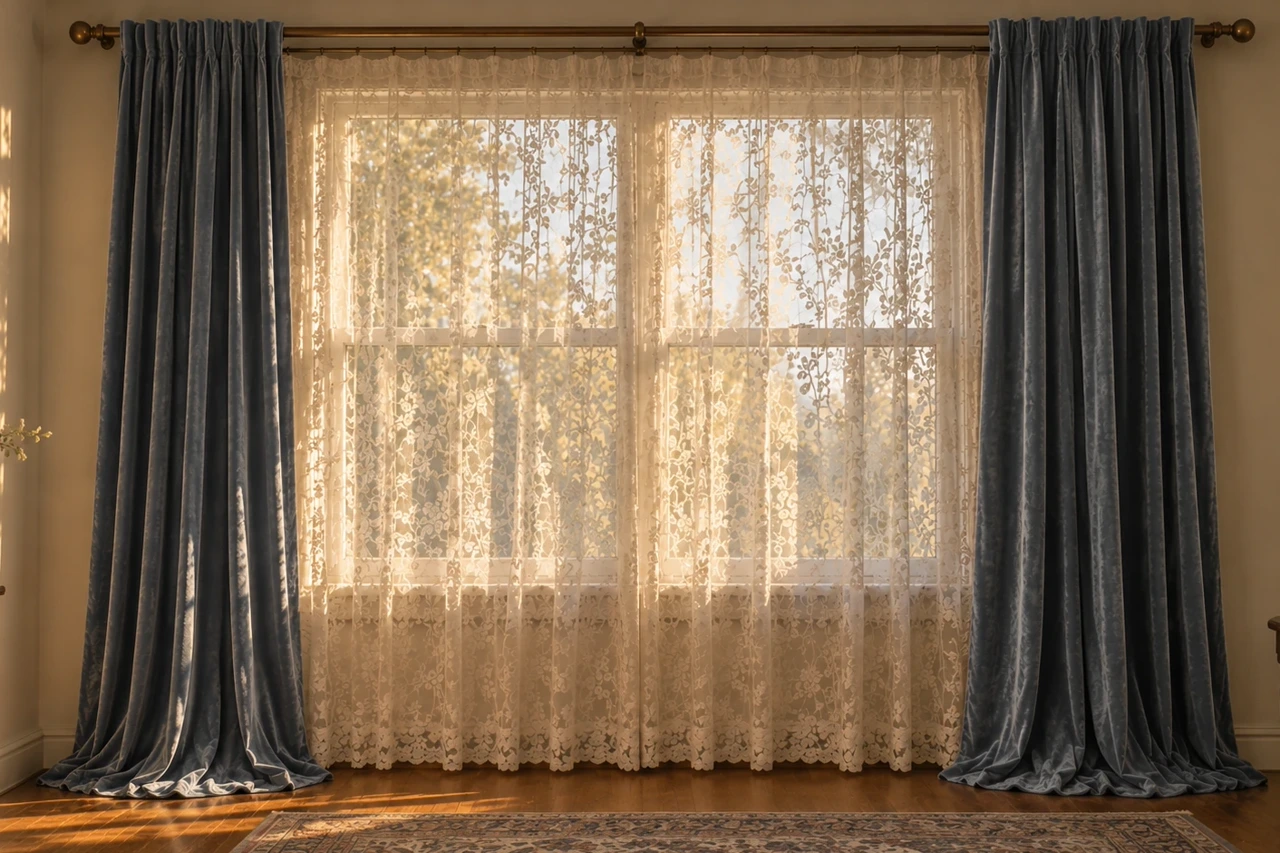
Made for this page. Not a photograph of these two products. Beige behind, Misty Blue in front
Blue goes cold fast in a room that faces north. A warm beige lace behind it is the cheapest correction there is, because the daylight comes through the warm layer first and the blue never gets to be the only thing in the window.
The beige laceThe misty blue velvet -
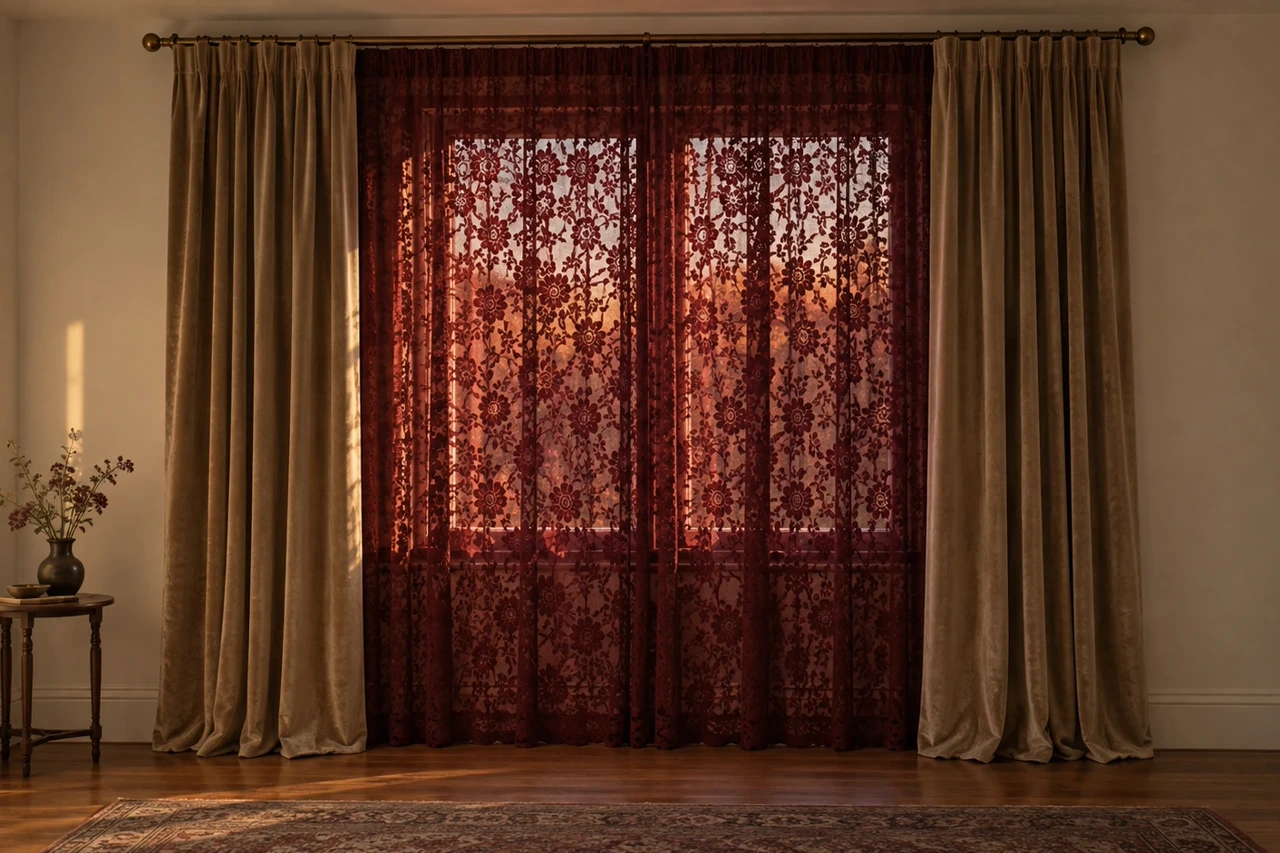
Made for this page. Not a photograph of these two products. Burgundy behind, Camel Beige in front
This one is backwards on purpose: the color lives behind and the front panel is the neutral. Wine lace lit from behind all day, quiet camel once it is closed. For a room where you want one strong thing that stops shouting at night.
The burgundy laceThe camel beige velvet -
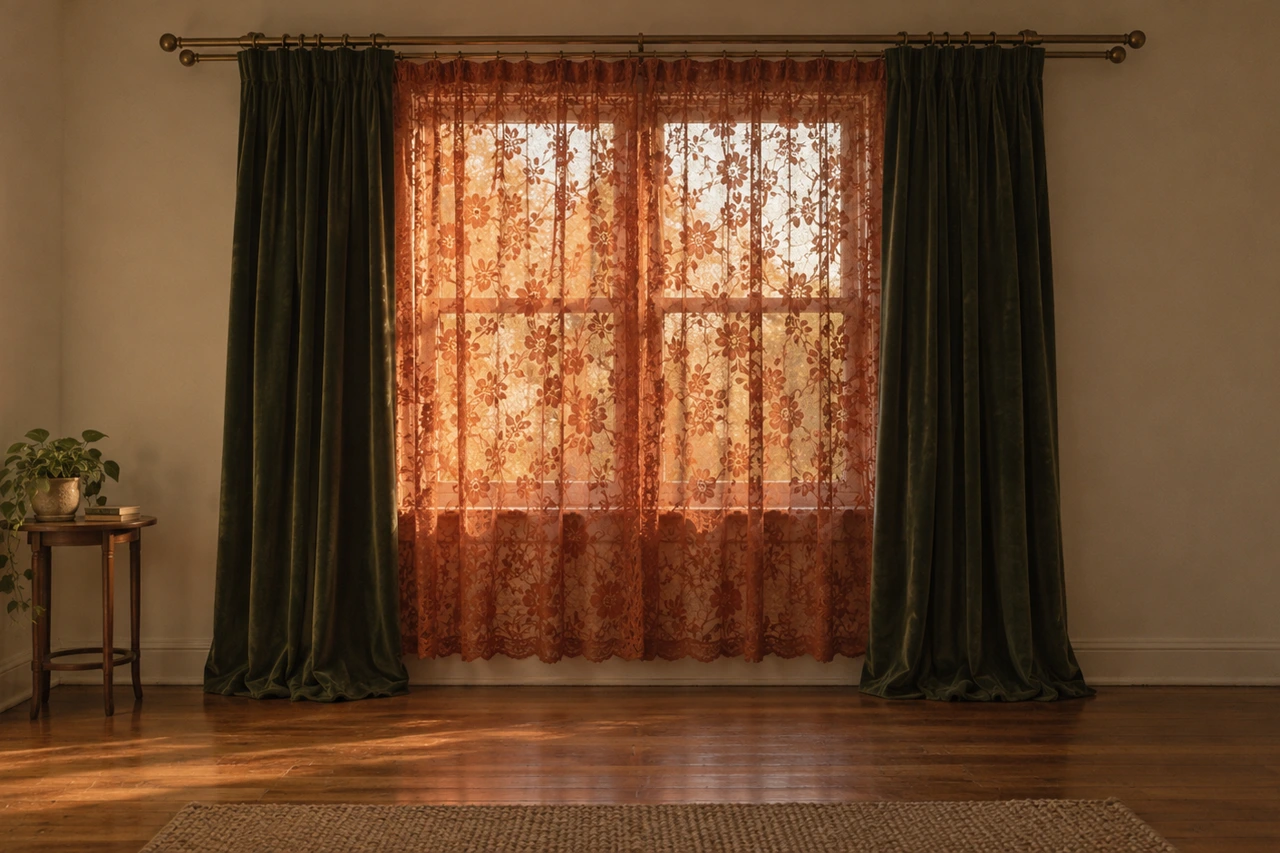
Made for this page. Not a photograph of these two products. Burnt Orange behind, Dark Green in front
The two loudest colors on the list, and the only pair I would talk you out of unless the room already owns one of them. Orange lace with the sun behind it is beautiful, and it is a lot.
The burnt orange laceThe dark green velvet
The squares on every card and in the palettes above are drawn here, not photographs. Their color was measured off each listing’s own swatch, which gets you close and no closer: both listings warn that color shifts with the light in your room and with the screen you are reading this on. Order one pair before you order four.
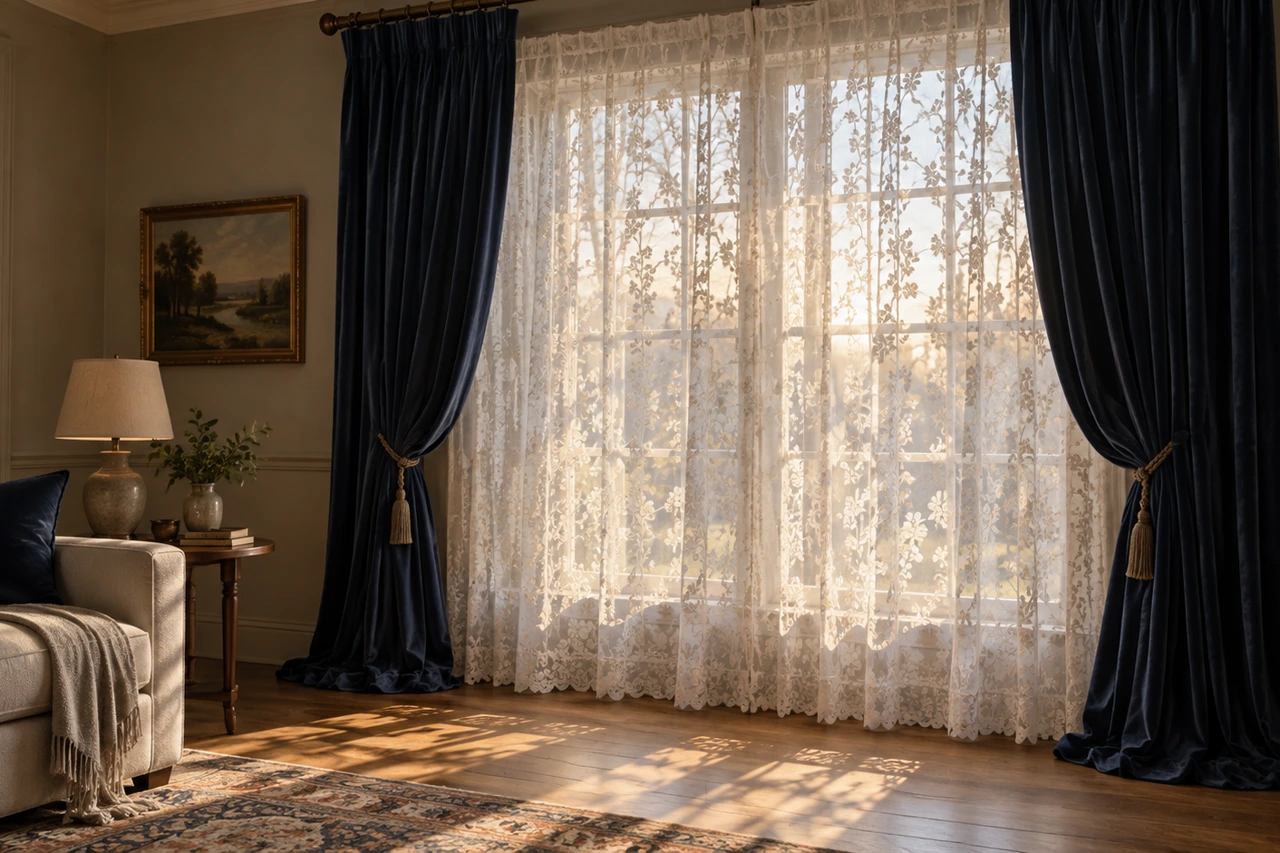
Pattern
If the curtain is going to be the pattern in the room
Everything above is about where the rod goes and how long the panel is, and none of that changes when the fabric has a print on it. But two things do, and they are the reason patterned curtains get returned.
You only see the pattern when the curtain is shut. Open, a panel is a column about 6 to 10 in wide with the print folded into itself, so for most of the day a bold print reads as one block of color at each side of the window. If you want the pattern on show in daylight, you want it on a panel you leave closed, which means a light filtering one, not a blackout one.
And a pattern gathers. Panels hang at two to two and a half times the rod width, so a large medallion on a 50 in panel shows you maybe one and a half motifs across. Big prints want a wide window or a rod you leave covered; small repeats survive the folds.
That is why the opacity is printed on every card below, in the words its own listing uses. It runs from 100 percent blackout to semi sheer across these ten, and that single line decides whether you will ever see the print you paid for.
See the ten patterns, and what each listing declares
-

SUBRTEX, brown leaf floral
50 percent blackout, semi sheerGrommet top63, 72, 84, 95, 108 in
See it on Amazon -

Burnt orange abstract, rust
50 percent blackout, room darkeningGrommet top36, 63, 72, 84, 96, 108 in
See it on Amazon -
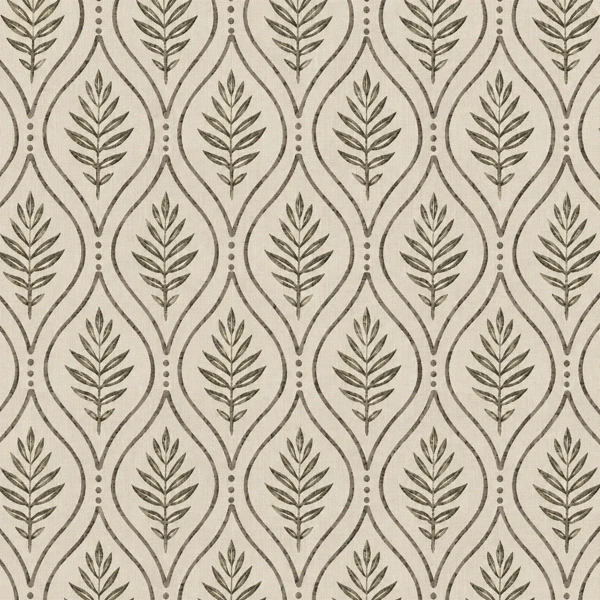
BGment, leaf jacquard botanical
Light filtering, semi sheerGrommet top63, 72, 84, 90, 96 in
See it on Amazon -
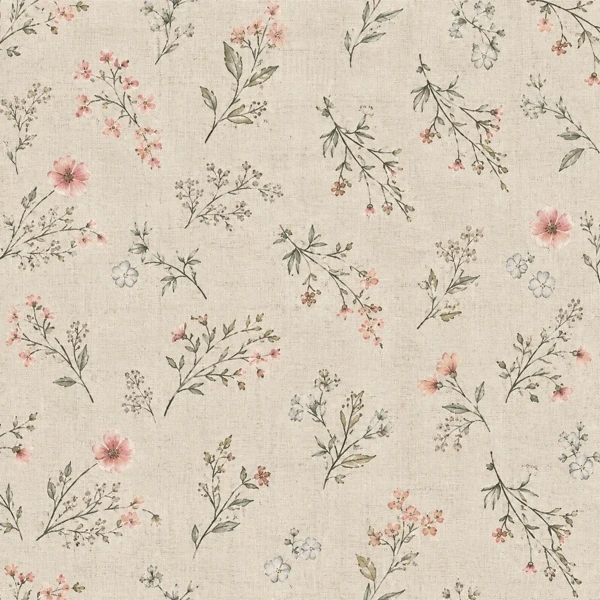
XOGUIBO, boho floral with tassels
100 percent blackoutRod pocket top18, 24, 36, 63, 72, 84, 90, 96, 108 in
See it on Amazon -
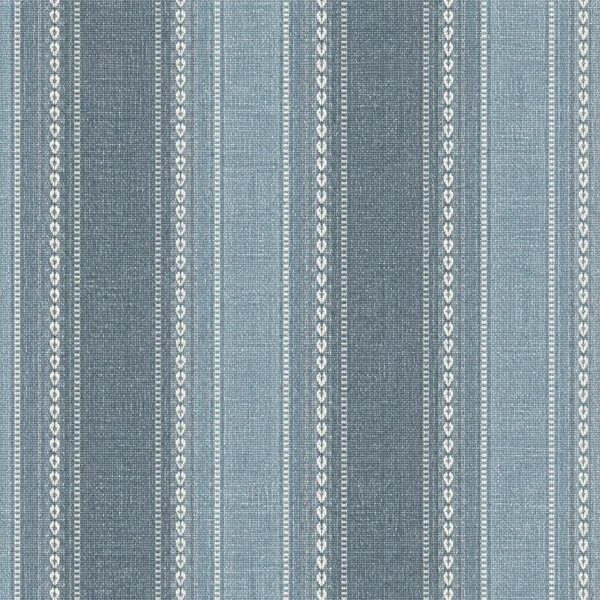
Sutuo, denim blue boho, single panel
Light filteringRod pocket top18, 36, 63, 72, 80, 84, 90, 96, 102, 108, 120 in
See it on Amazon -
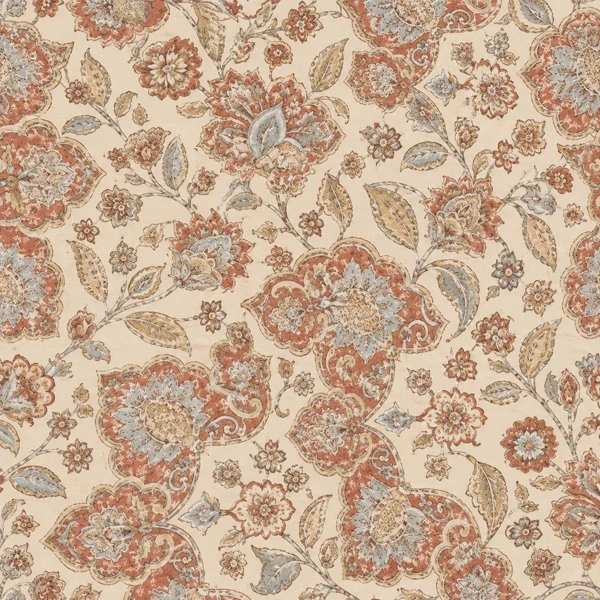
Central Park, vintage medallion, gold and red
Light filtering, semi sheerGrommet top58, 63, 72, 84, 90, 95, 102, 108 in
See it on Amazon -
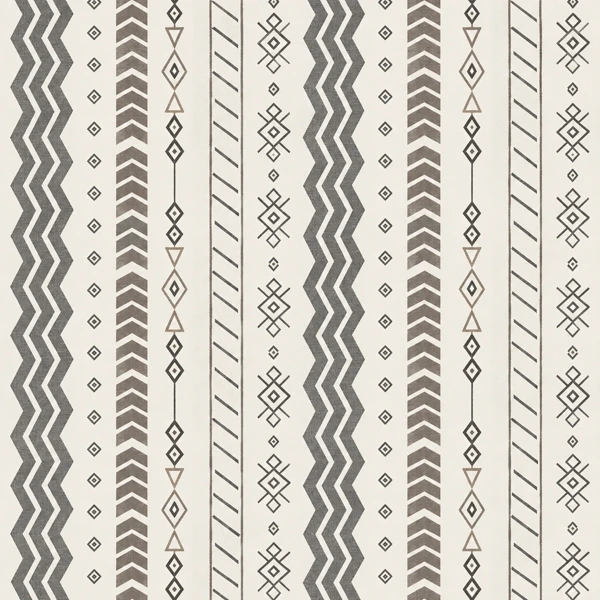
ColorBird, western Aztec with tassels
Semi blackout, light filteringRod pocket top18, 63, 84, 90, 95, 108 in
See it on Amazon -

jinchan, vintage floral linen
Light filtering, semi sheerRod pocket top45, 54, 63, 72, 84, 90, 96, 102, 108, 120 in
See it on Amazon -

GIGIZAZA, embossed velvet, 300 gsm
Light blockingBack tab top63, 72, 84, 90, 96, 108, 120 in
See it on Amazon -

Amidoudou, 3D embroidered, with valance
Double layerRod pocket top43, 84, 90, 95, 96, 102 in
See it on Amazon
Each square is the pattern itself, drawn for this page, not a photograph of the curtain hanging up. Under it is what the listing declares, the header it hangs from, and the lengths it comes in. Check that last one against the number you worked out above before anything else.
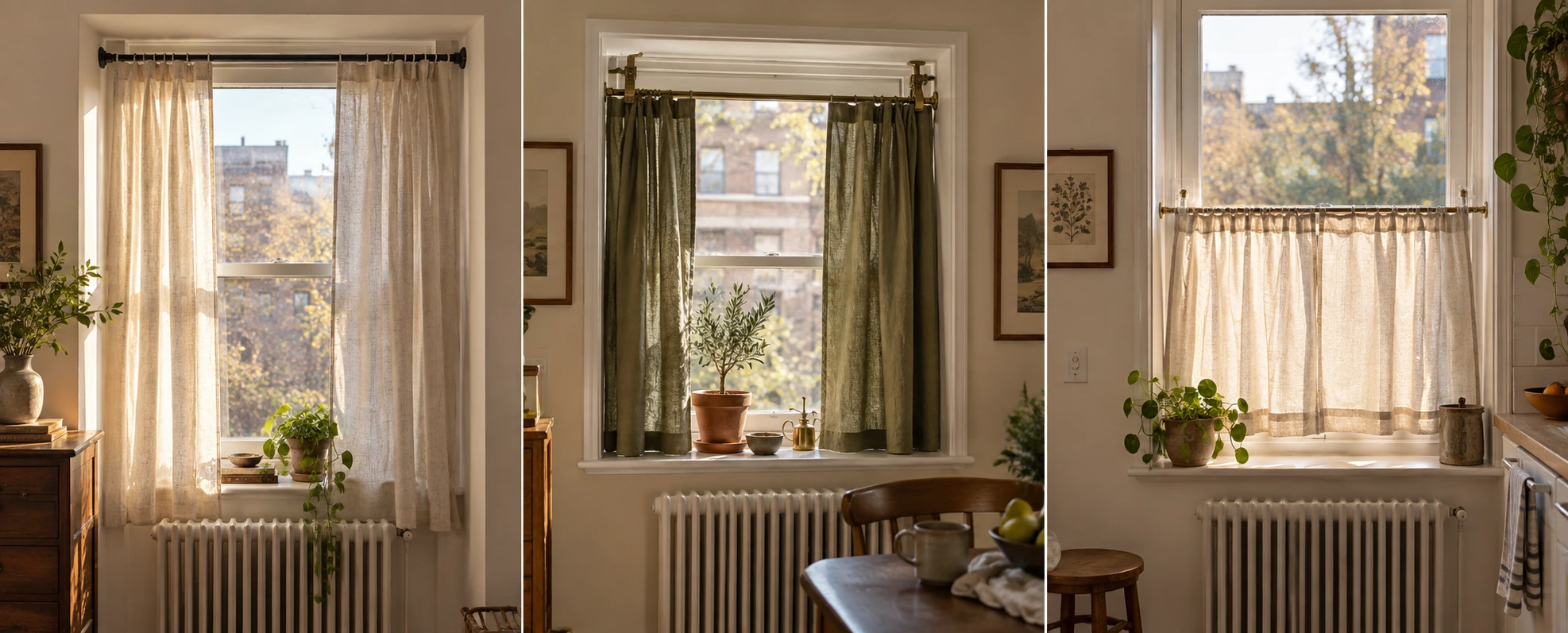
No drill
Four ways to hang curtains without a drill, and what each one holds
Every tutorial on this starts with a drill and a stud finder, which is useless if your lease says no holes or your walls are plaster that comes off in chunks. So here are the four that work, ranked by how much weight they take, with the way each one fails. A curtain rod that comes down at two in the morning is an upsetting way to learn about load ratings.
Weigh what you are hanging first. A pair of lined blackout panels plus a metal rod runs somewhere between 8 and 15 pounds, and most of the no drill options on this page are not built for the top of that range.
-
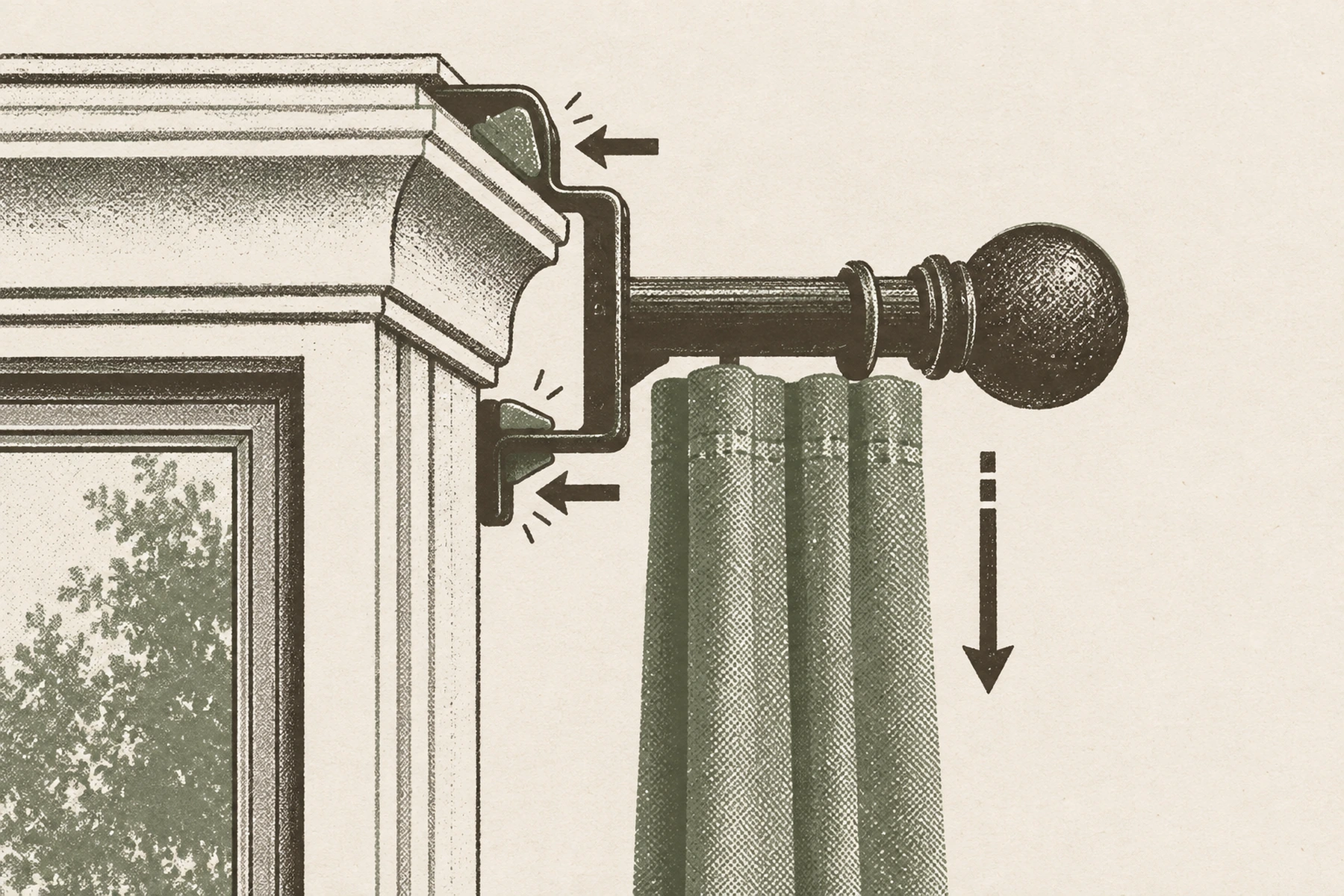
Brackets that clip into the window molding
The only no drill option that keeps the height, which is why it is first. The bracket has hardened pins that press into the wooden molding around the window, and it carries a normal rod above the frame. You get the lift, the brackets sit outside the frame, and the pin holes are the size of a pushpin mark.
See the 1 in no drill bracketsHoldsA standard 1 in rod and a pair of lined panels, hung high and wide like the rest of this page says.Does not holdAnything if your window has no wooden molding. Drywall wrapped openings and metal frames give the pins nothing to bite.
-
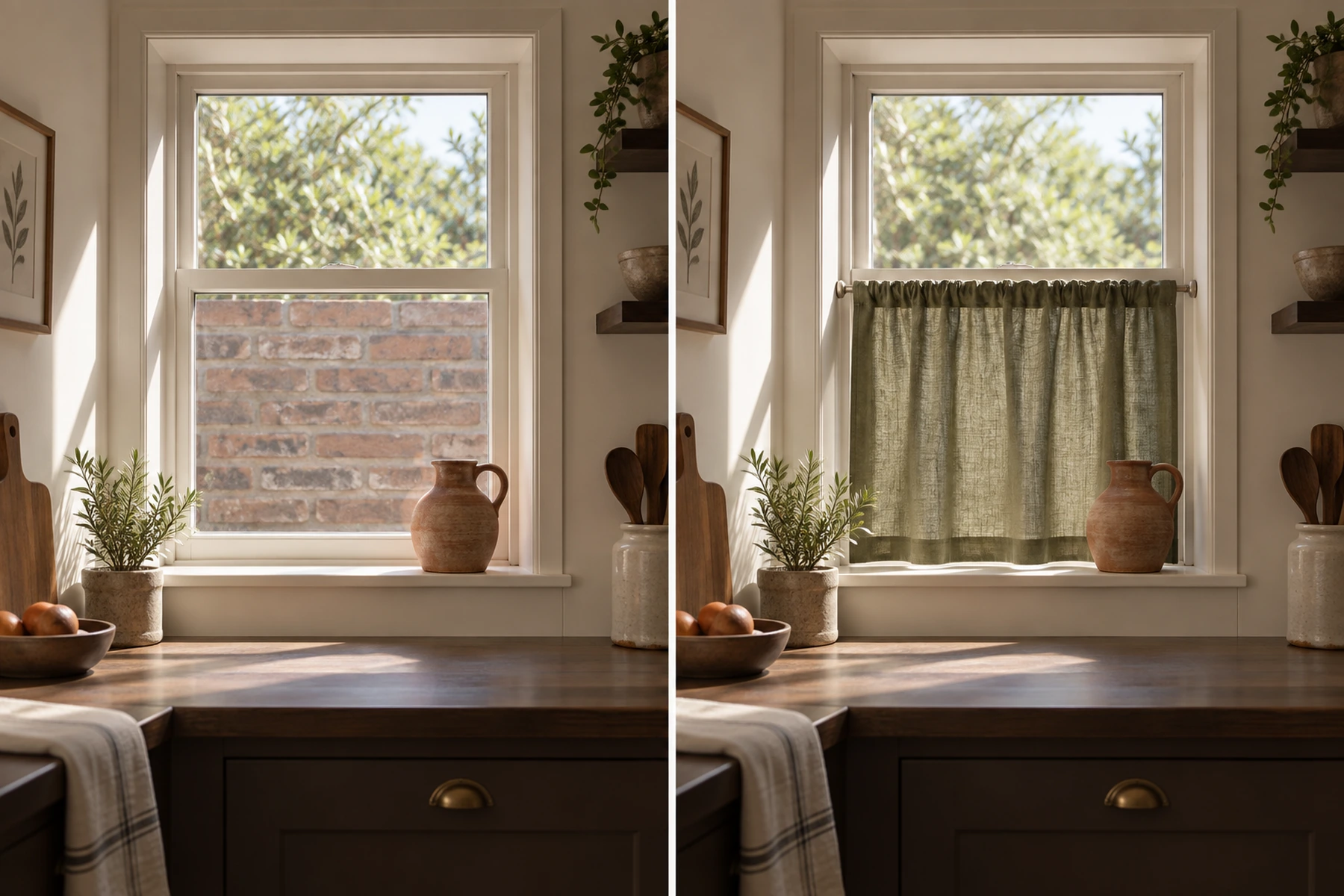
A tension rod inside the opening
A spring pushes outward against both sides of the window recess. It is the fastest thing on this list and it leaves nothing behind at all. It also puts the rod below the top of the frame, so you give up every inch of height the rest of this guide just spent talking you into. I would use it on a kitchen window and not in a bedroom.
See the 36 to 54 in See the 54 to 90 inHoldsSheers, light cotton, a cafe panel. Weight it carries comes from friction, so keep it under a few pounds.Does not holdLined blackout, thick linen, or anything you drag open every morning. It slips, then it drops, usually at night.
-
A rod with adhesive brackets
The middle ground: a real rod, but the brackets stick to a smooth surface instead of screwing into it. It will go on tile, on a painted door, on the glass of a French door, and on a wall that is smooth all over, which most rental walls are not. Clean the spot with alcohol first and let the adhesive cure overnight before you hang anything on it.
See the 28 to 47 in adhesive rodHoldsOne light panel over a narrow window or a door, on a surface you wiped down first.Does not holdTextured or freshly painted walls. Adhesive needs something flat and fully cured to grip, and new paint is neither.

She has never once needed a bracket to stay up there.
-
Adhesive hooks, chosen by the weight on the package
A pair of utility hooks on the wall, rod resting in them. This is the one people improvise and the one that fails most, because the hook is rated for a static picture and a curtain is not static: every pull adds a yank the rating never covered. So halve the number on the box and then decide.
See the 5 lb hooks See the 7.5 lb jumboHoldsA thin rod and a sheer, if you use two hooks a side and stay well under the printed rating.Does not holdBlackout panels. And nothing at all on wallpaper, which peels off with the hook still attached to it.
The over the door rod is not a window product
It comes up in every no drill list and it hangs from the top edge of a door, so it can only ever be as high as a door and only ever where a door is. For a closet opening with no door, or a doorway you want to curtain off in a studio, it is excellent. On a window it is the wrong shape. I would rather tell you that than watch you order one for a window it cannot reach.
The awkward window
Three windows that break the rules, and what I would do to each
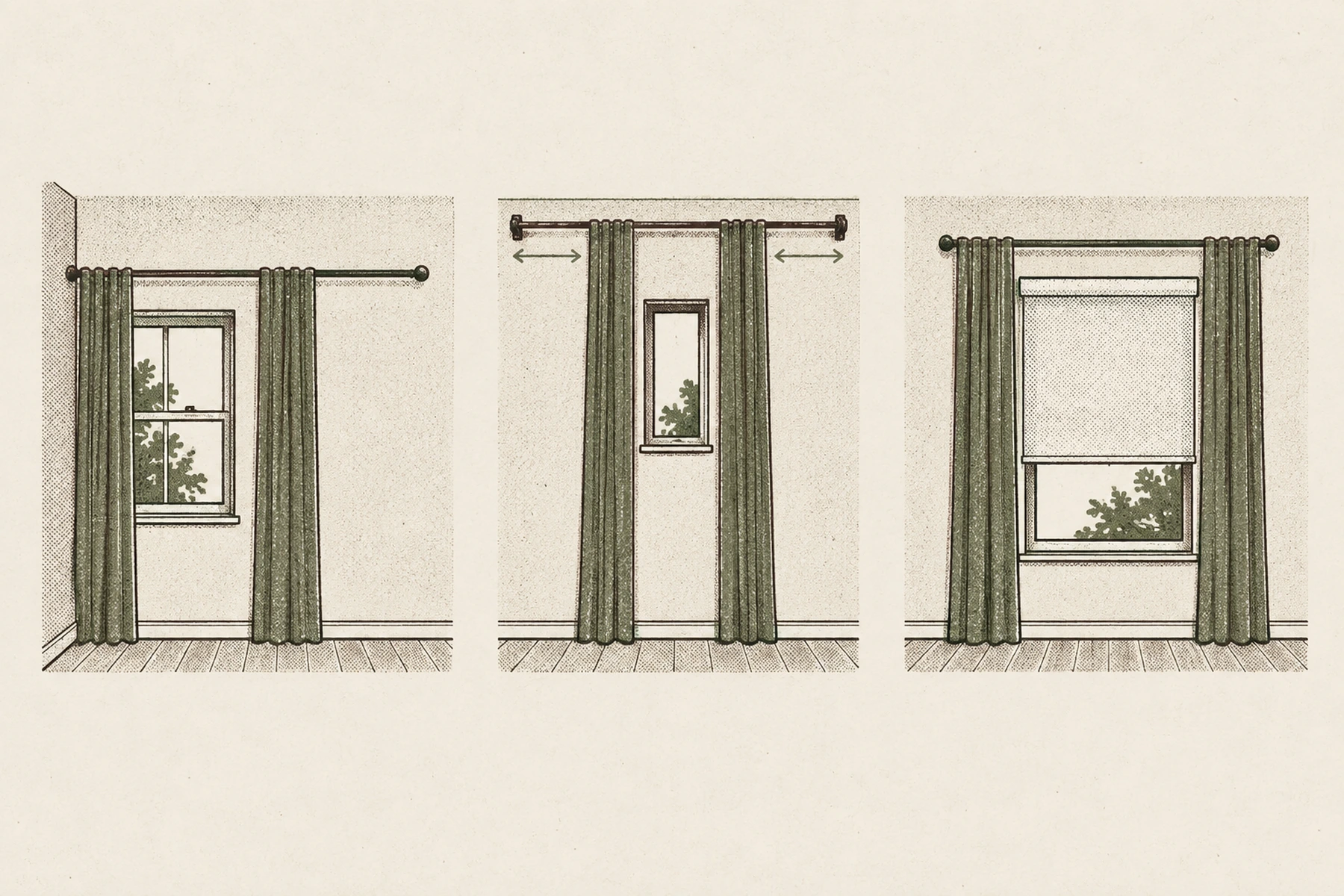
Everything above assumes a window sitting politely in the middle of a wall. Rentals do not work like that. Here are the three that come up most, and the fix in each case is the same idea: once the panels are up, nobody can see where the frame is, so stop measuring to the frame.
-
Off center
Center the rod on the wall, not on the window
The window sits closer to one corner than the other and the whole wall looks tilted. Run the rod so it is centered on the wall, which means the bracket extension is longer on one side than on the other. Three inches past the frame here, eleven inches there. It is the only asymmetry in this guide that I would do on purpose, and it is invisible: the panels cover the evidence and the eye gets a centered line instead of a lopsided one.
-
Too small
Buy the rod for the window you wish you had
A 24 in window with brackets 10 in past each side reads as a 44 in window, and a rod near the ceiling stretches it upward at the same time. Do both at once and a small window stops announcing itself. The one warning: your panels still have to add up to twice the rod, not twice the glass, so a tiny window with a generous rod needs more fabric than the size of the glass suggests.
-
The landlord’s blind
Frame it, do not fight it
That white roller blind is staying, because taking it down means unscrewing brackets you have to put back in August. So hang the rod above and outside it, keep the blind rolled up inside the recess where the panels hide it, and let the blind do the blackout job it is already doing. If you want fabric across the glass as well, a double rod puts a sheer in front of the blind and your good panels out on the wall.
See what else changes in a small apartment →
Chenille’s Box · One email a month from Nora, for when the sofa, rug or bed is next on your list. See what is inside →
Quick answers
Six things people type into Google at eleven at night
As close to the ceiling as the bracket allows, usually 1 to 2 inches under it. 4 to 6 inches above the window frame is the lowest it should ever go, for a window with almost no wall above it. Your eye reads the rod as the top of the window, so every inch up makes the window look taller, and it costs nothing.
All the panels added together should be 2 to 2.5 times the width of the window. Standard panels are 50 to 52 inches wide each, so two of them dress a window up to about 48 inches. Past 60 inches of window you need three panels, and at a sliding door you need four. A panel the same width as the window hangs flat and looks like a bedsheet.
95 or 96 inches. Mount the rod 1 to 2 inches under the ceiling, so its top sits near 94 to 95 inches off the floor, and a 96 inch panel kisses the floor or breaks on it by an inch or two. 84 inch panels only fit a rod at about 84 inches, or about 86 inches on clip rings, which is just above the window frame. Measure from the top of the rod to the floor before you order, never from the window frame.
Four ways, in order of how much weight they take. Brackets that clip into the wooden window molding carry a normal rod and keep the height. A tension rod inside the opening holds sheers and light cotton but loses you every inch of lift. A rod with adhesive brackets works on smooth surfaces only. Adhesive utility hooks work if you halve the rating on the package and use two a side.
Yes, or come within half an inch of it. Three finishes work: the hem brushing the floor, the hem half an inch above it, or 1 to 3 inches of fabric puddled on the floor. Pick the half inch gap over a radiator or a vent. Anything floating 3 inches up reads as a mistake from across the room.
4 to 10 inches past the frame on each side, on bare wall. An open curtain bunches into a column 6 to 10 inches wide, and that column should stand on the wall instead of on the glass. Narrow windows take the low end, and anything wider than 48 inches takes the high end.
Rod as close to the ceiling as the bracket allows, and never less than 4 to 6 in above the frame. Brackets 4 to 10 in past the frame on each side.
The window reads taller and wider than it is, and the glass stays uncovered when the curtains are open. Hung on the frame itself, a curtain just makes the window smaller.
The full cardWhere next
Three things worth your next five minutes
Hang the rod high and wide and the room changes more than a new sofa would. These are the next three decisions in the same room, in the order I would make them.