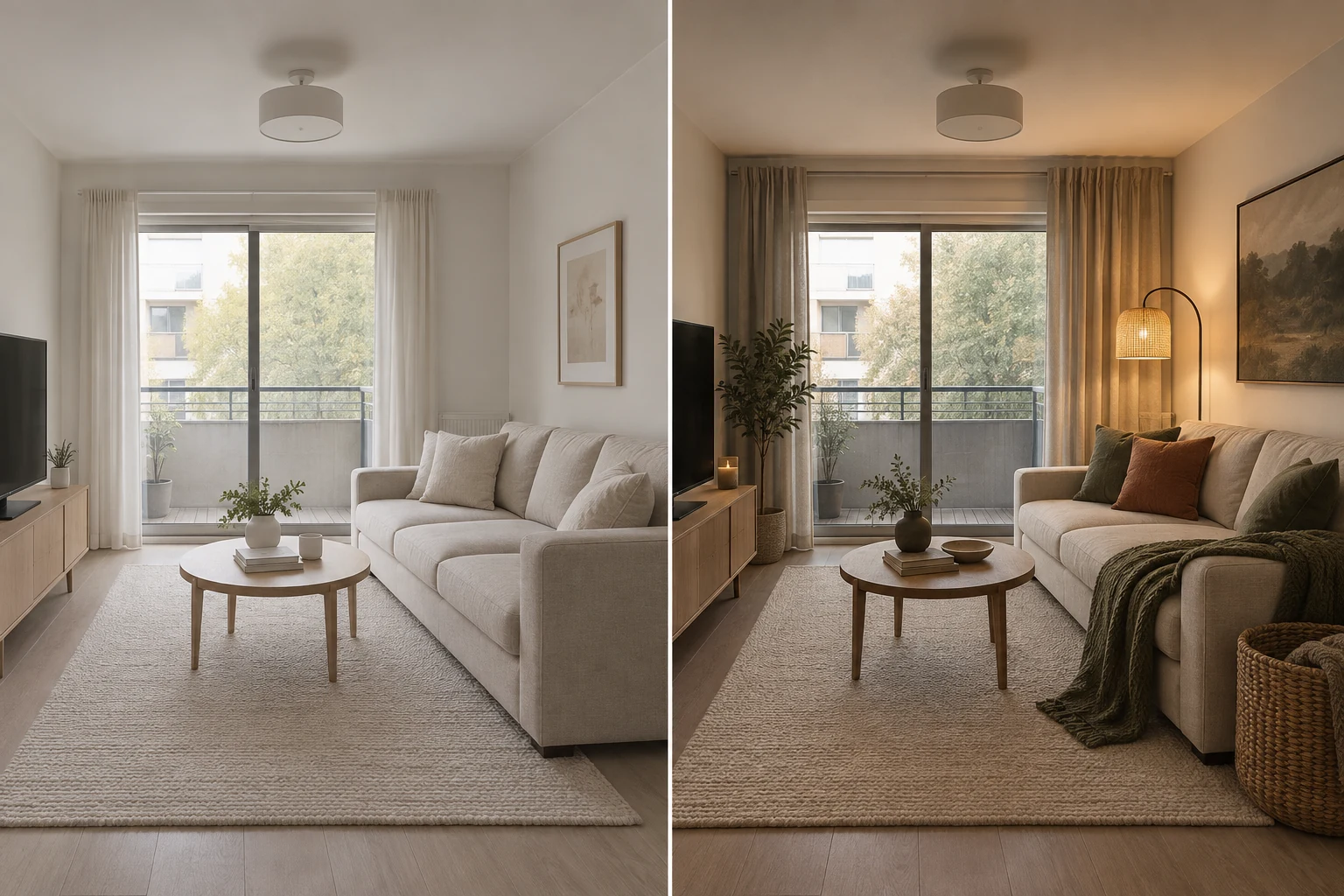
Which materials survive a rental, and which ones only look like they will
Two moves · Four years · Checked Sep 15, 2026

By NoraLease and Layer · Checked Sep 15, 2026
Six materials, and what two moves do to them
- Oatmeal linen gets better It relaxes, it creases, it fades a shade. Every one of those is the material doing what it was bought to do.
- Solid walnut gets better, veneer does not Solid wood you can sand a corner of. A printed foil over particleboard shows its white core the first time a doorframe catches it.
- Wool pills, then stops, unless it is loose A dense weave settles down in a few months. A loose boucle keeps shedding loops and catches on every zip.
- Unlacquered brass patinas, lacquered brass peels The same metal, two finishes, opposite endings. One gets a history, the other gets patchy and cannot be fixed.
- Unglazed terracotta is the only one that improves on purpose The white bloom people scrub off is the finish arriving. It is also the one thing here that breaks in a van.
- Limewash on the wall is a bill, not a finish It ages beautifully and you still have to cover it before you hand back the keys, in two coats or three. Put it on a panel instead.
In this guide
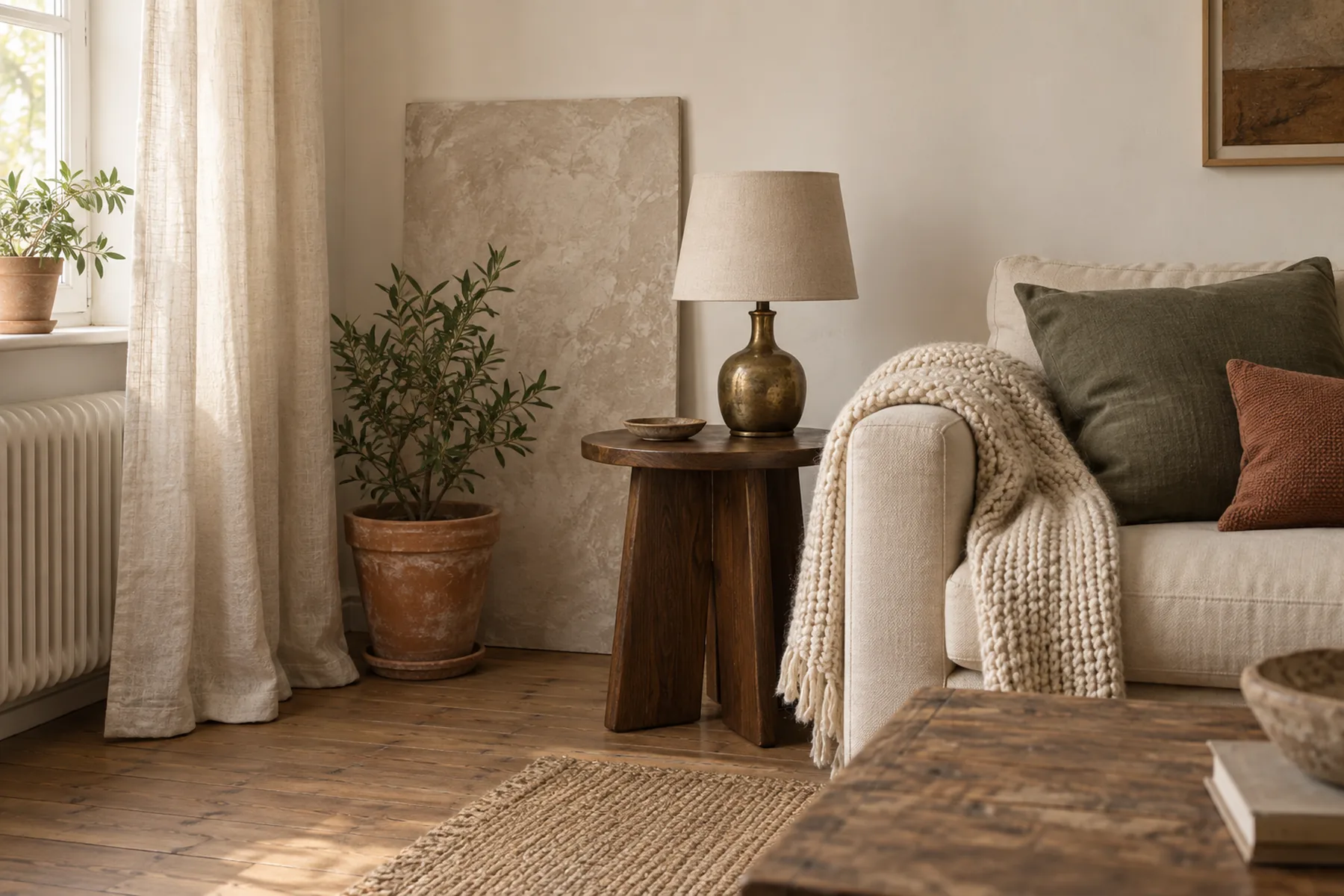
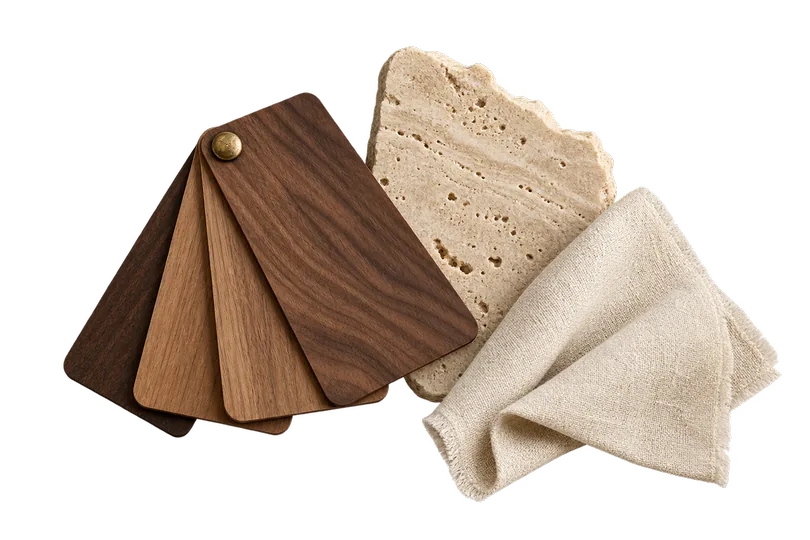
Six materials you can put in an apartment you do not own, bought new, moved twice and looked at again four years later: oatmeal linen, solid walnut, wool, brass, unglazed terracotta and limewash. Three of them held.
Nothing in a rental gets four quiet years. It gets four years and two vans, and the van is where the decision you made in the shop gets its answer. A material in a shop only tells you how it feels on day one, the one day it is guaranteed to feel good. The useful question is whether in four years it looks lived with or looks broken.

Two vans, and she supervised both of them from the box.
What fails is the coating. A sealed, shiny surface has one good state, the one it left the factory in, and every mark after that is a mark on a picture of a material. An uncoated surface has nothing to lose. Linen relaxes, terracotta blooms, brass goes dark in the corners and bright where your thumb lands.
Two questions in the shop, then: what is this made of, and what is on top of it.
The two move test
The same six materials, new, and then after two moves
Every material below comes with a square you can press to age it four years. Press it again to put it back. The line underneath says what happened and gives it one of three verdicts, and the counter at the end keeps score.
Guess before you press. Most people get terracotta and brass the wrong way round, and the reason why is the whole point of this page.
The six, one at a time
Four things happen to a material in an apartment, and only one of them is your fault
Sun, water, rub, and a move. Every material gets the same four tests in the same order, so you can compare them instead of trusting a shop light. The move is the one people forget to budget for, and it is the one that ends things.
Weave loosened, two creases now permanent, a strip by the window a shade lighter. Undyed linen fades toward its own color, so it reads as age.
Holds up
Oatmeal linen
Undyed flax, washed before it is sold. Linen creases; that is what the material does. A linen curtain that hangs flat after a wash is a polyester blend wearing the word.
- Sun
- Fades toward its own color, so the fade is even and quiet. A dyed navy or black goes patchy in the same window.
- Water
- Dries without a ring if you blot it. Water marks are a coating problem, and there is no coating.
- Rub
- Softens, then keeps softening. Flax is stronger wet than dry, which is why a linen cover survives twenty washes.
- A move
- Folds into a bin bag and weighs nothing. Move creases drop out in a day on the rail.
The lookalikeLinen look, linen blend, linen texture. Under about 55 percent flax it behaves like the polyester half: it pills, it shines where it rubs, it never softens.
Scratches, one water ring, an edge worn lighter where hands pass. All three sit in the finish or the top fraction of the wood, so all three sand out.
Holds up
Solid walnut
The verdict on wood turns on one question shops make hard to answer: is it wood, or a picture of wood on a board. Sand a corner of solid walnut and you find more walnut. Sand a foil edge and you find white chipboard.
- Sun
- Walnut lightens in strong light, which surprises people who expect wood to darken. Turn the piece twice a year and it stays even.
- Water
- A glass leaves a pale ring in the finish, not in the wood. On oil, rub it back with more oil. Under lacquer you live with it.
- Rub
- Edges round off and go lighter. On solid wood that reads as age; on veneer the same rub goes straight through.
- A move
- Corners take every hit. Solid wood takes a dent and keeps its color. One small solid piece outlives three large printed ones.
The lookalikeRun your eye off the edge of the top. If the grain stops at the edge instead of wrapping into end grain, or the same knot appears twice, it is printed.
Pills, pulled loops, a flat patch where somebody sits. The pills shave off and stop coming on a dense weave. The pulled loops do not go back.
Holds up with care
Wool
All new wool pills: the short fibers left over from spinning work their way out first. On a dense weave that stops within months. On a loose boucle it never stops, because there is always another loop to give up.
- Sun
- Cream wool yellows slowly in direct light and never comes back. Keep a throw on the arm of the sofa, not draped in the sun.
- Water
- Beads for a minute, then soaks, then takes a day to dry. Blot, never rub, and never put it on a radiator.
- Rub
- Pills, and a cheap fabric shaver takes them off in five minutes. A pulled loop from a zip or a claw does not undo.
- A move
- This is where wool dies, and not from the van. Three weeks in a sealed box is how you get moth holes. Wash or freeze it first.
The lookalikePolyester boucle. Identical in a photograph, flat and shiny in the traffic lane inside a year. Wool flattens too and springs back with steam; polyester does not.
Dark in the recesses, bright where thumbs land, two dents from a move. That is solid unlacquered brass, and it is the best a metal gets.
Holds up with care
Aged brass
Two objects are sold under one name. Solid unlacquered brass can never be ruined, because the patina is the surface meeting the air and your hands. Lacquered and plated brass are thin coats whose one job is to stay perfect. They do not.
- Sun
- Nothing. Brass is the only material here you can put in the brightest spot in the apartment without a thought.
- Water
- Spots, then patinas over the spots. On a lacquered piece, water gets under a chip and lifts the coat from underneath.
- Rub
- High points go bright, recesses go dark, and the object tells you how it is held. On a lacquered pull the coat goes first exactly where everybody looks.
- A move
- Brass is soft. On solid brass a dent looks like a life; on plated steel it cracks the plating and a gray line shows through.
The lookalikeHold a fridge magnet to it. Solid brass is not magnetic. If the magnet sticks it is steel under a coat of brass color, and there is nothing underneath to like.
The pale bloom is mineral salt coming through from the water, and it is why people buy old pots. The chip shows lighter clay, which reads as age.
Holds up
Unglazed terracotta
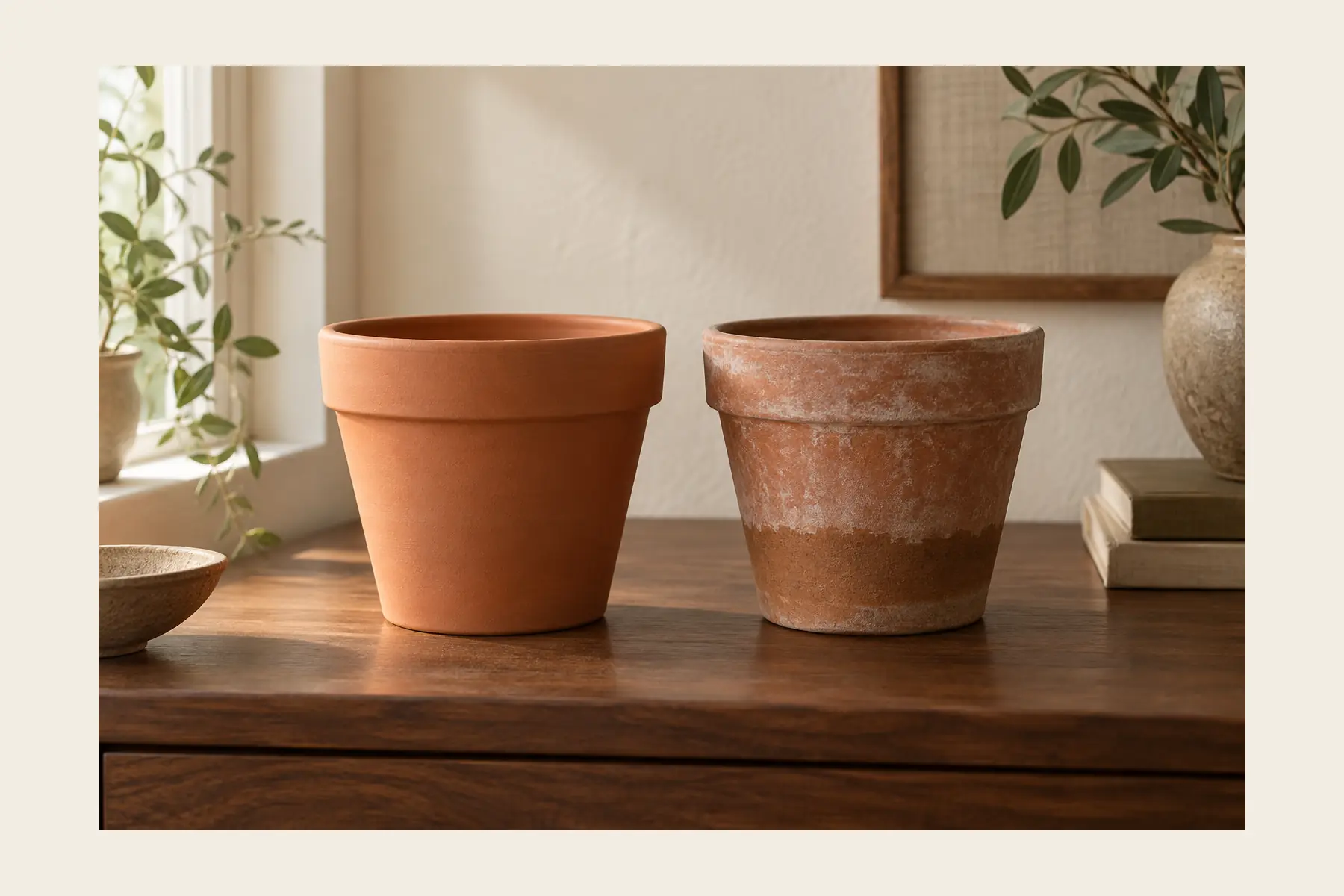
Fired clay with nothing on it: the cheapest material on this page and the only one designed to change. People buy a new pot, watch a white bloom come through the side, and scrub it off with a wire brush. That bloom is what old pots are sold for.
- Sun
- Nothing. It has already been through a kiln; a window is not a threat.
- Water
- Passes through it, which is the point for a plant and a problem for a floor you do not own. Always a saucer, never on bare wood.
- Rub
- The rim chips, and the chip shows a lighter clay that reads as age within a month. No finish, so no scratch.
- A move
- It breaks, and it is the only thing here that can be over in one second. Wrap it in the linen curtain or carry it on your lap.
The lookalikeTerracotta sealed, painted or glazed on the outside. It cannot breathe, so it cannot bloom. To bring the aged look on faster, there is a weekend way.
The surface ages well: rubbed thin at a corner, one hairline crack, a mark where a chair leaned. The problem is whose wall it is on.
Not on a wall you rent
Limewash
Slaked lime and water, brushed on in cloudy passes. As a finish it is the best looking thing here and ages better than any of the others. The verdict is about what is underneath, which in a rental belongs to somebody else.
- Sun
- Nothing worth reporting. Lime is mineral, so it does not yellow like cheap latex.
- Water
- A splash dries back most of the way. Steam is another story: over modern plasterboard paint it does not bond well enough to survive a bathroom.
- Rub
- It chalks. A limewashed wall behind a sofa transfers onto a shoulder, which photographs never mention.
- A move
- Here is the bill. One coat of white does not cover it: the cloudy layer reads through, so two coats, often three.
The version that holdsLimewash a sheet of plywood or MDF, lean it on the wall, take it with you. The panel, start to finish →
Each material is shown new and then after four years and two moves. Three hold up: linen, walnut and terracotta. Two with care: wool and brass. One does not: limewash on a rented wall.
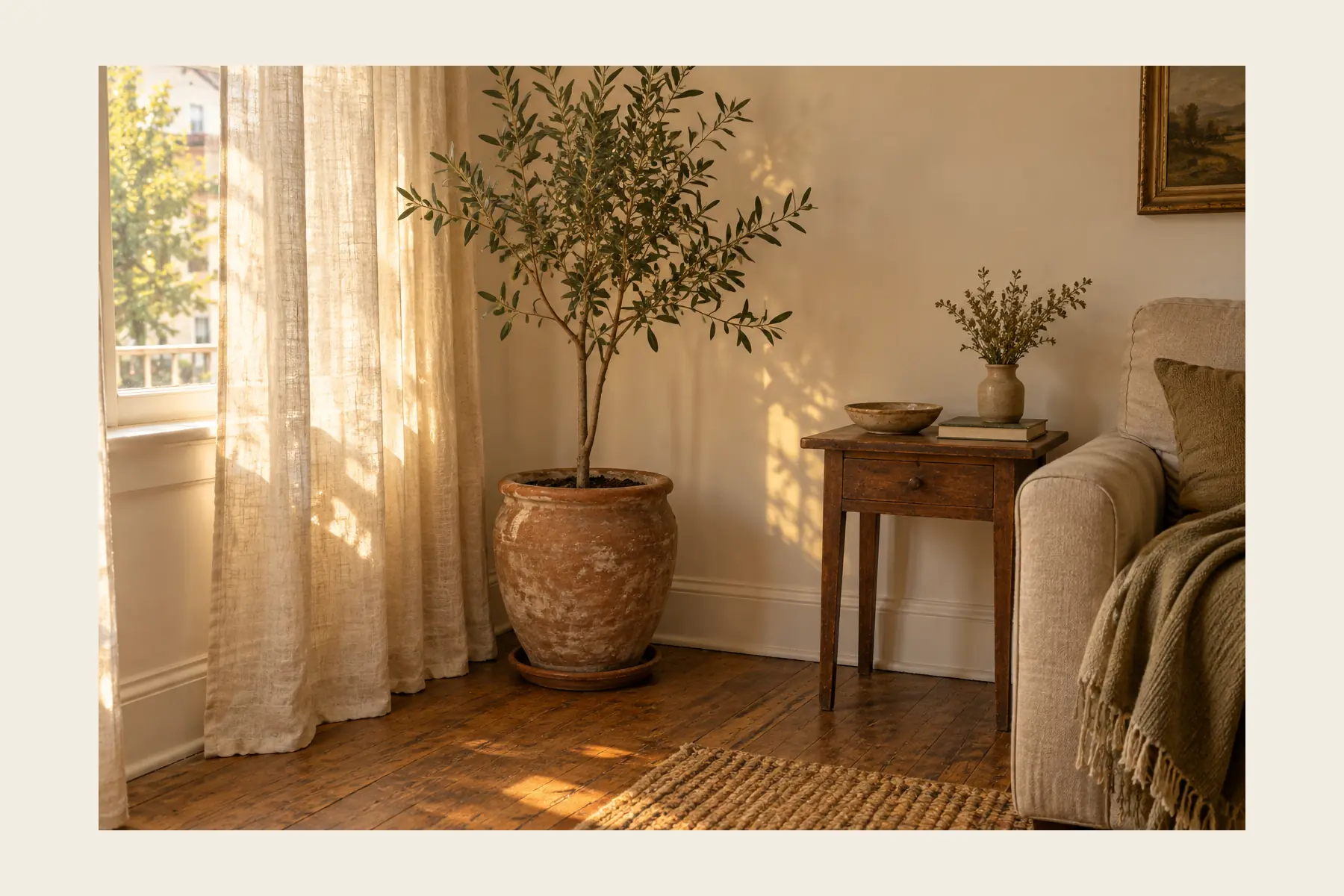
Where each one goes
One material per job, and the one that fails in that job
A material is only good or bad in a place. Wool is right on a floor and wrong at a sunny window.
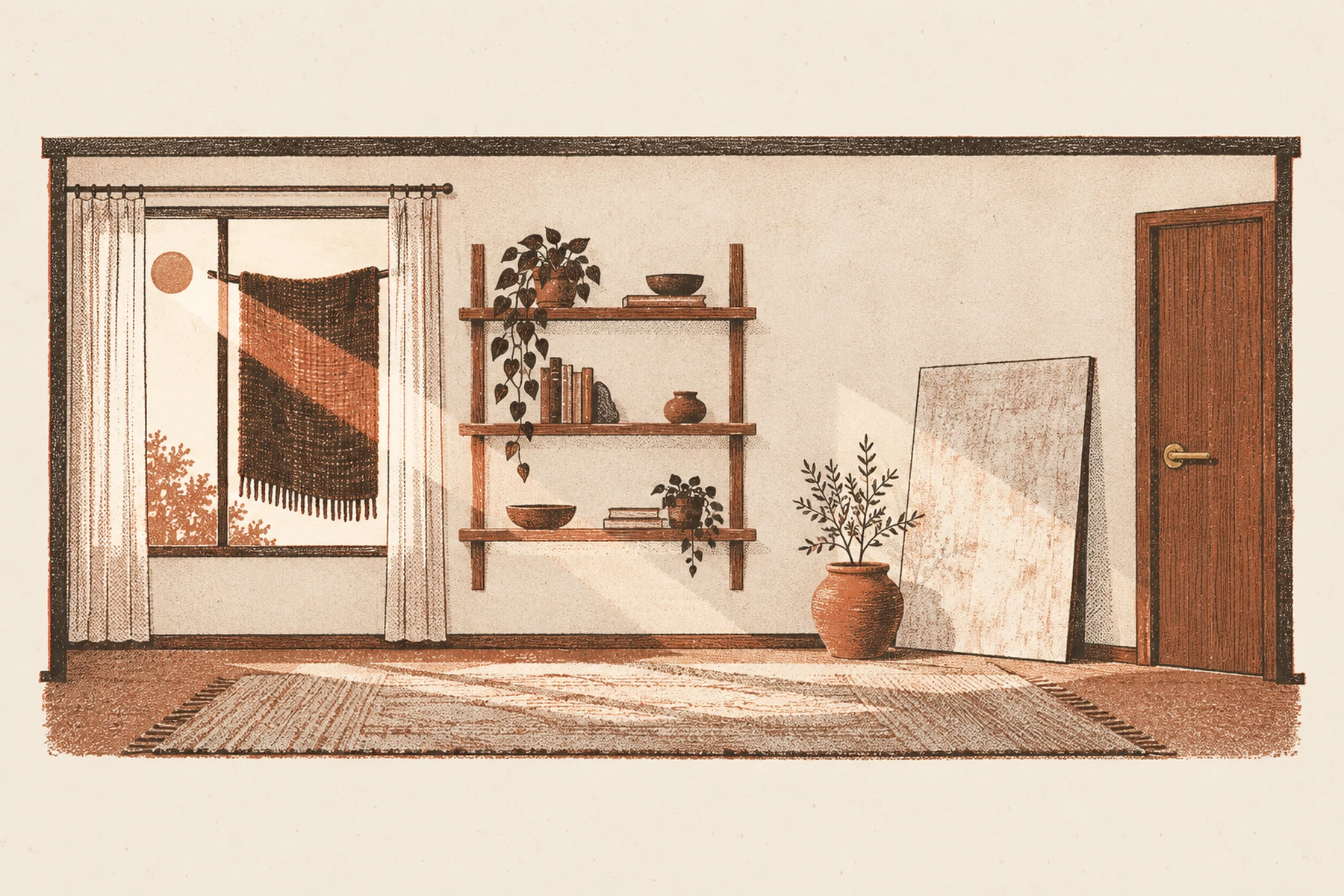
| The job | What survives it | What fails it |
|---|---|---|
| The windowThe hardest light in the apartment | Oatmeal linen, hung to the ceilingUndyed flax fades toward itself, so four years of sun reads as age, not a stripe. Hang the rod 4 to 6 in above the frame and the fade line lands on the wall. | Dark dyed cotton, and blackout liner with a rubber coat that cracks along the folds after two summers. |
| The floor you sit onTraffic, spills, a sofa leg | Wool, dense and low pileA tight pile takes a sofa leg and comes back with steam. | Polypropylene sold as wool look. It flattens along the walking line within a year and goes shiny there. |
| The one piece you carryTwo vans, four corners | Solid walnut, about 18 to 22 in acrossSmall enough to lift alone, solid enough that every knock stays the same color. | Foil or paper over particleboard. The first doorframe takes a corner off and the white core cannot be touched up. |
| The job | What survives it | What fails it |
|---|---|---|
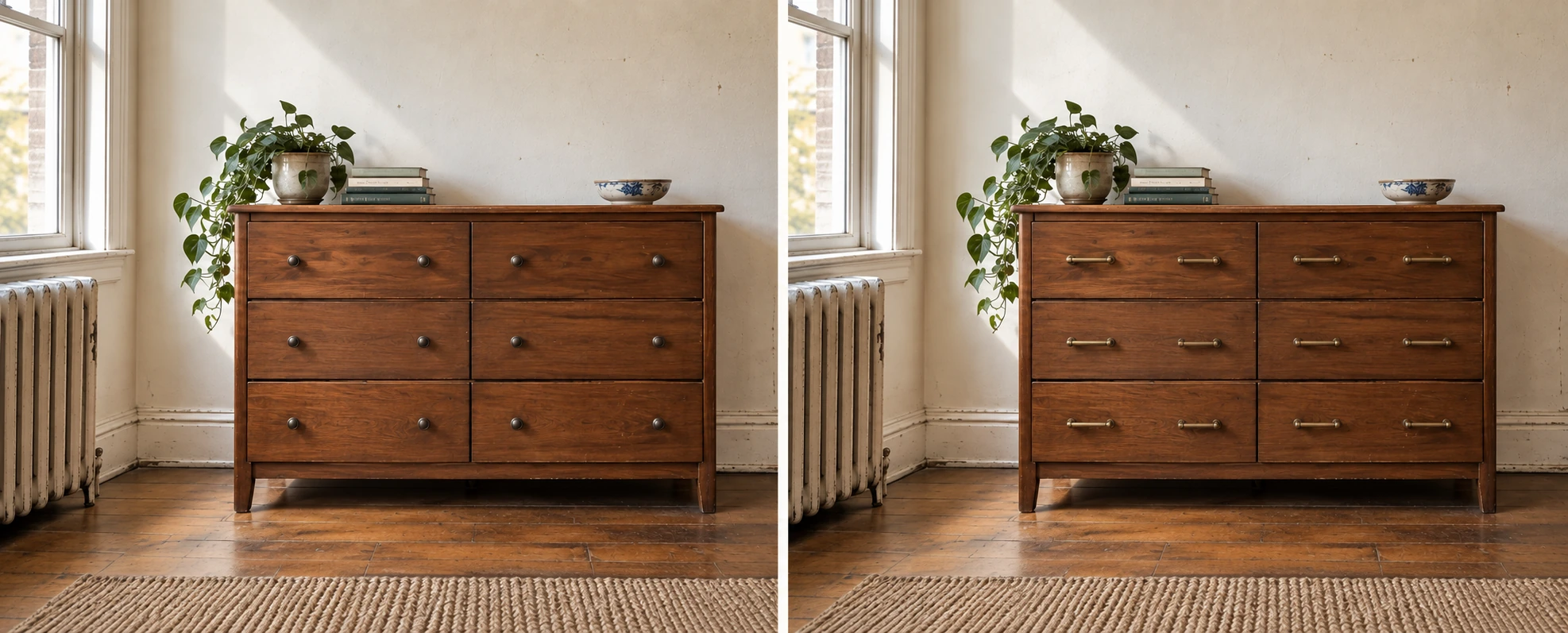
| What your hand touchesPulls, switches, hooks | Solid unlacquered brassYour hand is the finish. Four years of the same drawer gives a bright thumb mark on a dark ground, the look people pay extra for. | Lacquered or plated brass, for the same reason: where your hand lands is where the coat goes first. |
| The job | What survives it | What fails it |
|---|---|---|
| Anything holding a plantWater, every week, for years | Unglazed terracotta with a saucerPorous clay pulls water away from the roots, which is why it forgives overwatering. The saucer is not optional. | Sealed or painted pots, and terracotta straight onto a wooden floor. The first cannot bloom; the second leaves a dark ring. |
| The wallThe surface you do not own | Limewash on a leaning panelA sheet of MDF cut to about 24 by 48 in, limewashed and leaned, gives the same chalky light and goes in the van. | Limewash on rented plaster. Four good years, then two or three coats of white before the deposit conversation. |
The part I am supposed to leave out
Most of the material in your apartment was chosen by somebody who has never met you
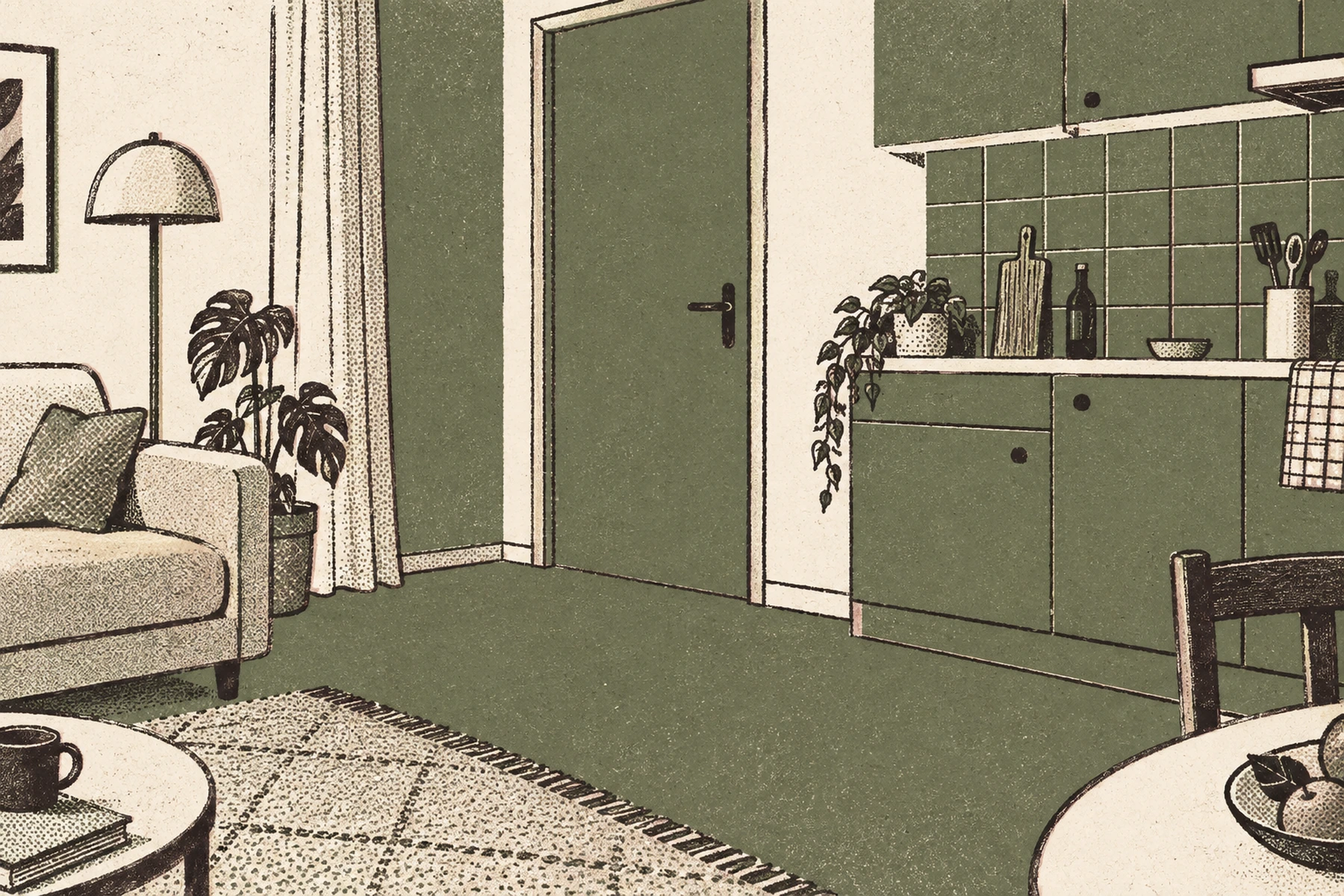
The five biggest material surfaces in a rented apartment are not yours. The walls, the floor, the kitchen fronts, the tiles and the internal doors were picked to be cheap to replace, and no amount of shopping changes any of them. What you can change is the soft and the small, which is exactly the six on this page.
-
Work over it
The wall paint
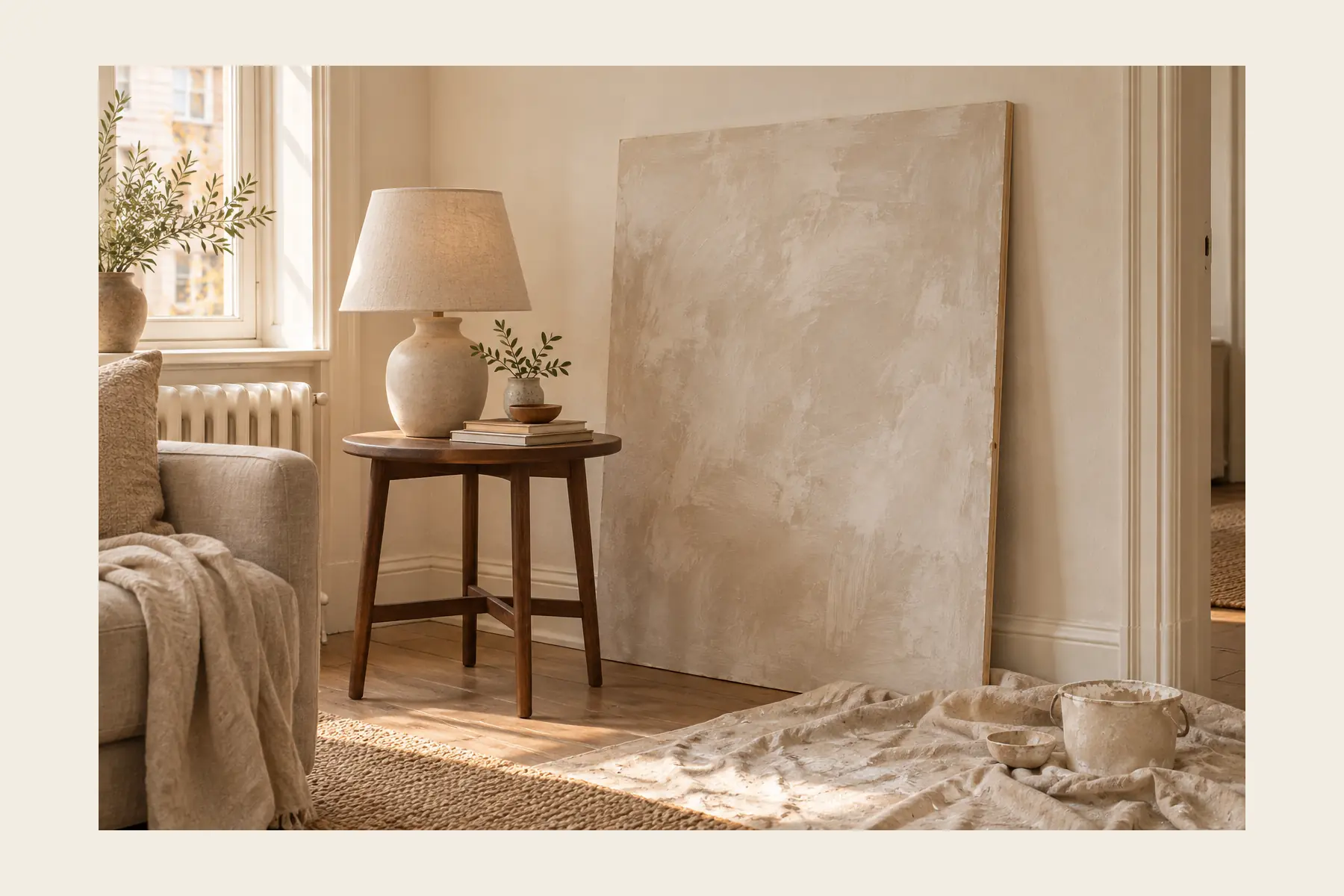
Magnolia, or a white with a green cast, in a finish chosen for wiping rather than for looking at. You are usually allowed to repaint and usually required to put it back, so every coat you put on is a coat you buy twice. Cover a piece of it instead: a limewashed panel in the corner, a curtain taken to the ceiling, one large thing hung from the picture rail.
-
Cover it
The floor
Laminate with a photograph of oak on it, or vinyl with a photograph of tile. It is the worst material in the apartment and also the largest, which is why rented rooms read as cheap in photographs. Here a rug does the repair, and it has to be big enough to sit the front legs of the furniture on.
-
Change the handles
The kitchen fronts
Foil wrapped doors already lifting at the steam corner above the kettle. You cannot replace them and you should not paint them without asking, because paint on a foil door peels in sheets. The handles are four screws each, and they are the one material decision in that room you are allowed to make.
-
Add, do not swap
The ceiling light
One fitting, in the middle, at the wrong color temperature, casting a shadow under everybody’s eyes. Changing it is electrical work and not yours to do. Adding light is: two plug in lamps at the edges do more for how these materials look than any single purchase, because wool, brass and terracotta need side light to read as texture.

Nobody asked either of us about the tiles.
-
Leave it
The bathroom tile
Nothing on this page helps you here and I am not going to pretend otherwise. Wool, linen and limewash all hate a room that hits full humidity twice a day. A terracotta pot on the windowsill is the honest limit here.
Changing the handles, and putting the old ones in a labeled bag →
The ones that only look like they last
Four tests you can run in a shop with your hands
Every material here has a twin that photographs the same and ends differently. None of these takes ten seconds, and all four work in a shop aisle without asking anybody.
Linen, or linen look
Screw a handful of the fabric up in your fist, hold it five seconds and let go. Linen holds the crease. A polyester blend springs back almost flat, and the smoother the recovery, the less flax is in it.
Then read the label rather than the sign. Linen look, linen texture and linen blend are three ways of writing polyester.
Wood, or a photograph of wood
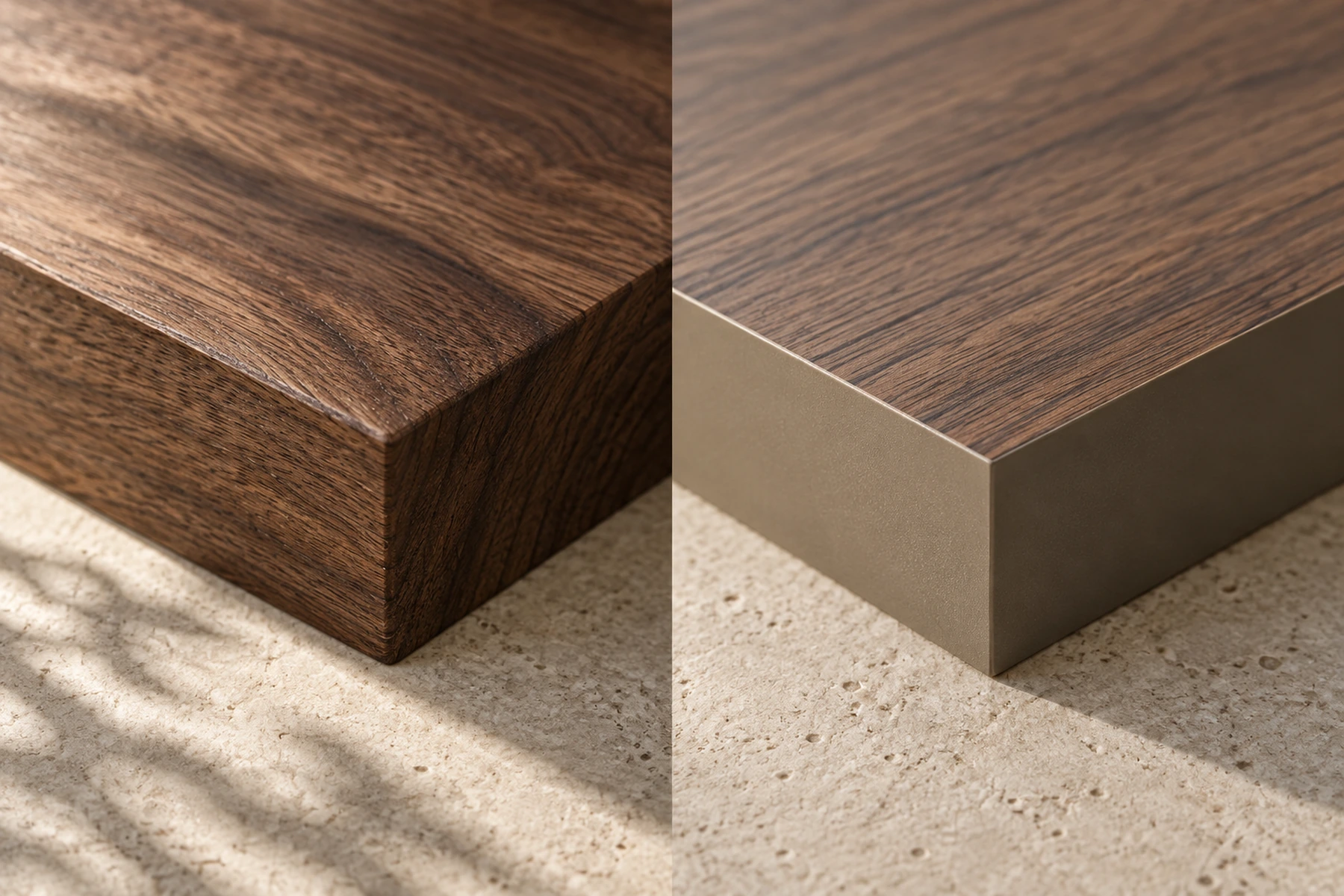
Look at the edge, not the face. On solid wood the grain turns the corner and becomes end grain, which looks nothing like the top. On a foil or a veneer the pattern stops dead at the edge, or a thin strip of a slightly different color is glued along it.
Then look for the same knot twice on one surface. A printed sheet repeats.
Terracotta, or terracotta colored
Wet a fingertip and touch the clay. Unglazed terracotta pulls the water in within a second and goes darker there. Sealed, painted or glazed clay holds the droplet on the surface.
The sealed one is not useless; it just cannot do the thing terracotta is for: no breathing, no bloom, nothing to gain from four years of use.
Brass, or brass colored
Carry a fridge magnet. Solid brass is not magnetic, so if the magnet grabs you are holding steel with a thin coat of brass color. That coat is the whole object as far as looks go, and it wears through where your hand goes.
If the magnet does not stick, ask one more question: lacquered or not. Unlacquered brass usually says so on the label, as a warning that it will tarnish. That warning is the feature.
Quick answers
The questions people type
The ones with nothing on top of them. Linen, solid wood and unglazed terracotta have no coating to lose, so wear changes them instead of taking something away. A coated material has exactly one good state, the one it left the factory in. That is why price is a poor guide: the cheapest thing here is a terracotta pot, and it is the one that improves.
Because it is lacquered, and the lacquer has worn through where your hand touches it. Unlacquered brass darkens in the recesses and goes bright where it is handled, which looks deliberate. Lacquered brass goes patchy in blotches with hard edges. There is no fix short of stripping the whole piece.
No. It is mineral salt from your tap water coming out through the clay, the same bloom that makes old pots cost more than new ones. Leave it. The only real terracotta problem is water reaching the floor: a porous pot passes it out of the sides as well as the base, so it always needs a saucer.
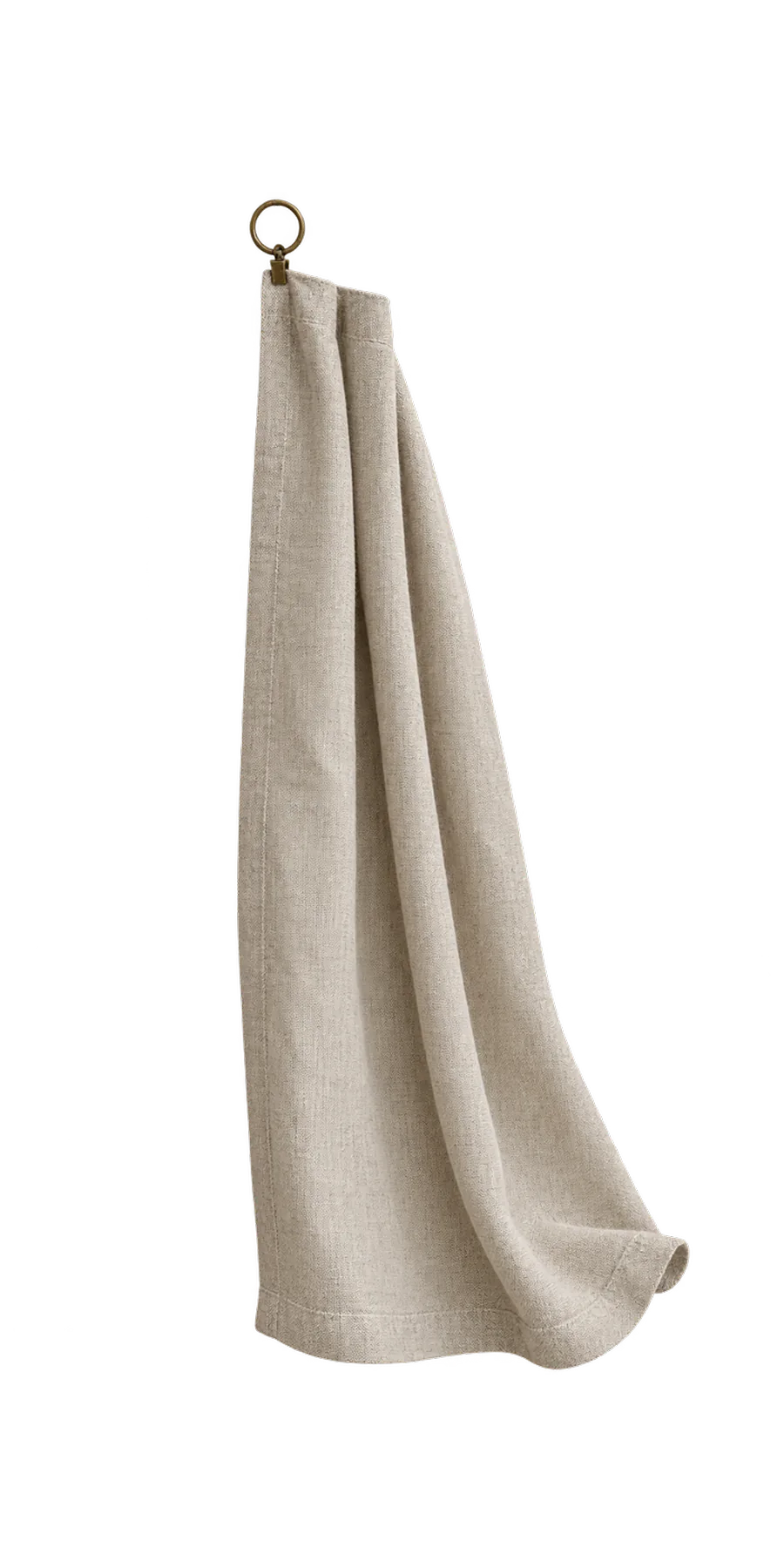
Crush a handful in your fist for five seconds and let go. Linen holds the crease; a polyester blend springs back nearly flat. Then read the fiber content rather than the sign, because linen look, linen texture and linen blend are all ways of writing polyester.
Yes, and the pilling stops. New wool sheds the short fibers left over from spinning, which is most of what you see in the first months. Shave them off and a dense weave settles down for good. A loose knit or a boucle keeps pilling. The damage that does not undo is a pulled loop, so ask whether the weave is tight.
You can, and I would not. Limewash is the best looking finish here and ages better than anything else, but on a wall you rent it is a bill waiting for you. One coat of white does not cover it: the cloudy layer keeps reading through, so two coats and often three, plus a primer. Limewash a sheet of MDF instead.
Where next
Three things worth your next five minutes
Measured in a rental · Checked Sep 15, 2026