How much old can a new room take?
One in five, and how to choose which one · Checked Sep 15, 2026

By NoraLease and Layer · Checked Sep 15, 2026
The whole rule, in four lines
- Count what you would name out loud Say the room down the phone. Sofa, rug, curtains, table, lamp, art, mirror, plant: about a dozen. Books and coasters do not count.
- One in five of those can be old A dozen gives you two, three in a large room. Past three it stops being the exception.
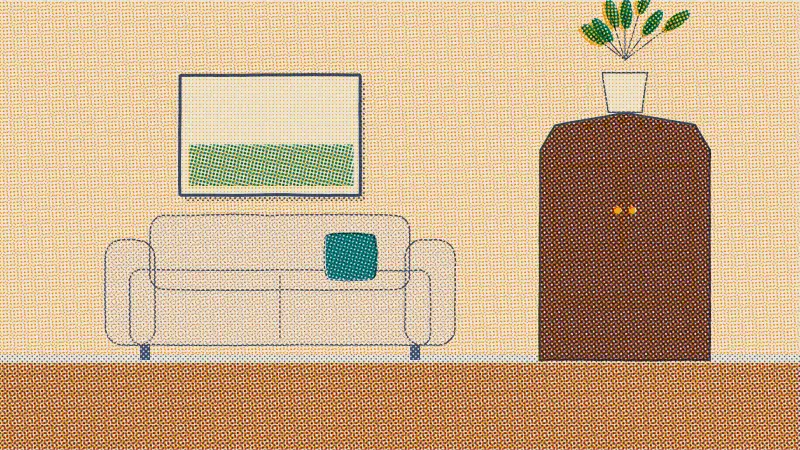
- Pick it by one quality, never three The biggest, the darkest or the most carved. One of them. A big dark carved wardrobe is all three at once and eats the room.
- Everything around it stays plain Plainness is what makes the old piece read as chosen rather than inherited.
In this guide
A new room takes about one old thing in five of what you would name out loud, which in a rented living room means two old pieces, three if it is large. One old chest is the thing everybody notices. Six is a shop, and in a shop nobody notices anything.
The usual mistake is buying the second old thing, and then the third, because the first worked so well. Each piece is a little worse than the one before, and the drop is invisible while it happens. By the time the room reads heavy, no single purchase did it.
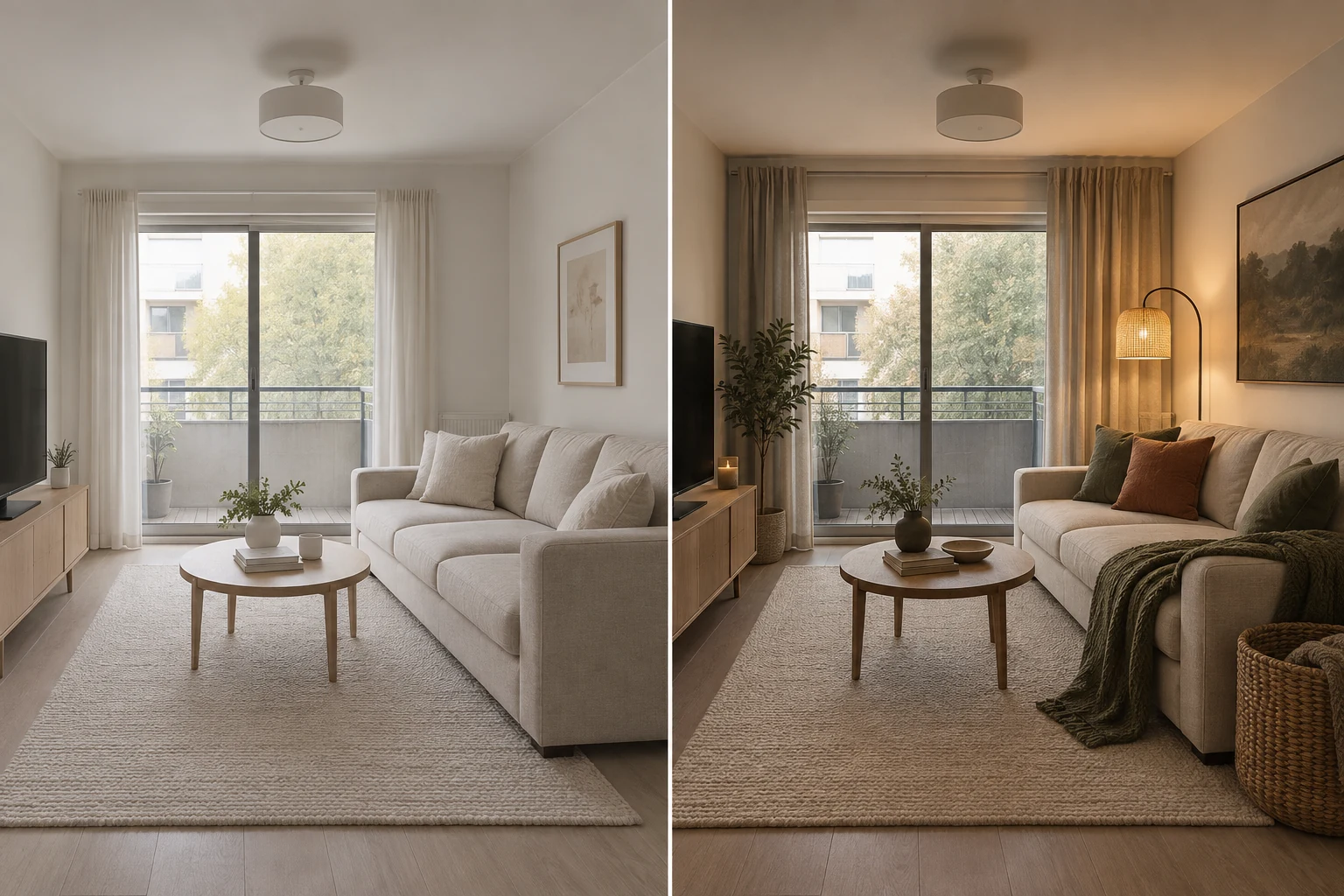
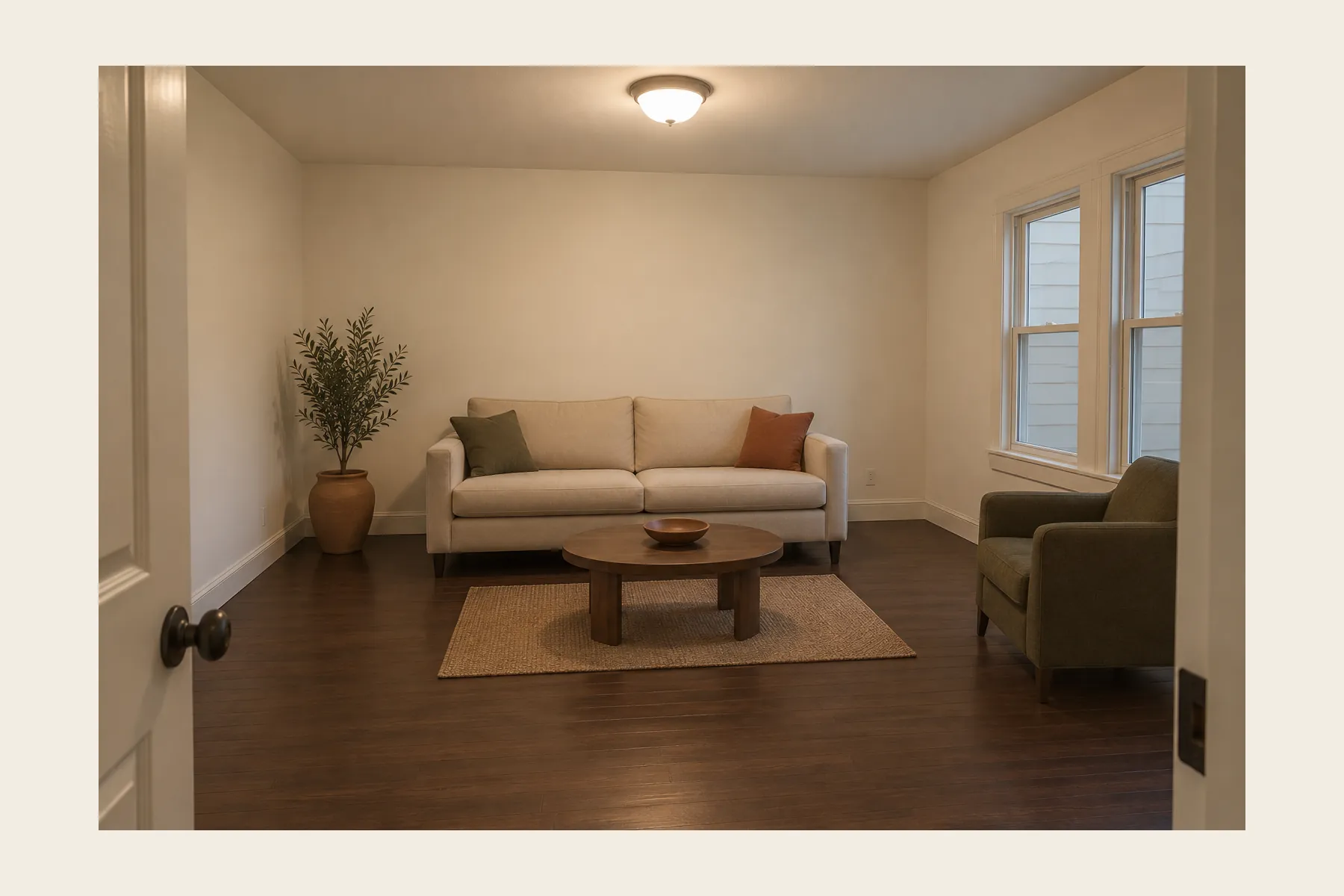
The other failure is the room with nothing old in it, where most rentals start. Everything was made in the same five years to the same tolerances: nothing chipped, nothing darker, no edge softer. Not ugly, just unread, and new cushions do not fix it.
So this page gives you a number, because a few vintage pieces
is not one. Then the harder part, which is not how many but which one.
The proportion, counted
One old thing in five, which is two in a normal living room
Stand in the doorway and name what you would mention describing the room by phone. Not every object: the ones with a name. A rented living room gives about twelve. Sofa, armchair, rug, curtains, coffee table, side table, floor lamp, table lamp, art, mirror, plant, clutter holder.
One in five of those can be old. Twelve gives you two and a bit, so two, or three if the room is large.
Two things bend the number, both downward.
The building counts as a piece. Original moldings, a tiled fireplace, panelled doors from before the war: the room spent a slot before you carried anything in. One movable old thing, not two. Nobody thinks of the walls as furniture, which is how the count goes wrong.
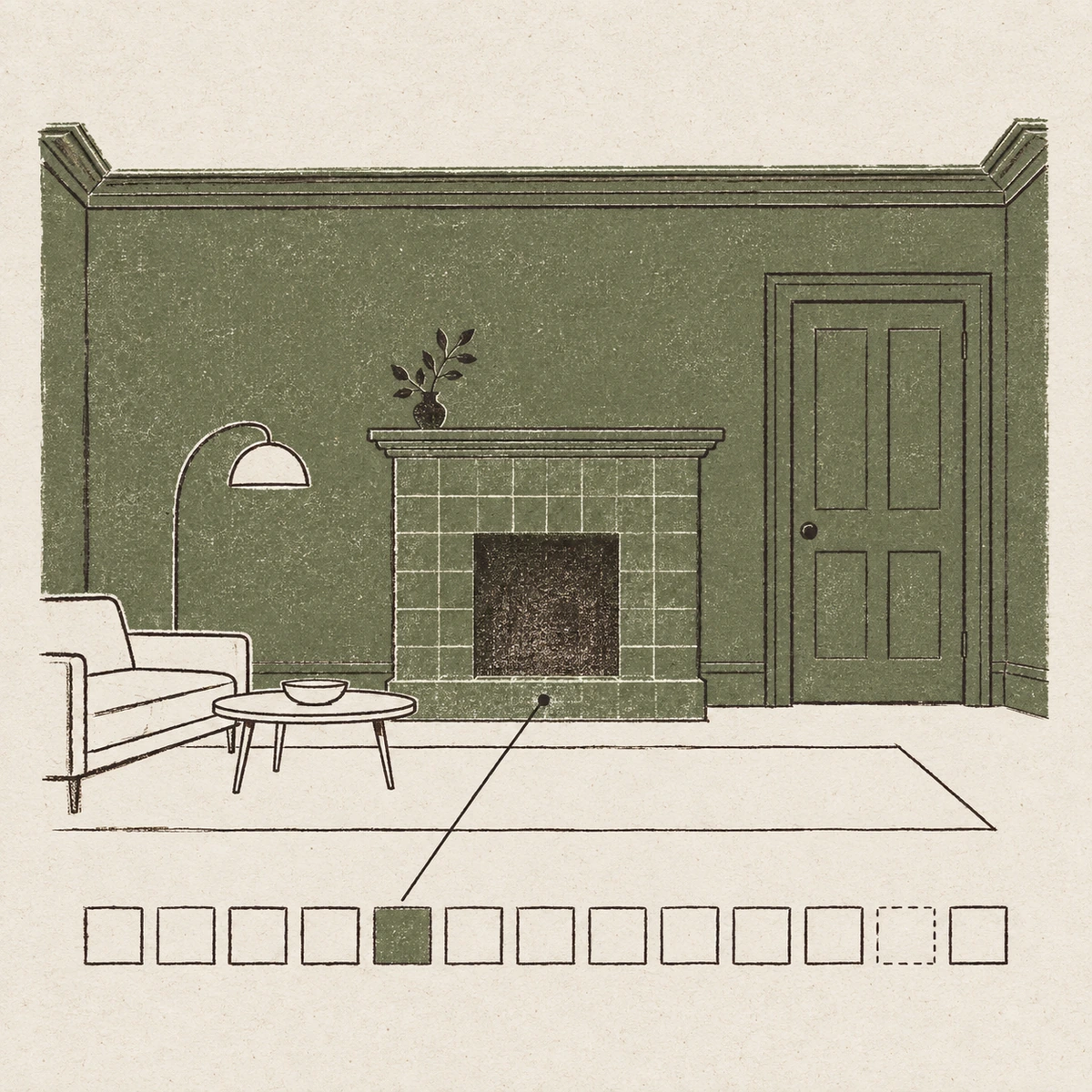
Small rooms count faster. Eight nameable things gets one old piece.
The exception, stated here rather than buried: rooms with nine old things do work, for people who have bought and discarded for decades. That is thirty years of edits, not a rule you copy in a weekend.
The dial of the vintage
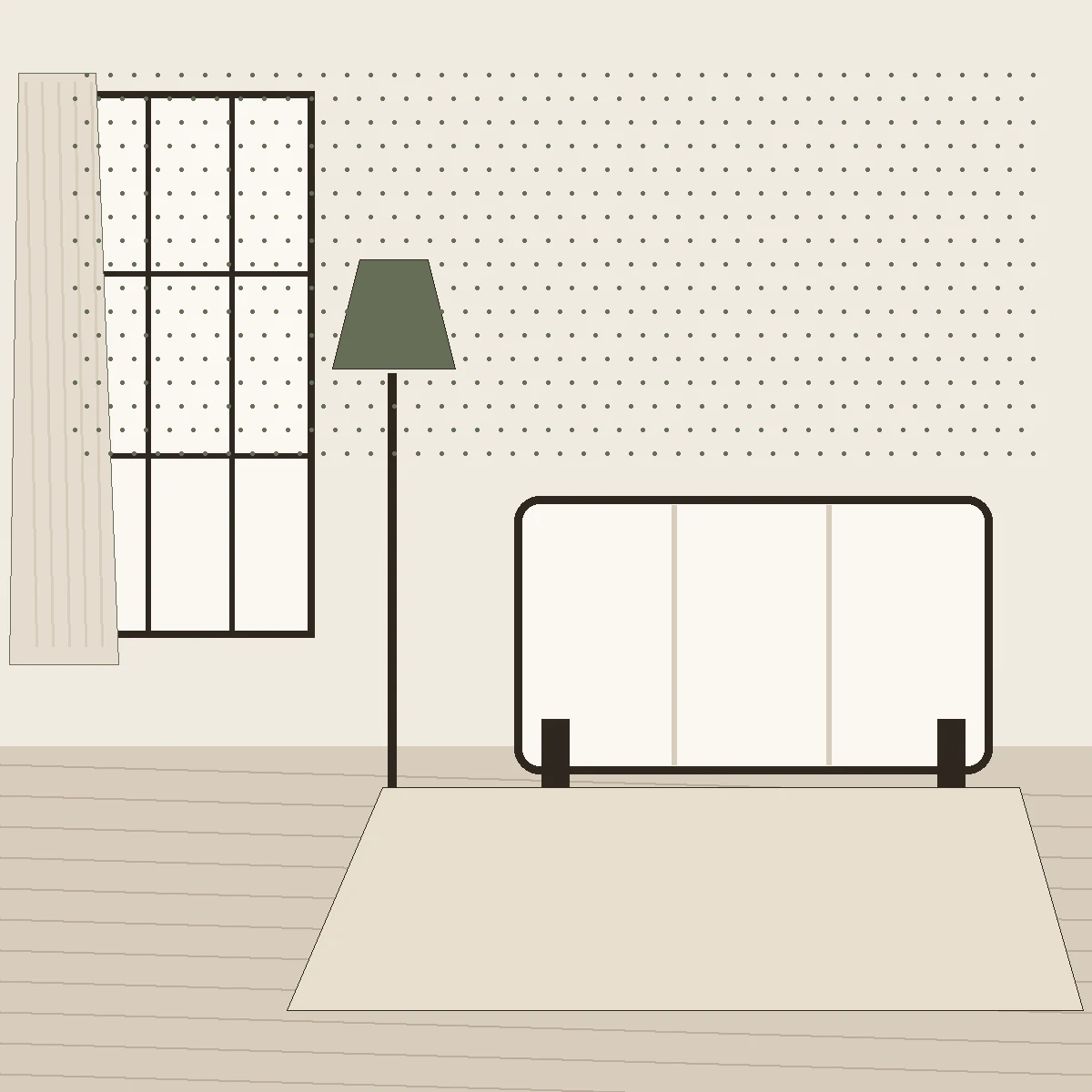
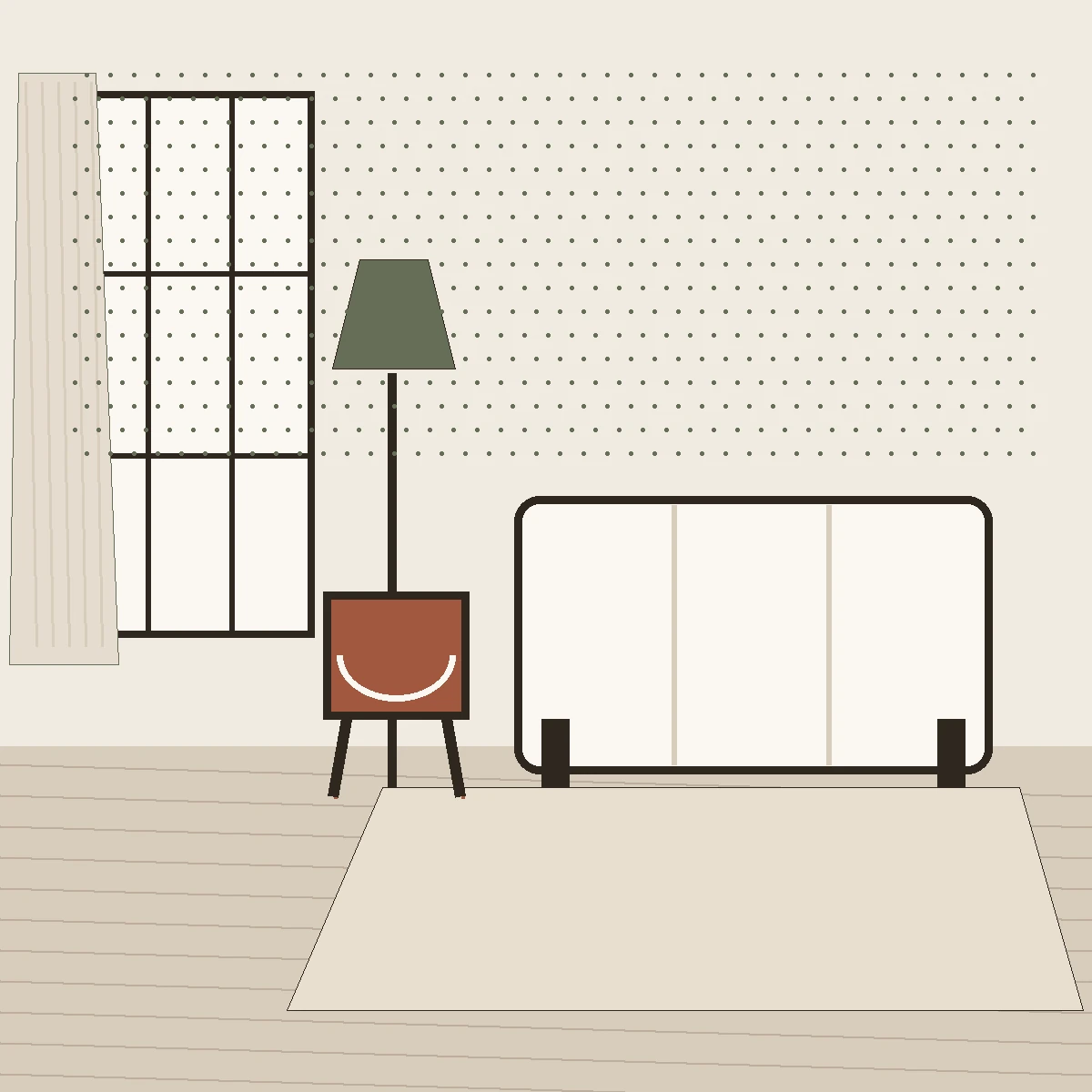
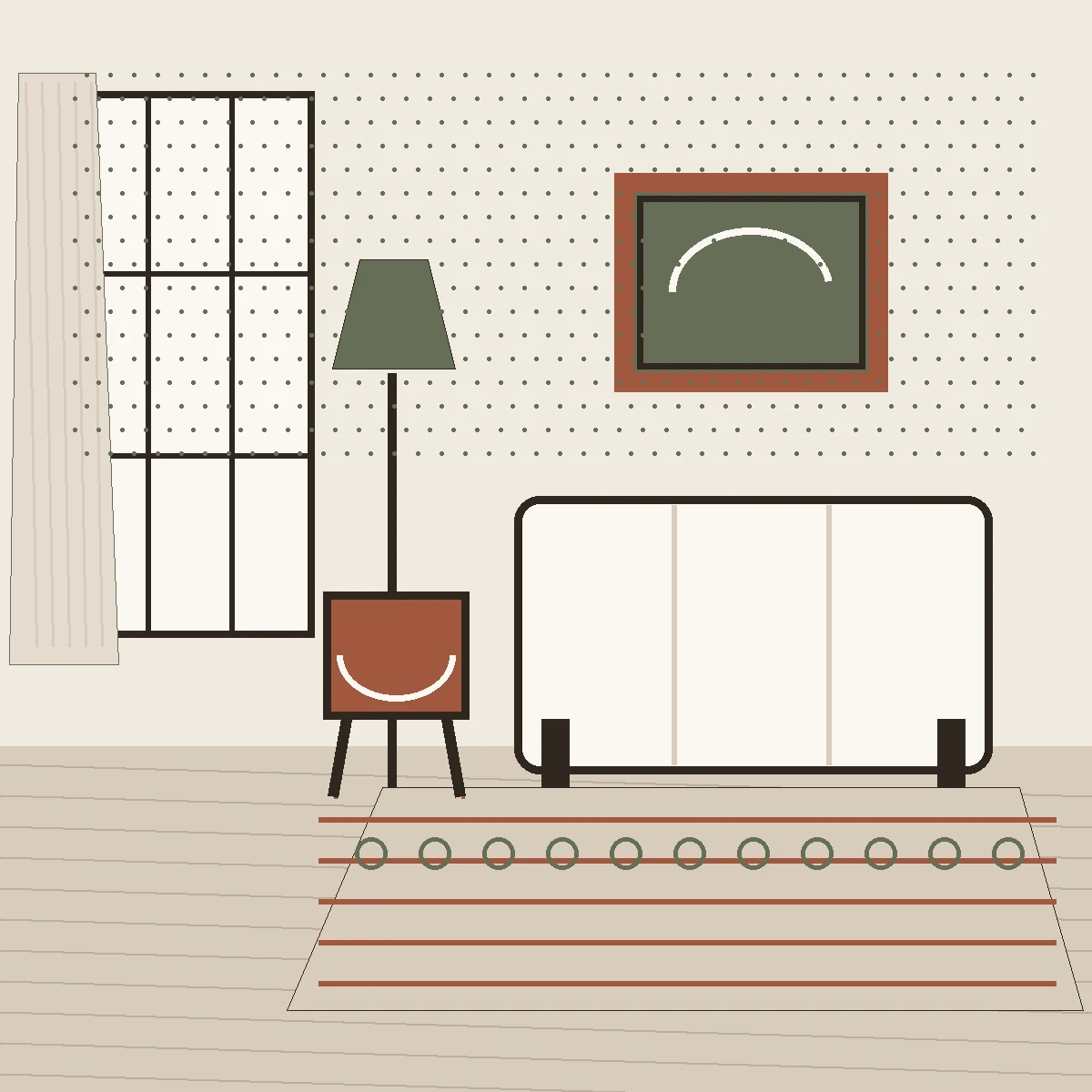
The same room, five times, from nothing old to all of it
One room, one viewpoint, one sofa. Only the number of old things changes. Move the control and watch where it stops being a room.
Catalog
0 old things of 12
Nothing here is older than the lease. Every edge is the same age and sharpness, so the eye finds nothing to catch on. Not ugly. Unread.
It has a history
1 old thing of 12
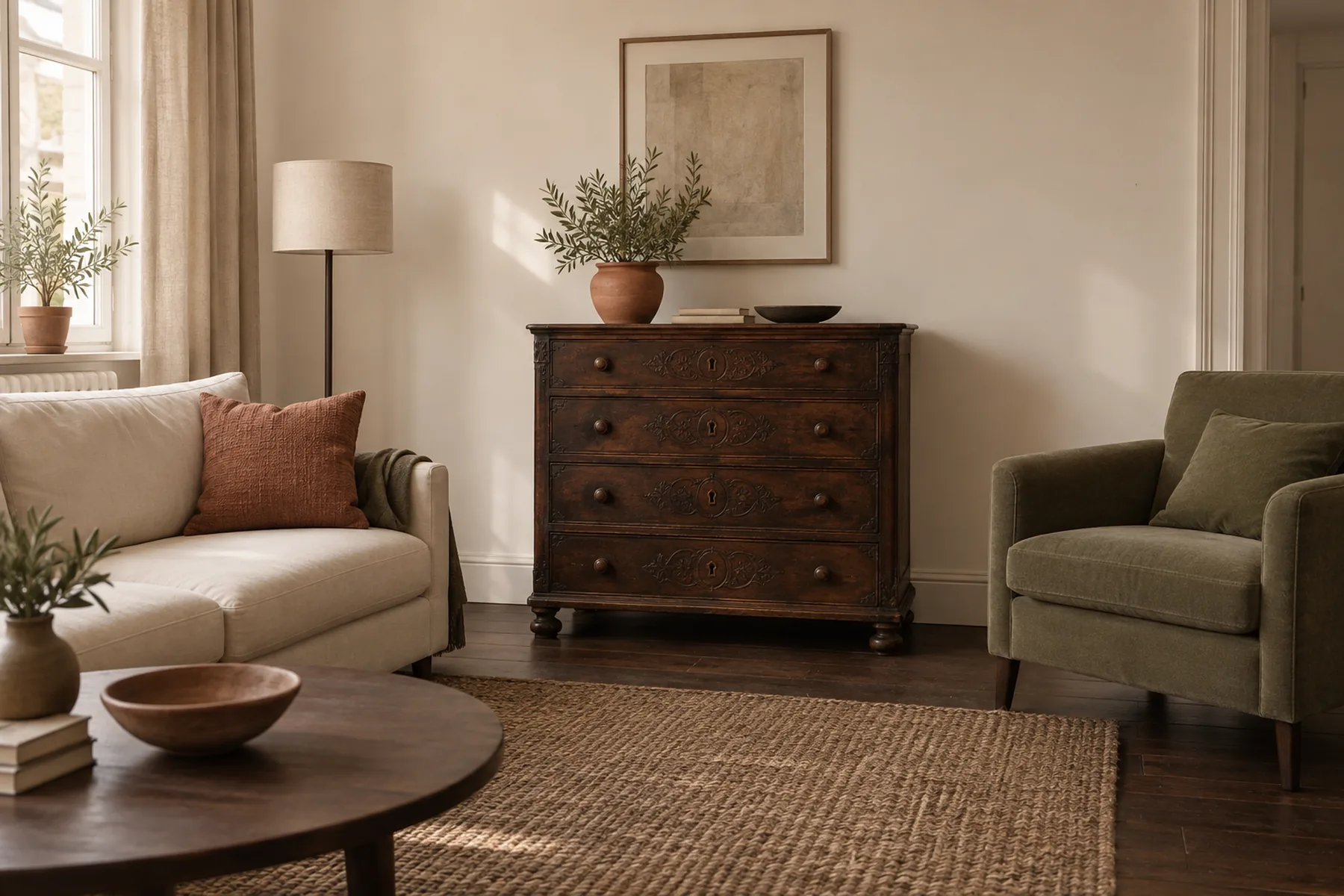
One old side cabinet against plain everything else. It reads as chosen because it is the only thing here that could have been.
Collected
3 old things of 12
Cabinet, framed picture, patterned rug: three old things, three jobs, three sizes. The room looks like it happened over years. The top of the good band, not the middle.
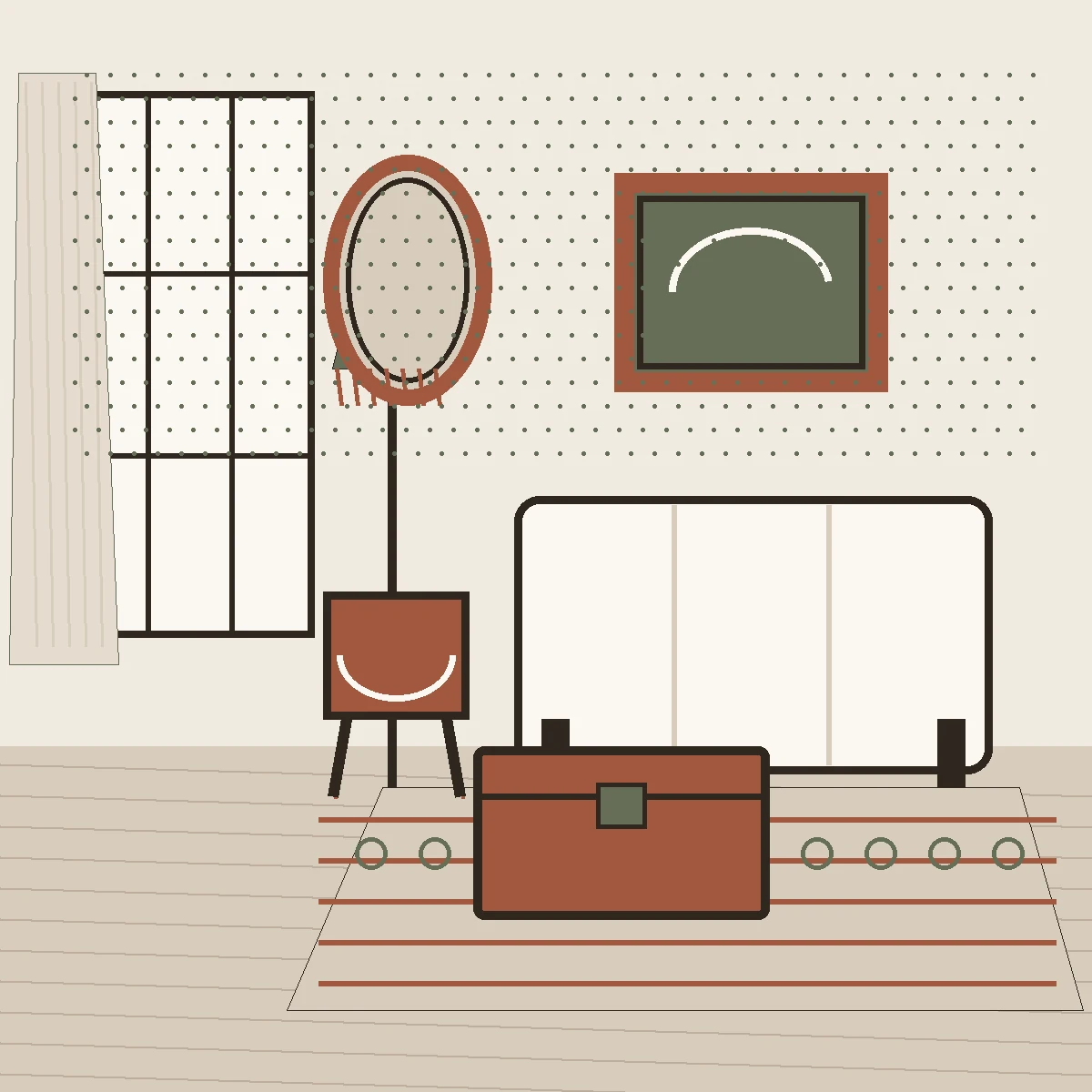
Starting to weigh
5 old things of 12
Add a mirror and a trunk and the old stops being the exception. Half the room is the interesting half, which means none of it is. Nowhere plain to rest.
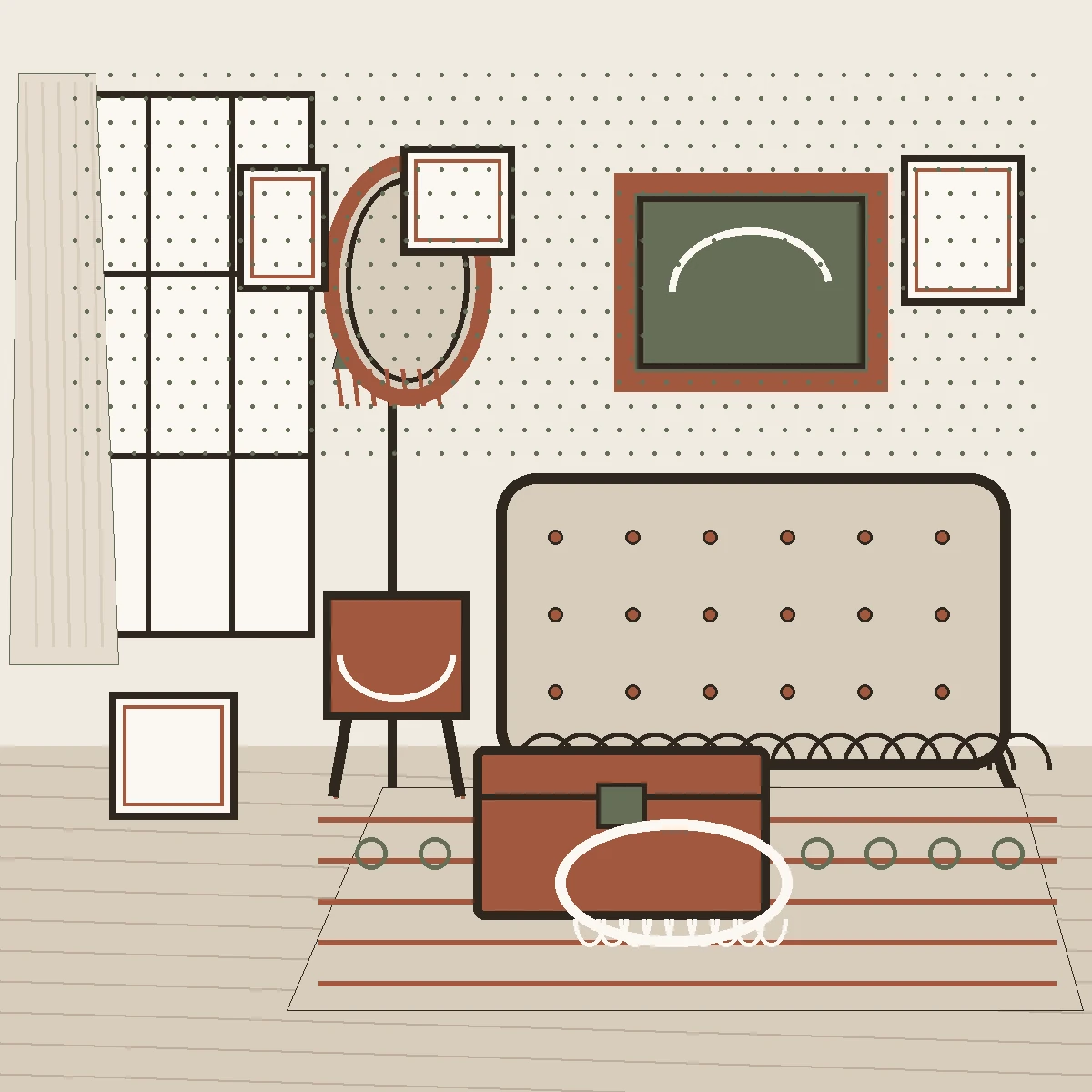
Antique shop
11 old things of 12
Everything is old except the window, the sofa included. Nothing is the oldest or the darkest any more, so nothing is anything. Stock, not a room.
The two outlined in color are the stops that work. Arrow keys move along the dial.
The drop from the third drawing to the fourth is far steeper than the climb from the first to the second. The first old piece improves the room a little. The fourth ruins it a lot.

Which piece is the old one
Pick it by one quality, and only one

Biggest, darkest or most worked. She has picked the darkest and sat on it.
Knowing you get two does not tell you what to buy, and this is where money goes badly. An old thing earns its place by being one of three things: the biggest, the darkest, or the most worked. Decide the job before you look and you walk past nine tenths of what is for sale.
The biggest thing in the room
A chest of drawers, a dining table, a sideboard. At this size old is cheaper and better made: nobody under forty wants brown furniture, so solid oak costs less than flat pack. You are buying mass, which a rented room has none of.
The condition: everything else stays light and plain. If the big piece anchors, nothing else gets to be dark and nothing else gets carving.
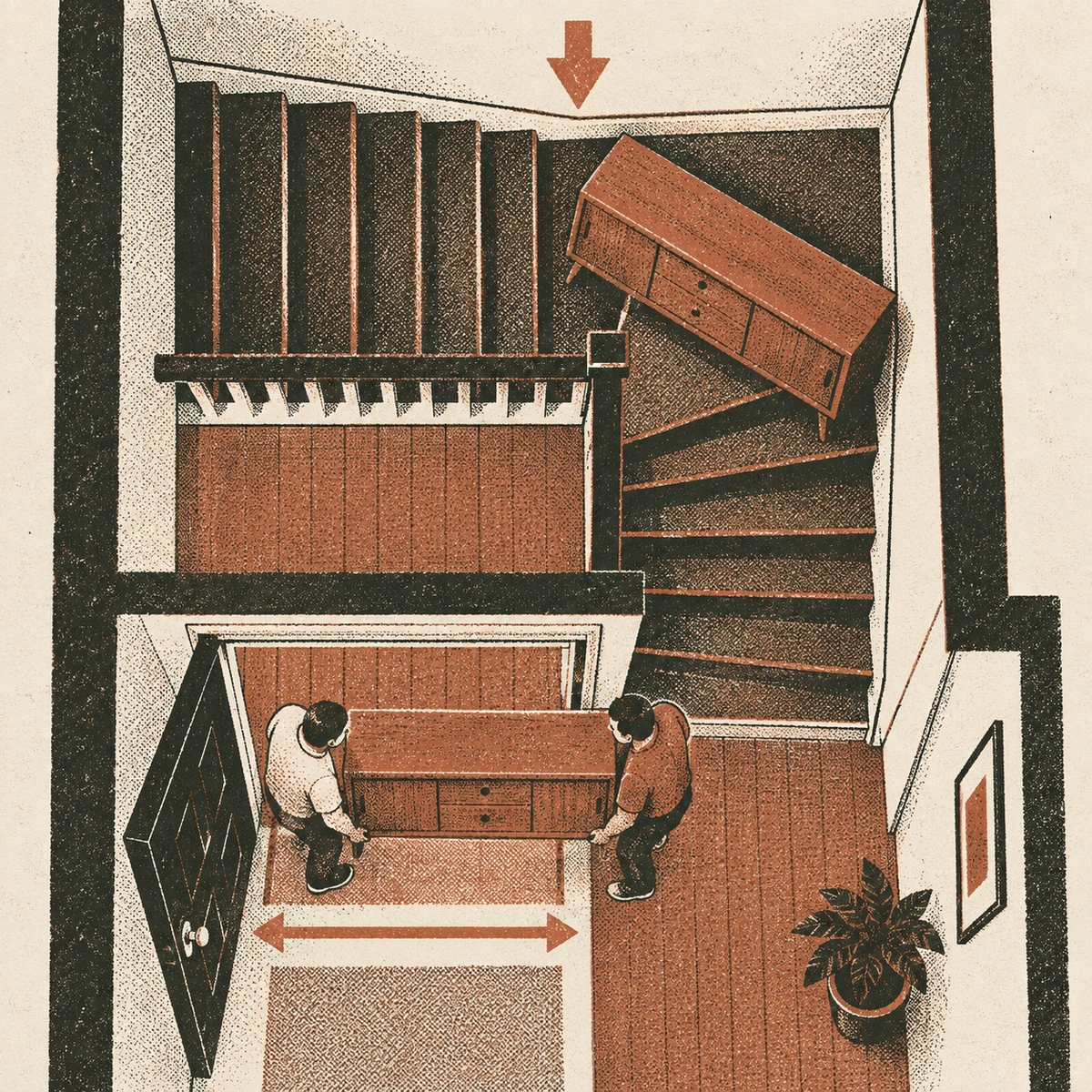
What goes wrongBuying it before measuring the stair turn. In eighteen months the sideboard does not leave the way it came in.
The darkest thing in the room
Rentals run pale: off white walls, oatmeal sofa, pale floor. A room like that needs one properly dark object or it floats, and old furniture is the cheapest dark there is. A stained cabinet, a walnut stool, a black box on a shelf.
Dark does not mean large. A dark thing the size of a breadbin does the job if it sits where you look, which makes it the option for a small apartment.
What goes wrongTwo dark pieces at opposite ends of the room. Your eye ping pongs and neither wins, the same failure as two tall objects on one shelf.
The most worked thing in the room
Carving, turning, inlay, a gilt edge, a chair back somebody spent a week on. Detail at that level is not made at a price a renter pays, so second hand is the only way. It makes a room look like a person lives there, and it works at the smallest size of the three: a mirror frame, a chair, a painted box.
Because it is small and cheap, it is the one people repeat. Resist. Two ornate things argue about which is the interesting one, and you can see the argument from the door.
What goes wrongOrnate and dark and large in one object, the standard Victorian wardrobe. Not a piece in the room: the room, with everything else a corridor to it.
Where it comes from
Where the old piece comes from, without spending a month of rent
The word vintage on a listing roughly triples the price, so the skill is finding the ones where nobody typed it. Five places in the order I try them, and one to skip.

-
Half price
An estate sale, on the last day
They discount hard on the final day, because whatever is left must be cleared and clearing costs money. Furniture is the worst thing in the house for them: heavy, slow, and it does not fit in a car.
The cost is taking what is there. Go with the three jobs in your head, not a picture of one thing.
-
Free to try
Marketplace listings, searched by the wrong spelling
People who do not know what they have cannot spell it either. Search chest of draws, dinning table, the maker name typed wrong: those listings sit for weeks because nobody else finds them.
Search the words of a house being cleared too: moving, must go, downsizing. Those sellers want it gone by Sunday.
-
One trip
The thrift store in the expensive part of town
They price from a list that does not know what neighborhood it is in. Donations in a wealthy area are better and the prices are the same as everywhere. One weekday morning beats five Saturdays: stock goes out as it arrives.
-
Patience
The low lots at a local auction
Regional auction houses sell brown furniture in bundled lots that dealers do not want, and the prices are low. It costs time and nerve: view in person, collect within days, and the buyer fee on top of the hammer price is real.
-
Free, with a string
A relative who is downsizing
Free, with a catch worth naming. A piece you were given is one you cannot quietly sell when it turns out not to work, the hardest kind to own well. Take it only if it passes the test you would apply to a thing you paid for.
-
Look, do not buy
The one to skip: the antique mall
Booths are rented by dealers who paid retail and need a margin on a stall fee. A pleasant afternoon, and the most expensive old furniture in town. Go to learn what things are; buy elsewhere.
What you want alongside it is small and new: felt glides so it does not score a floor you do not own, a side lamp, a low stool to keep it off the wall.
What to leave where you found it
Five old things that are a bad idea specifically in a rental
None are bad objects. They are bad for somebody who owns neither the walls nor the floor and moves again in eighteen months.
-
Smell is forever
Upholstered anything you cannot get cleaned
You can wash a cover. You cannot wash the inside of a chair, and the inside is where decades of smoke, damp and animal live. A chair that smells faintly in the shop smells loudly in a small apartment with the heating on.
The exception is real: a good frame priced as a frame. If the wood is sound, reupholstering works. Get the quote first, because it usually costs more than the chair did.
-
Lean or leave it
A heavy mirror that has to be hung
An old mirror is one of the best single objects in a rented room, and hanging one is how people lose a deposit. Old glass is thick and old frames are solid, so you are past what a picture hook carries and into an anchor in a wall you do not own.
Lean it against the wall or on top of a chest. If the shape means it will not lean, that is your answer.
-
Price the rewire
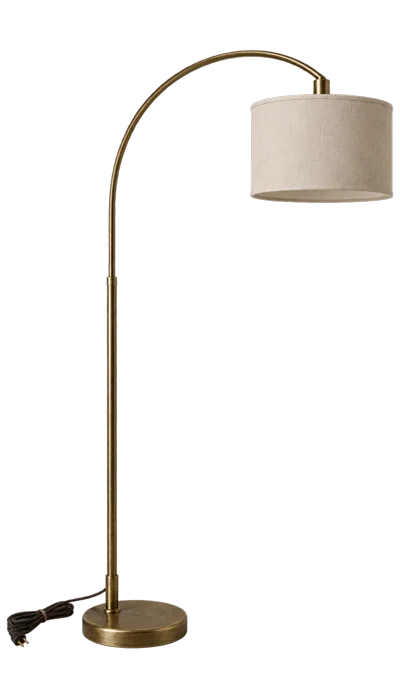
A lamp nobody has rewired
Cloth flex, a brass toggle switch and cracked rubber insulation look wonderful and belong to another century of wiring, and the apartment is not yours to take chances in. Rewiring is a small job for somebody qualified and costs more than the lamp. Count it in or walk away.

-
Do not sand
A painted piece you intend to sand
Lead house paint was only banned in the United States in 1978, and furniture painted before then can carry it under the top coat. Sanding it in a room you live in is the wrong way to find out. Use it as it is, or buy something never painted.
-
Measure the route
Anything wider than the turn on your stairs
It has to come up, and in eighteen months go down, usually with less help. Measure the narrowest point of the route, not the doorway: the doorway is almost never it. A wardrobe you take apart to move is one you leave behind.
The part I am supposed to leave out
Most old furniture is just old
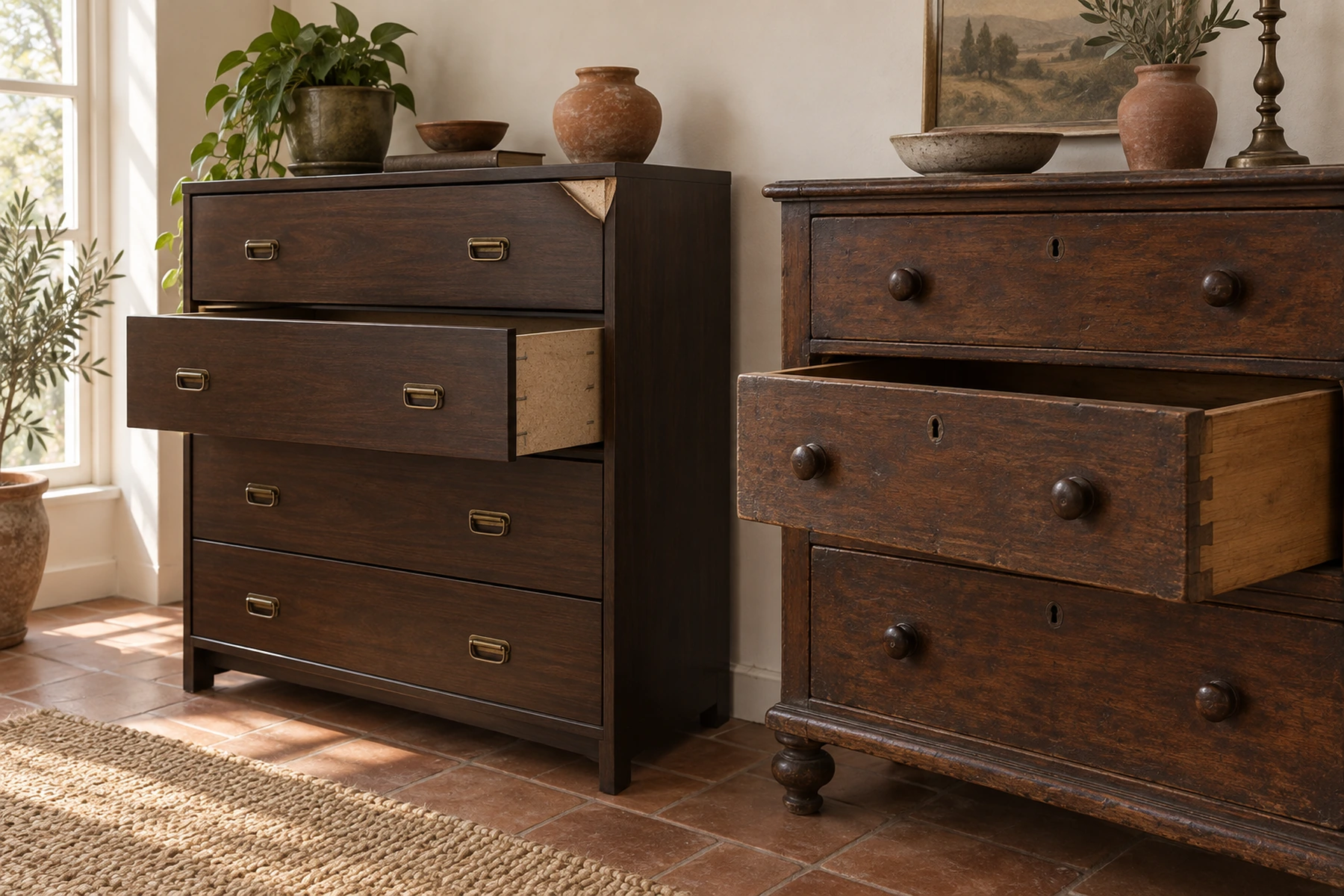
Brown furniture is cheap for a reason: much of it was mass produced badly in the 1970s to look like 1890. Dark, heavy, veneer over chipboard, none of the qualities that make an old piece worth having. Age is not a quality. Age is a date.
The count is two. The reason it is two and not six is that you are going to carry them down a staircase.

You did not find it. It was in the way, and you were the one holding the van keys.
So the test is the one from further up: biggest, darkest or most worked, and well enough made to be worth the space. If none of those, it is not a find at any price, free included.
And the thing nobody writes down: old furniture is heavier than you, and you are the one moving it.
Quick answers
The questions people type
About one in five of the things you would name out loud. Twelve nameable objects means two old pieces, three if the room is large. Past three it reads as an antique shop. If the apartment is old, with moldings or a period fireplace, the building has used a slot: one movable piece, not two.
Keep the new things plain and let one old thing be the exception. Decide its job before you shop: the biggest object, the darkest, or the most worked. Pick one: large and dark and carved at once becomes the room instead of a thing in it.
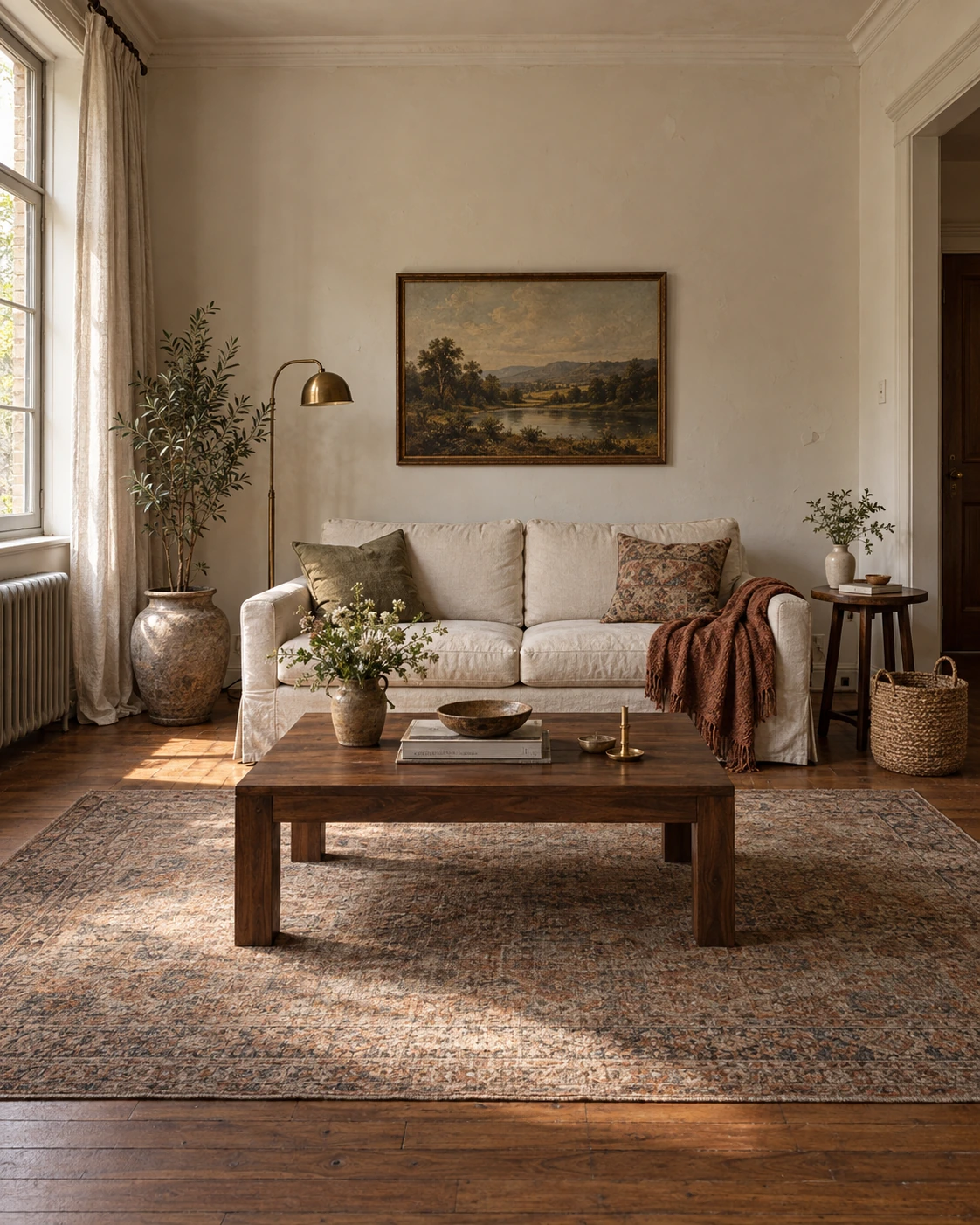
It works for people who have been buying and discarding for decades, rarely for anybody else. The problem is mechanical, not a matter of taste: an old piece stands out because most of what surrounds it does not. Remove the plain majority and nothing registers. Stock, not a home.
Estate sales on their last day, when the leftovers cost the company money. Marketplace listings searched by misspellings such as chest of draws or dinning table. Thrift stores in wealthy areas, which price from a national list but get better donations. The low lots at a regional auction. Skip antique malls.
Upholstered pieces you cannot have cleaned: you wash a cover, not the inside of a chair. Heavy mirrors that need hanging, which want an anchor in a wall you do not own; lean them. Lamps nobody has rewired. Pre 1978 painted furniture you plan to sand, because of lead paint. Anything wider than the narrowest turn on your stairs.
Because everything was made within the same few years to the same tolerances: nothing chipped, nothing darker, no edge softer, so your eye finds nothing to catch on. The fix is one object visibly older than the rest; more cushions will not do it.
Where next
Three things worth your next five minutes
Measured in a rental · Checked Sep 15, 2026