How to style a shelf in five moves
Books, height, art, layers, empty space · Checked Sep 15, 2026

By NoraLease and Layer · Checked Sep 15, 2026
Some links on this page go to Amazon. As an Amazon Associate I earn from qualifying purchases, which is how the site pays for itself. How this works
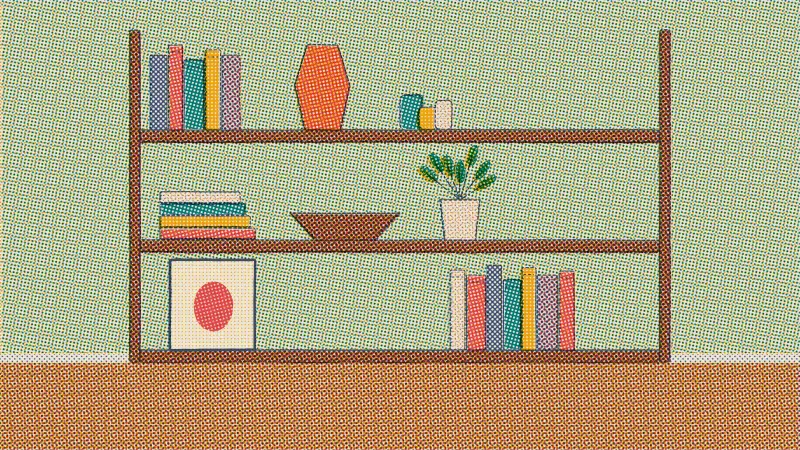
The whole method, in five lines
- Books first, standing and stacked The books you already own do the structural work. Flat stacks turn into pedestals for everything else.
- Add height, once per shelf One tall thing near 9 in per shelf. Without it every shelf reads the same and the eye skates off.
- Lean a small piece of art at the back A leaned 5 by 7 in frame gives the shelf a back wall. Hanging is not required and your deposit stays whole.
- Layer objects in odd groups Threes, and something in front overlapping something behind. Overlap is what turns a row into a still life.
- Leave a third of every shelf empty This is the move nobody makes, and it is the whole difference between a styled shelf and a full one.
In this guide
Take me to what goes on the shelf
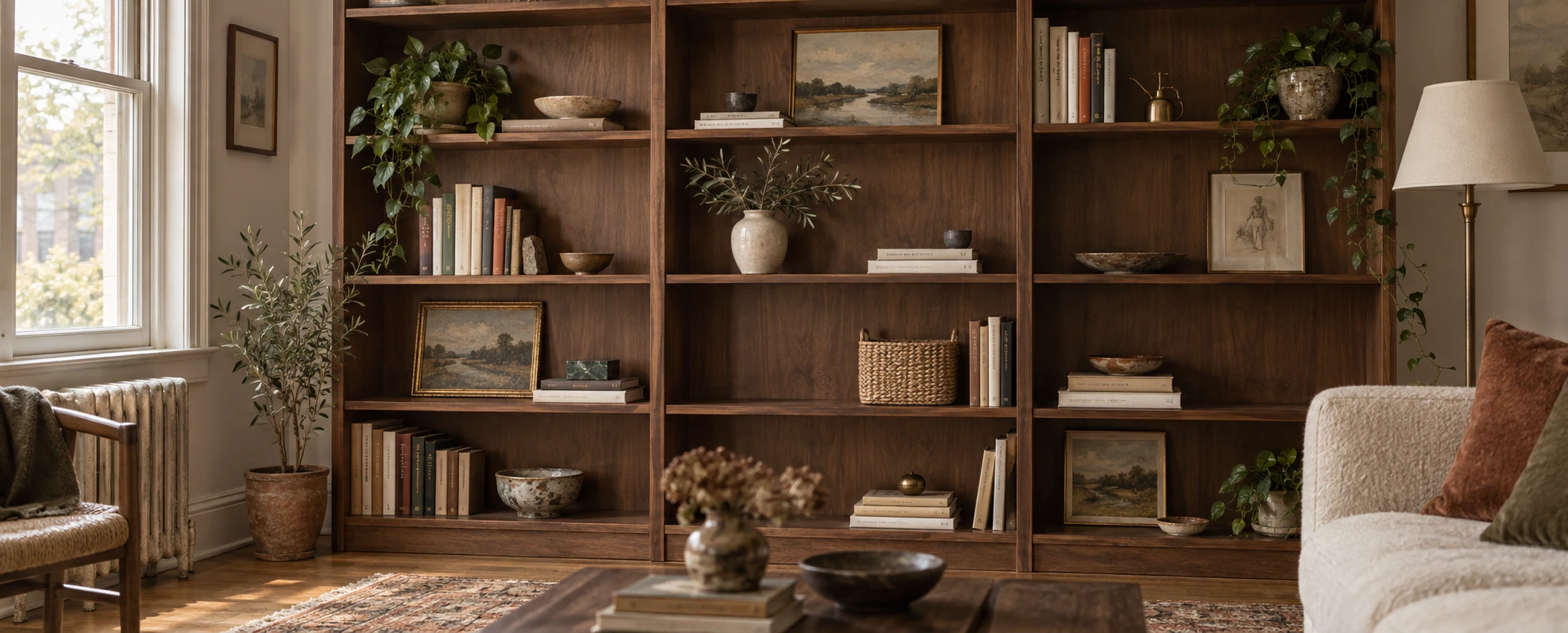
A shelf that looks like a storeroom is almost never too full of stuff. It is too full of one size.
Look at yours and count the heights. If everything on it lands between six and ten inches tall, that is the problem, and no amount of rearranging fixes it. Your eye reads a shelf the way it reads a skyline: it needs something tall, something low, and a gap. Give it three identical rows of paperbacks and it registers storage and moves on.
The other failure is the one people land in after they read an article like this one. They take everything off, put back four objects, and end up with a shelf that looks like a waiting room. The goal is empty in the right third, which is a different instruction.
One more thing before the moves, because most shelf advice skips it and it drives me up the wall. You do not have to turn your books around. Spine out, pages out, mixed, whoever cares. If you own books you read, the covers are the most personal thing on that shelf, and the version where you hide them so the beige matches is decorating for a photograph of a room instead of a room.
Five moves, in order, and the order matters: books go on first, because they are the only thing you already own enough of to build with.
The five moves
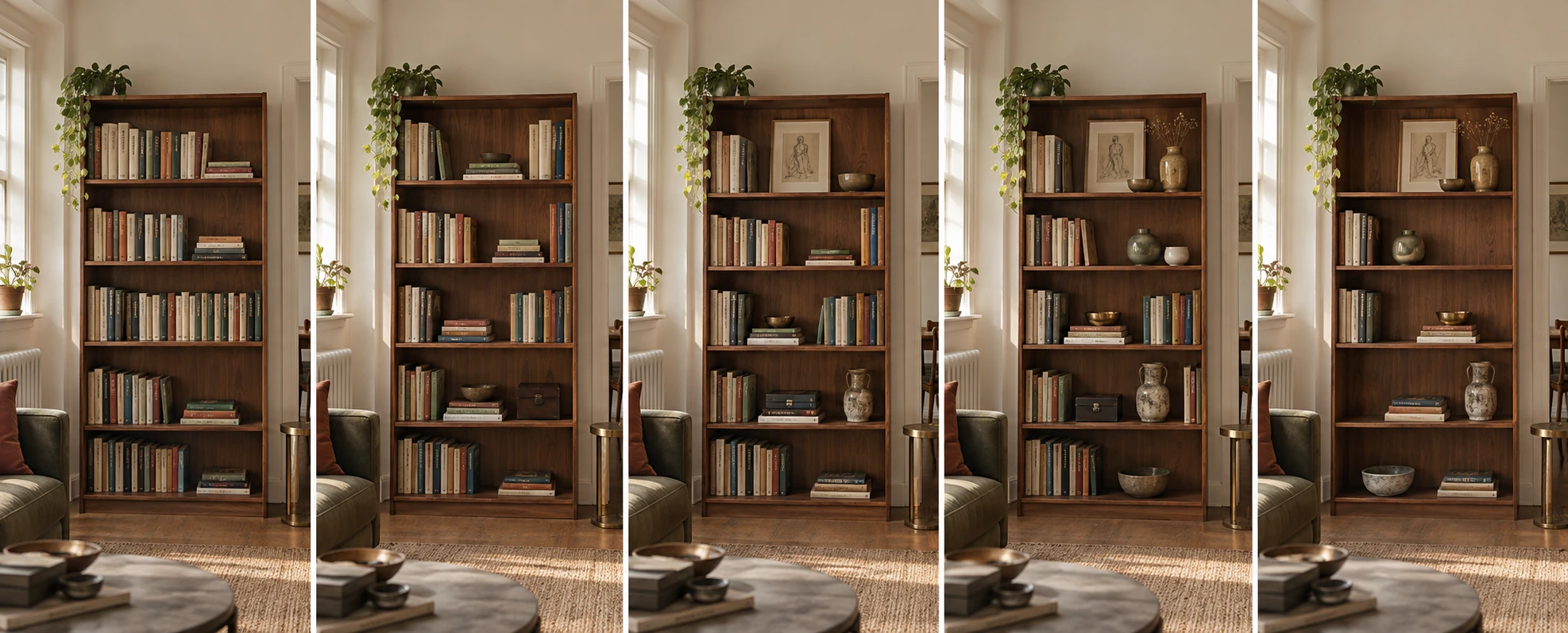
The same shelf, five times, in the order I would do it
Nothing here needs a drill and nothing here needs the shelf to be yours. Do them in order and stop after any one of them if the shelf already looks right.

Books first, standing and lying down
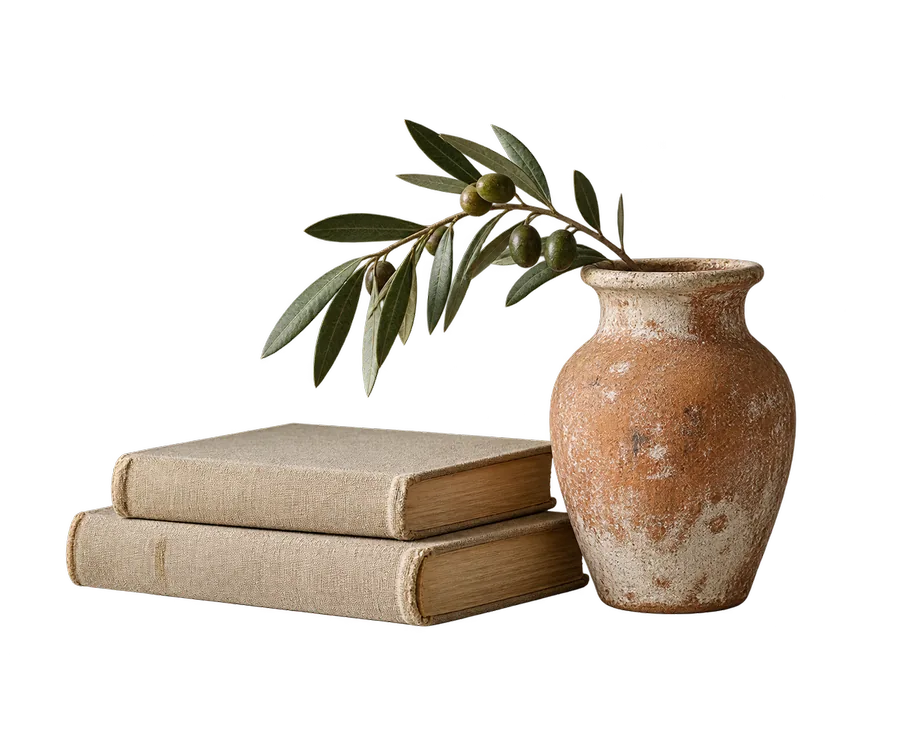
Put the books on before anything else, and split them two ways on every shelf: a run standing upright, and one flat stack of three or four lying on their sides. That flat stack is the point. It is a pedestal you did not buy, it is about 4 in tall, and whatever you put on top of it is now the tall thing on that shelf.
Alternate which side the standing run sits on as you go down the unit. Left, right, left. It costs nothing and it stops the whole bookcase from reading as one striped block.
What goes wrongFilling every shelf end to end with standing books. Full is not the same as finished, and there is nowhere left to put anything.
Add height, once per shelf, and only once
Every shelf gets one thing near 9 in tall. A vase, a tall candlestick, a stack of books on their sides with a small bowl on top. On a standard shelf with 12 in to 14 in of clearance, 9 in is the height that fills the opening without looking jammed under the shelf above it.
Only one, though. Two tall objects on the same shelf compete and the shelf goes flat again for a different reason.
What goes wrongBuying a vase that measures 11 in for a shelf with 12 in of clearance. It touches the top and the shelf looks like a packing crate.
Lean art at the back, do not hang it
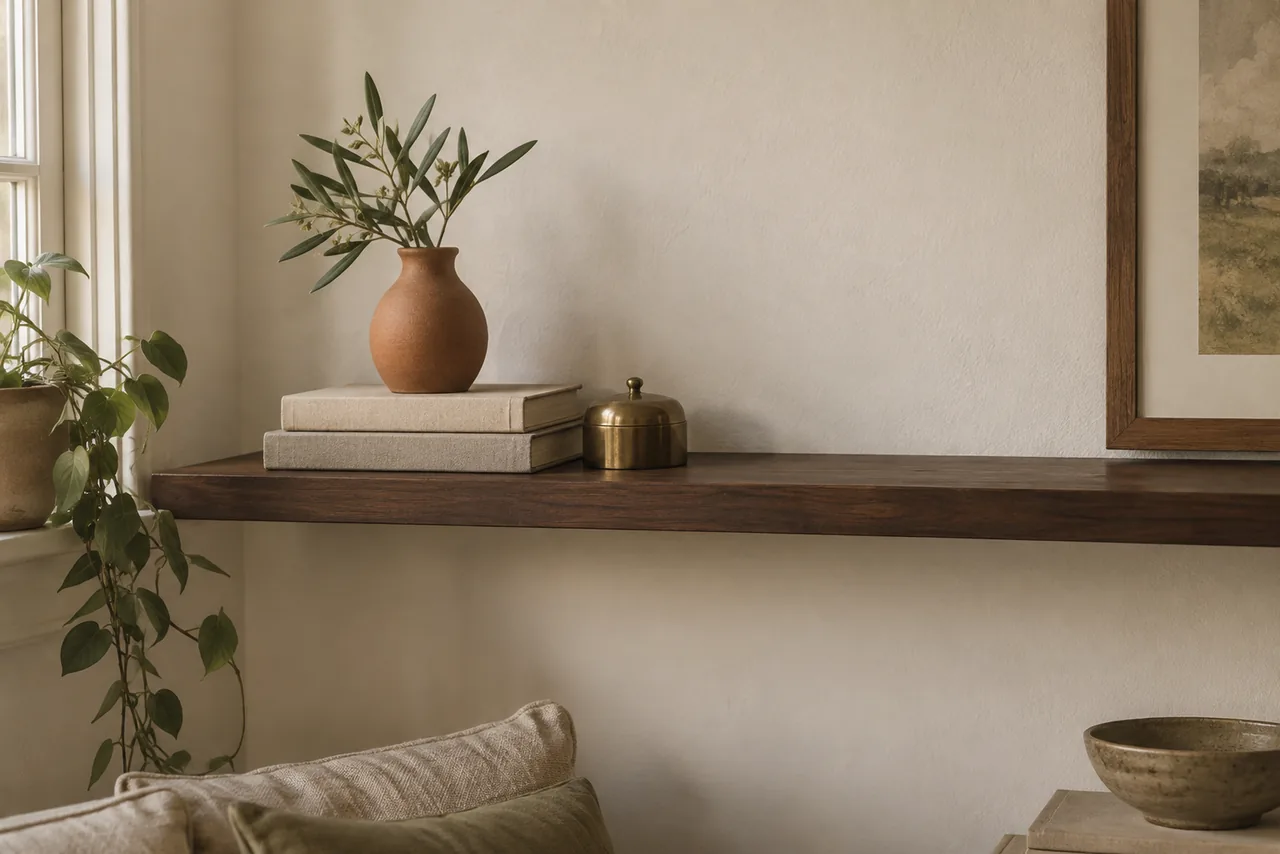
A shelf with nothing at the back is a shelf you see the wall through. Lean one small framed piece against the back of two or three shelves, not all of them, and the whole unit gains a depth it did not have. A 5 by 7 in or an 8 by 10 in frame is the size that leans without eating the shelf.
Rentals make this easy in the one way rentals are ever easy: leaning puts no holes in anything, and it takes four seconds to change your mind.
What goes wrongCentering the frame on the shelf. Push it to one end and let the books crowd up against it, or it reads like a certificate.
Layer objects in threes, and make them overlap
Now the small things. Work in groups of three, at three different heights, and push one of them forward so it covers a corner of the one behind it. That overlap is the entire trick. A bowl set in front of a leaned frame, a small basket half in front of a book stack. Three objects in a straight line with air between them is a shop display; three objects that touch are a still life.
Depth is the thing renters never use, because a rental shelf is usually 11 to 12 in deep and everything gets pushed flat to the front. Use the back half. Something at the back, something at the front, overlapping in the middle.
What goes wrongSpacing objects evenly, like a museum case. Even spacing reads as a set, and a set reads as merchandise.
The object doing the most work in that overlap is usually the one you did not buy new. One worn or inherited piece in the group is what stops a shelf of new purchases from looking like it arrived in one order.
Leave a third of every shelf empty
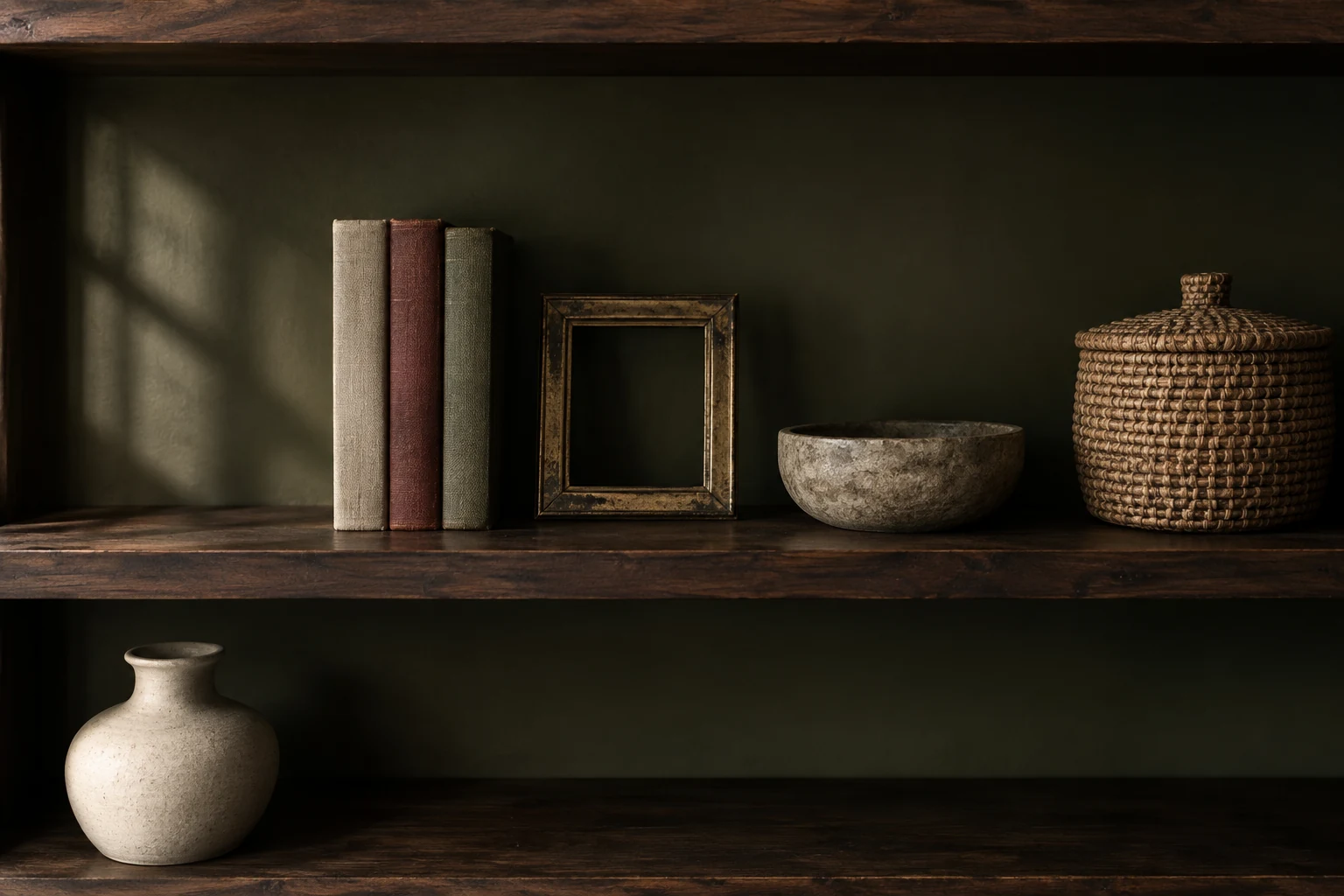
Stand back and take a third of each shelf off, every single shelf, and put the empty stretch in a different place each time so it staggers down the bookcase. This is the move that separates the shelves you save on Pinterest from the shelves you have.
It feels wasteful and that feeling is the point. Empty space is what gives your eye somewhere to rest, and rest is what makes the full parts look deliberate instead of accumulated.
What goes wrongPutting all the empty space on the top shelf, where nobody looks. Put the empty stretch at eye level.
The three rules underneath
Three rules run all five moves, and two of them are countable
Odd numbers, and three is the number
Group objects in threes. Fives if the shelf is long. Never twos, never fours. An even group closes: your eye pairs them off, finishes the job and leaves. An odd group never resolves, so it keeps you looking.
Vary the heights inside the three as well, because three objects of the same height is a row wearing a costume. Tall, medium, low, touching.
The triangle: never stack tall on tall
Whatever is tallest on one shelf does not sit directly above whatever is tallest on the shelf below. Move it at least half a shelf sideways, so the tall things zigzag down the unit instead of forming a column.
Do that on every shelf and something quietly good happens: the bookcase stops being five separate arrangements and starts reading as one composition, which is the thing people cannot name when they say a shelf looks professional. Draw imaginary lines between your tall objects. You want triangles, not a ladder.
A third of every shelf stays empty
On a 30 in shelf that is about 10 in of clear board, which sounds like a lot until you see it and realize it is one bowl’s worth of restraint. Stagger where the gap falls: left on one shelf, right on the next, middle on the third.
If you want one number to take away from this page, take this one. Every other rule here makes a shelf look considered. This one is what makes it look finished.
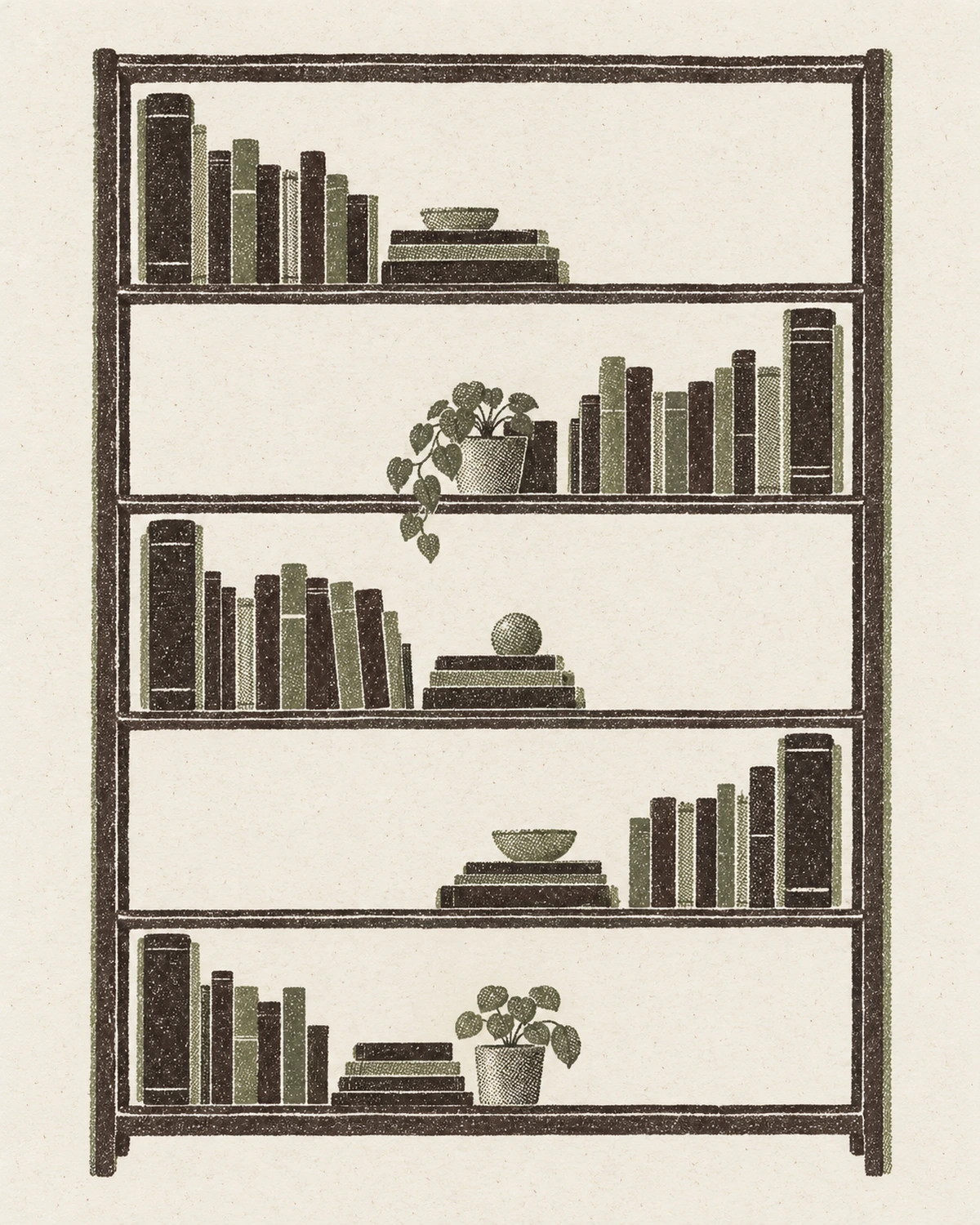
Same five things, same heights, one third of the board left clear. The gap is what makes the rest look chosen instead of collected.
Three arrangements of the same five objects. One: all at one height, spread evenly, which reads as a set. Two: three heights and a group of three, still filling the board. Three, drawn above: the same group pushed into two thirds of the shelf, with the last third clear.
What goes on it
What to put on a shelf, by category, at a size that fits
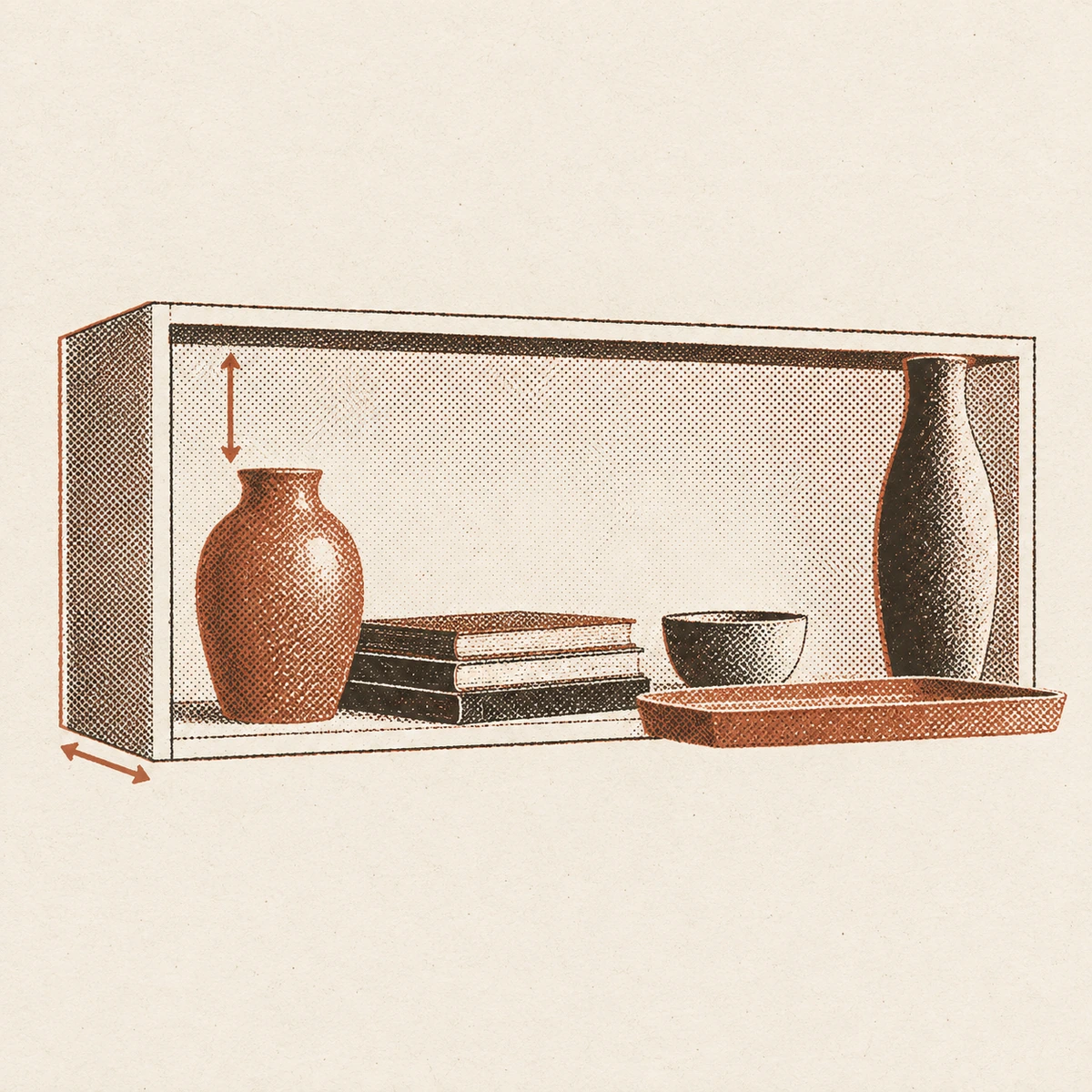
A standard rental bookcase shelf is 11 to 12 in deep. That single number disqualifies about half of what gets sold as shelf decor, because a 17 in tray does not go on a 11 in shelf, and nobody puts the depth in the photo. So every row below names the size that fits, not just the thing.
You do not need all of these. Pick three categories, buy the cheapest honest version, and spend nothing until you have lived with it a week.
| What | The size that fits an 11 to 12 in shelf | See it |
|---|---|---|
| Books you already ownMove 01 | Any. Stacks of 3 or 4 lying flatFree, and the best thing on the shelf. Skip the rest of this row unless your books are all paperbacks the same height. | Nothing to buy |
| Decorative booksIf you only own six books | Set of 3, small, about 9.5 in longBlank pages and plain covers, stacked flat as a pedestal. Fair warning: these are props. If you own real books, use those and keep your money. | See the set of three |
| A wooden bowlMove 04, the front layer | 10.75 by 7 in oval, shallowOval beats round on a shallow shelf: it fills the width and leaves the depth. Shallow means you see into it, which is the point of a bowl on a shelf. | See the 10.75 in oval, up top |
| A ceramic bowlIf you want one thing with weight | 10 in across, on a wood baseWhite ceramic on acacia gives you two materials in one object, which is why it holds a shelf on its own. It is also the heaviest thing here, so keep it off a melamine shelf that already sags. | See the 10 in bowl |

Eleven inches deep. She fits. Nothing else you own does.
| What | The size that fits an 11 to 12 in shelf | See it |
|---|---|---|
| A small trayCorrals the small stuff | 13 by 9 in, pairThe 9 in side goes front to back and clears the shelf edge by two inches. Every tray sold as an ottoman tray is 17 by 13 in and will hang off the front. | See the 13 by 9 pair |
One warning before you fill a cart: a solid walnut bowl and a printed veneer one can look identical in a listing photo and behave completely differently in your hand. Four tests, done with your hands in the shop, tell the two apart before you have opened the box.
| What | The size that fits an 11 to 12 in shelf | See it |
|---|---|---|
| A vase for heightMove 02 | 9 in tall, matteNine inches under a 12 to 14 in opening leaves visible air above it, which is what stops the shelf reading as packed. Matte over glossy: a glossy vase catches the ceiling light and becomes the only thing you see. | See the 9 in vase |
| Candle holdersHeight in an odd group | Set of 3, three different heightsThe cheapest way to buy rule one and move two at once: three objects, three heights, one purchase. They also work unlit, which is the only way most of us use a candle. | See the set of three |
| What | The size that fits an 11 to 12 in shelf | See it |
|---|---|---|
| Small basketsHides the ugly third | 2-pack, under 11 in wideTwo baskets absorb the chargers, the remotes and the mail, which is the real reason your shelf looks like a storeroom. Even numbers are fine here because they are containers, not objects. | See the 2-pack |
| BookendsLets you stop short of the end | Marble pair, about 5 in tallThis is the object that buys you the empty third. A run of books can stop halfway along the shelf only if something holds it there, and it has to be heavy. Marble is heavy. Folded metal is not. | See the marble pair |
| What | The size that fits an 11 to 12 in shelf | See it |
|---|---|---|
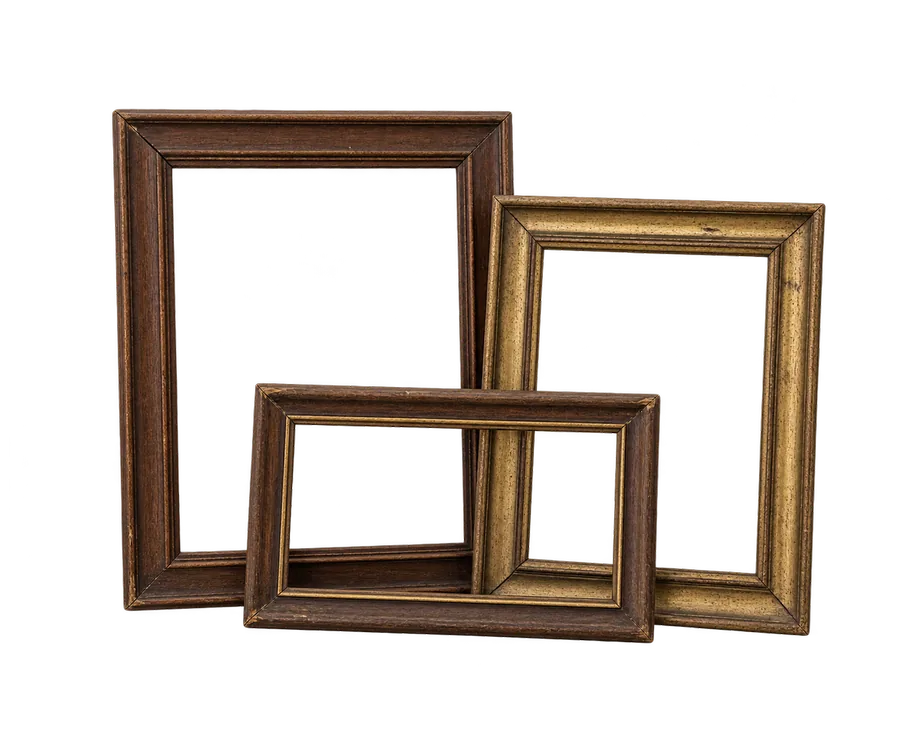
| A small frame to leanMove 03 | 5 by 7 in, pairLeaned at the back, not hung, so no holes and no deposit conversation. Two is right: one per shelf on two shelves, never on all of them. | See the 5 by 7 pair |
| One plant that survivesThe only living thing up there | 6 in pot, 10 to 14 in tallA ZZ plant takes low light and forgives three weeks of neglect, which is what a shelf plant faces. A 6 in pot fits the depth. The concession: it is mildly toxic to cats and dogs, so if yours climbs, buy a fake one instead. | See the 6 in pot |
She colonized the empty third within the hour.
When the shelf is not yours
The landlord’s bookcase: melamine, fixed shelves, bolted to the wall
Every styling article on the internet photographs a built in oak library. What you have is a white melamine unit with shelves that do not move, screwed to the wall by somebody who has never met you. Here is what you can do to it that you can undo on the day you leave.
-
Comes off
Line the back panel, not the shelves
The single biggest change, and the one nobody tries. A textured peel and stick paper on the back panel turns a white melamine box into a piece of joinery, and the back panel is the easiest surface in the apartment to paper because it is flat, dry and nobody ever leans on it. Take the shelves out if they lift; work around them if they do not.
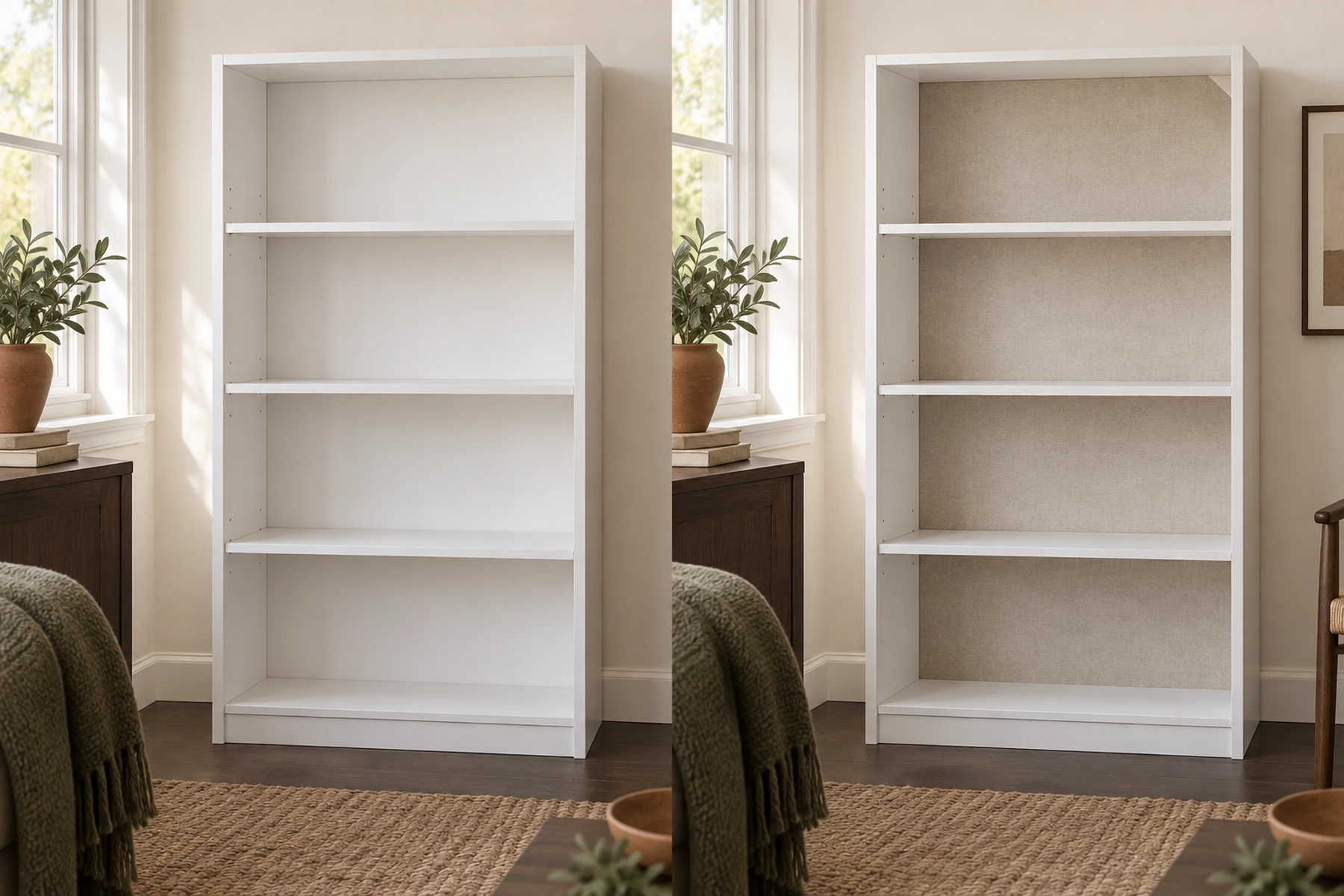
Same box, same shelves, nothing bought but a sheet of paper. -
Free
Put the weight over the supports
Melamine is chipboard in a plastic coat and it bends under books in the middle of the span. Heavy things at the ends, over the side panels, and light things in the middle. A shelf that has already bowed will not come back, so the styling job on that one is to unload it, not to decorate it.
-
One measurement
Fixed shelf heights change what you buy, not what you do
You cannot move the boards, so measure the opening once and shop to it. Most fixed rental shelves give you 11 in to 13 in of clearance, which is why 9 in keeps coming up on this page. Take that number to the shop instead of guessing, and nothing arrives too tall.
-
Do nothing
Leave the wall bracket alone
If it is bolted to the wall, it is bolted for a reason and the holes are already the landlord’s problem, not yours. Do not unscrew it to move it two feet. A unit you have unbolted is a unit you now own the anchor holes for.
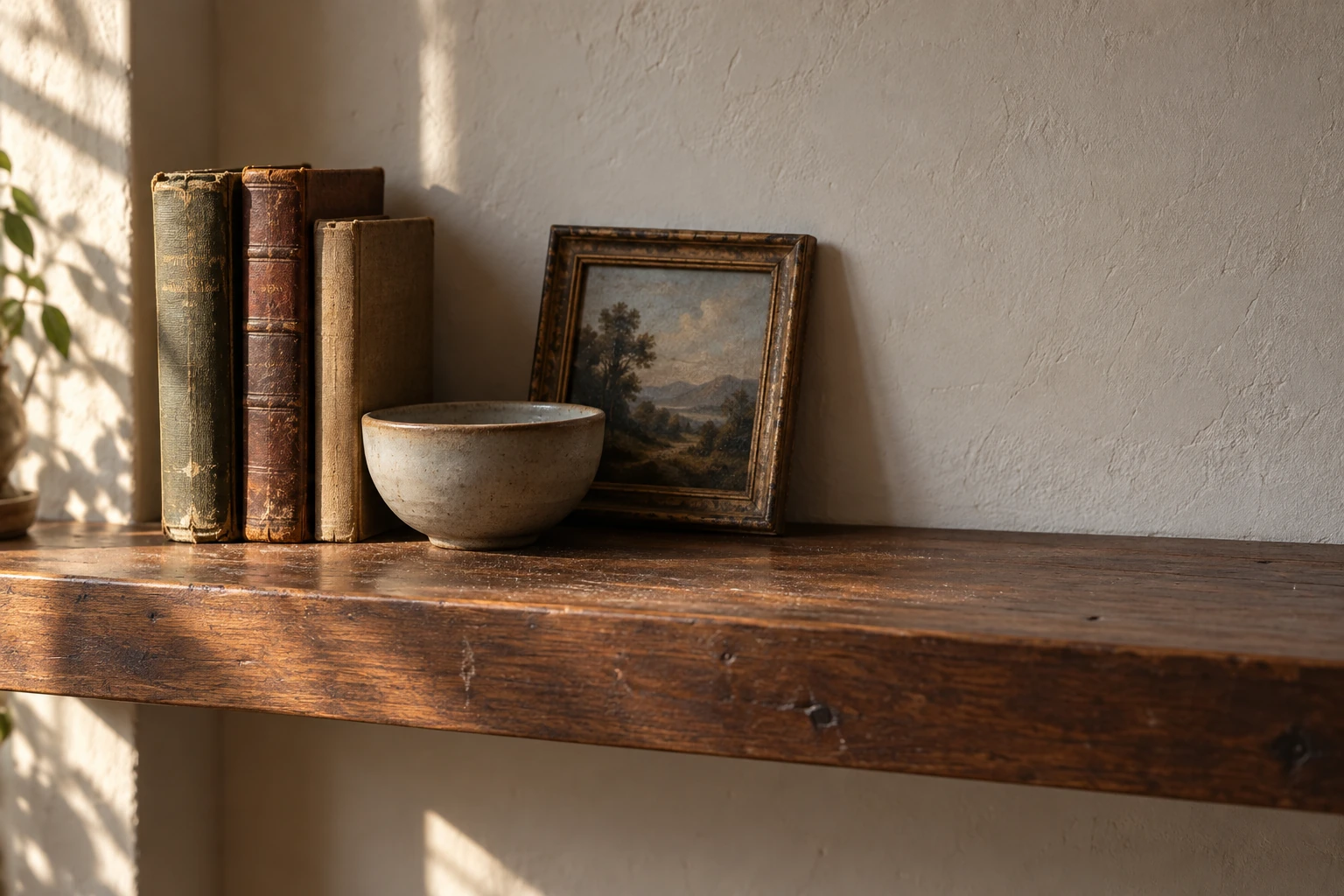
The part I am supposed to leave out
If you use the shelf, it will not look like this
A styled shelf photographs beautifully and holds almost nothing. Yours has the router on it, and the passport, and a bag of cables. That is not a failure of your decorating.
So split the unit. Two shelves are for living: baskets, the router, the stuff. The rest get the five moves. The lived shelves sit low, where hands reach and eyes do not, and the styled ones sit at eye level, where you look.
A bookcase kept perfectly empty of use is a sculpture you dust.
Quick answers
The questions people type
Books first, standing and in flat stacks. Then one tall object near 9 inches on each shelf. Then lean a small framed piece at the back of two or three shelves. Then layer small objects in groups of three so they overlap. Then take a third of every shelf back off and leave it empty. Do them in that order, because each move depends on the one before it.
Almost always because everything on it is the same height and there is no empty space. What reads as clutter is usually sameness. If every object on the shelf measures between 6 and 10 inches tall and the boards are full end to end, your eye gets no place to rest and reads the whole thing as storage. Add one tall object per shelf and clear a third of each board.
No. It is decorating for a photograph instead of a room, and it makes your own books unusable for the sake of a neutral color. If the spines feel loud, group them by color or by size, lay some flat in stacks, and put a bowl or a basket in front of the busiest run. That solves the same problem without hiding what you read.
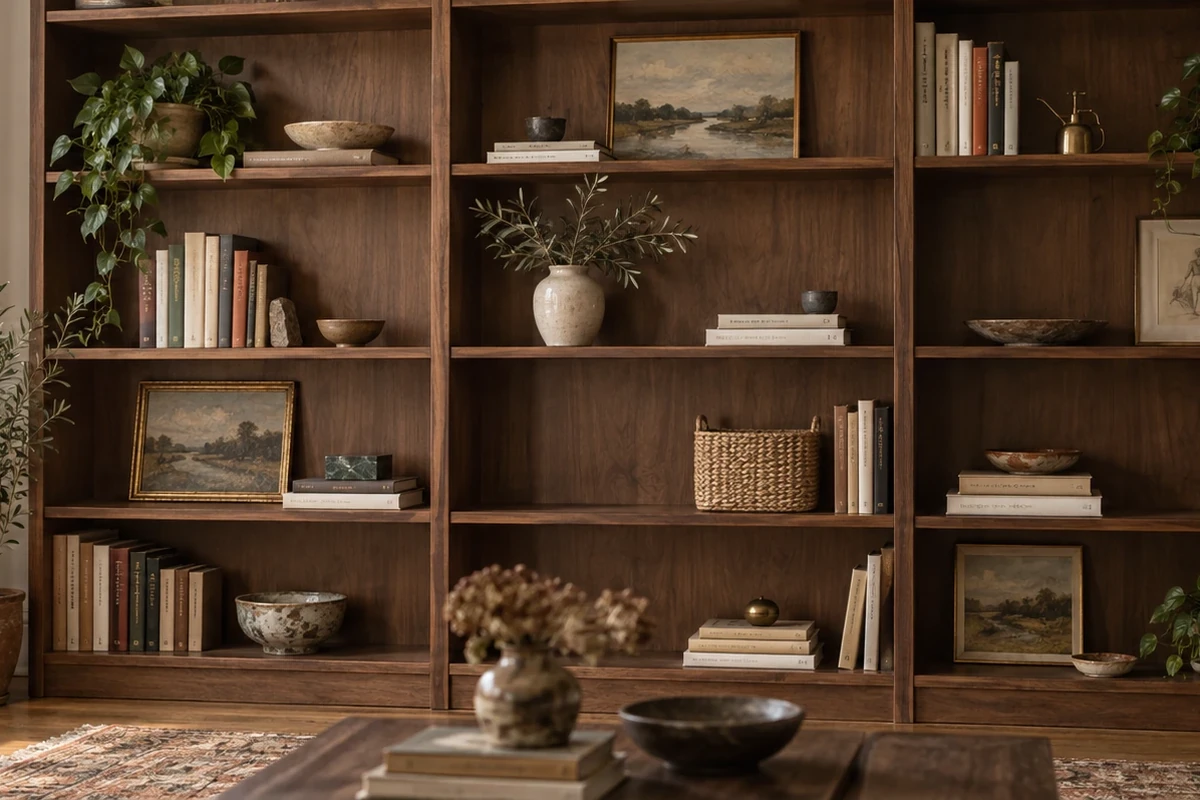
About a third of every shelf, not a third of the bookcase. On a 30 inch shelf that is roughly 10 inches of clear board. Move the gap around as you go down the unit, left on one shelf and right on the next, so the empty space staggers instead of forming a stripe. This is the single move that separates a styled shelf from a full one.
A standard rental shelf is 11 to 12 inches deep with 11 to 13 inches of vertical clearance. So look for objects around 9 inches tall and no more than 10 inches front to back. That rules out most trays sold for decorating, which are 17 by 13 inches and hang off the front edge, and it rules out any vase over about 10 inches.
Take everything off, then put back only books, in two positions: a standing run at one end and a flat stack of three or four on the other. Alternate which end the standing run sits on as you move down the unit, set anything you already own on top of the flat stacks for height, and leave a third of each shelf bare. That is four of the five moves done with objects you already had.
Where next
Three things worth your next five minutes
Measured in a rental · Checked Sep 15, 2026